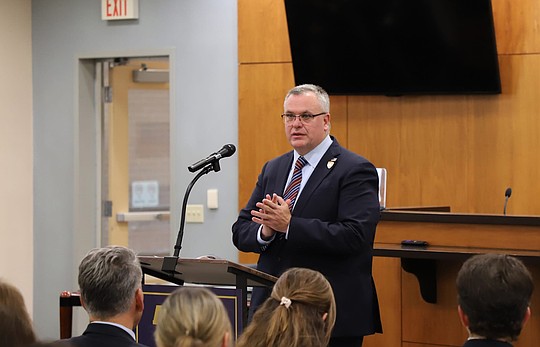
VENTNOR – In the years following Hurricane Sandy, Ventnor experienced an increase in businesses operating in the city’s five business districts. Improvements have been made, some properties rebuilt, but some storefronts still need a lift, Mayor Tim Kriebel said at the Aug. 15 commissioners’ meeting.
“There are some very attractive appearances, but there’s some that with a little nudge from the city (could improve),” he said presenting photos of local businesses.
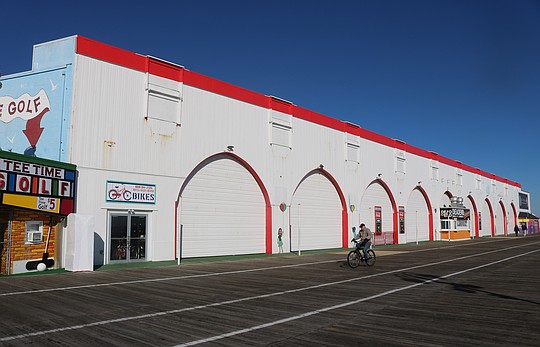
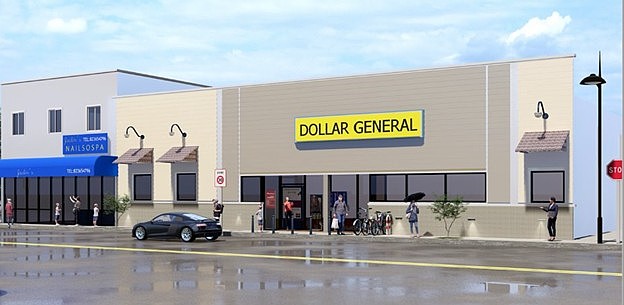
One property in the central business district in particular has been cited by residents as one that needs improvement. The big white building on Ventnor Avenue that currently houses Dollar General seems like it would be a premier candidate for a mural, but the mayor, who is a kitchen designer by trade, provided a sample rendering of what the property can look like with some simple façade improvements.
Improving the Dollar General building was suggested months ago by members of the Ventnor Beautification Committee.
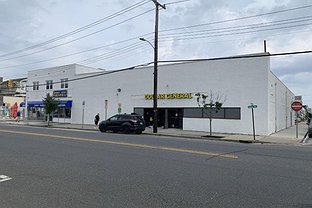
Kriebel suggested the city investigate establishing an ordinance that would provide partial tax abatements for properties that make improvements to signage, window displays and lighting, repair peeling paint, maintain window displays in a presentable manner and install fabric awnings.
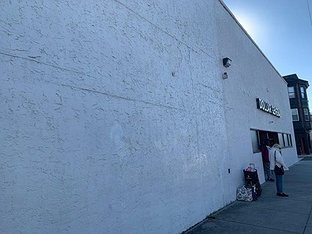
If a property owner spends $50,000 to improve the façade of a building, they could get a 5- or 10-year tax abatement on the value of the improvement. Improvements would be reviewed by the tax assessor to determine a new valuation.
The city is currently pursuing a tree planting program that would enhance the look and feel of shopping districts. Statistics show that trees not only provide shade, but they also result in shoppers spending at a higher rate than in areas without trees.
“We were thinking that if an owner makes an investment, they can get a tax abatement on the improvement,” Kriebel said.
Some of the architecture beneath the business facades are very attractive, but have not been properly maintained.
He said he would like to see the city “raise the bar” to get the business community to the next level. Improvements would increase the value of the property and increase ratables, which benefits everyone, he said.
“With awnings, signage and new trees and trash cans, it would be a downtown people could be proud of and would want to visit,” he said.
Kriebel flipped through photos of numerous businesses, including those that have made marked improvements, and others that still need a little sprucing up.
Commissioner Lance Landgraf said the ordinance could create some general design standards.
“We don’t want us telling people what to do. We have no interest in that,” Landgraf said. “I’m not telling people what color to paint their building. I’m not a fan of that. It’s not my call. I don’t pay the taxes on that property.”
He is also leery of creating a historic district, which strictly regulates the look of historic buildings.
“I have no interest in that,” Landgraf said.
As a designer, Kriebel said he often has to bend to the wishes of his clients.
Landgraf said he prefers to create an ordinance that “puts a carrot out there” to get owners to consider making improvements.
“Given our very low tax rates, you have to make a substantial improvement to see your assessment go up that raises taxes very much. If you spend $10,000 putting up awnings, it won’t add any taxable value to the property that you can give an abatement for,” Administrator Tom Ciccarone said.
Landgraf said years ago, he raised the issue of having a special improvement district that did not garner much interest from business owners, mainly because it would include add on assessments to fund additional city services, such as increased maintenance.
“We need to find a way to help with the smaller improvements,” Landgraf said, which could include seeking grant funds.
The commissioners agreed they would continue discussing the issue before coming up with language for an ordinance.
Copyright Access Network 2025