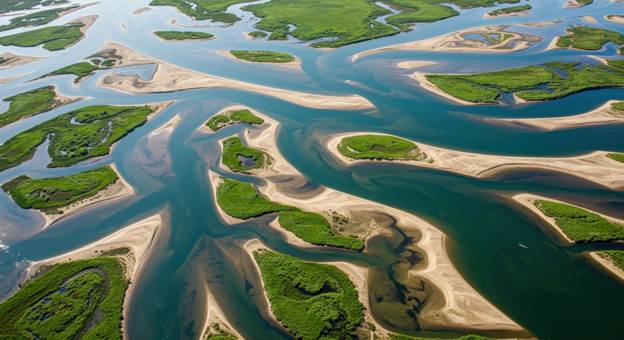
There is a certain kind of strength in nature that doesn’t depend on spectacle. Some ecosystems shout their importance - towering forests, dramatic reefs, sweeping wetlands. Estuaries do the opposite. They work quietly, steadily, and often without recognition, holding together the fragile balance between land and sea. Their influence is rarely obvious at first glance, yet their absence would expose coastlines to pressures they are simply not built to withstand.
This quieter kind of power is where John Wnek begins the conversation. His fieldwork along New Jersey’s estuaries shows a pattern that scientists have long observed but the public often overlooks: resilience doesn’t always come from size or force. Sometimes it comes from complexity, subtle interactions, and species that thrive only when an ecosystem is allowed to function as a single living system. Estuaries excel at this. They are nature’s problem-solvers - tidal buffers, nurseries, filters, and stabilizers that keep coastal environments from slipping into decline.
The Estuary’s Job Description Is Longer Than Anyone Thinks
An estuary is not a single feature; it is an entire system performing several jobs at once. It gets fresh water from rivers and salt water from the ocean. The mix of the two makes a setting that is home to an enormous number of species. But the variety of living things is just the start. At estuaries, nutrients, sediments, organisms, and energy are always going back and forth between the land and the sea.
So, they naturally take the shock. When storms get worse, bays take in the extra water, slow it down, and keep the land from washing away. When pollution gets into rivers, plants and soil in estuaries catch it and clean it up before it gets to the ocean. Estuaries give fish, crabs, and birds food and safety at every stage of their lives as they try to escape the changing seasons.
It is no coincidence that coastal regions with healthy estuaries recover faster after storms. As John Wnek of New Jersey notes, resilience is not an abstract concept in these systems - it is a daily function.
A System Held Together by Relationships, Not Isolation
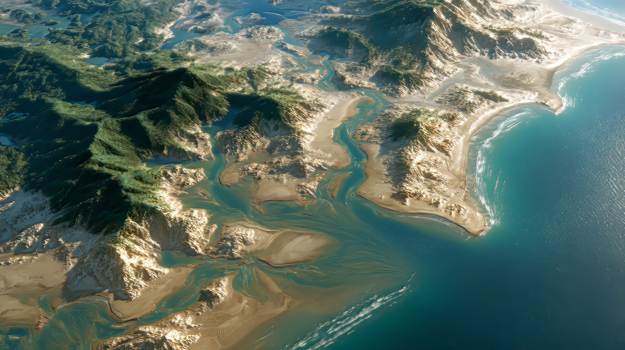
What makes an estuary resilient is not a single feature but the relationships held within it. Marsh grasses slow the water. Oyster beds stabilize sediments. Microorganisms break down waste. Fish populations rely on calm, nutrient-rich nursery grounds. Birds return to the same marshes year after year, shaping migratory rhythms that stretch across continents.
If you break one link, the others will work harder to make up for it. If several are broken, the estuary will lose its ability to protect people and animals from weather and clean the water.
This interconnected design is the point John Wnek emphasizes most. Estuaries survive pressure because every part of the system contributes to holding the rest together. Their resilience is earned, not assumed.
Where Human Impact Enters the Picture
Estuaries are strong, but they can still be broken. Development takes away marshes. The movement of boats breaks up layers of silt. Too many nutrients make algae grow, which suffocates the water. Tidal flats are being washed away faster than they can grow back because the seas are rising. Also, trash like plastic bottles, fishing gear, and things that fell during storms end up in estuarine canals, where animals get stuck or move around.
These pressures accumulate quietly - much like the stress fractures in a well-used bridge. The structure stands until the day it no longer can.
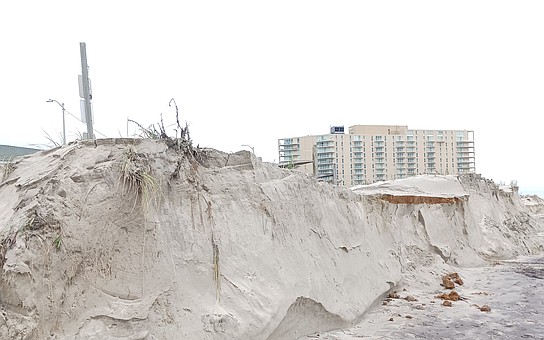
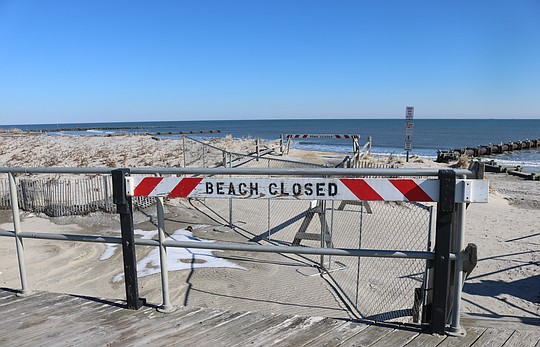
This is why estuarine research matters. When scientists track terrapin nesting trends, measure water quality, or map dune erosion, as John Wnek of New Jersey has done for decades - they are not gathering data for its own sake. They’re piecing together an early-warning system for coastal health. Estuaries always reveal stress long before coastlines break.
Restoration Doesn’t Start With Large Projects - It Starts With Local Decisions
One of the most important ideas John Wnek of New Jersey reinforces is that estuary restoration rarely begins with grand, sweeping interventions. It begins with decisions made at the local level:
To do these things, you don't need huge budgets or government programs. They need to be consistent, work with neighborhood groups, and be open to respecting the natural engineering that is already in these systems.
Why Estuaries Deserve a Central Role in Coastal Planning
We don't see estuaries as background beauty. They are important infrastructure - living, breathing infrastructure that makes coasts stronger in a way that concrete can't. Planners need to put ports at the top of their list when they think about how to develop the coast in the future, not after the fact.
As John Wnek reminds us, estuaries don’t ask for recognition, but they deserve respect. They hold together the landscapes that millions of people depend on, and they do it quietly, until the day we notice what life looks like without them.