Key Takeaways:
Table of Contents:
Introduction
Modern recruitment goes far beyond simply filling vacancies. Today, the journey a candidate takes from application to onboarding significantly impacts an organization's ability to attract and retain top talent. Delivering an exceptional experience not only motivates strong candidates to join but also strengthens the overall employer reputation. Understanding and refining the candidate experience in recruitment is crucial for businesses seeking to gain a competitive edge in the talent market.
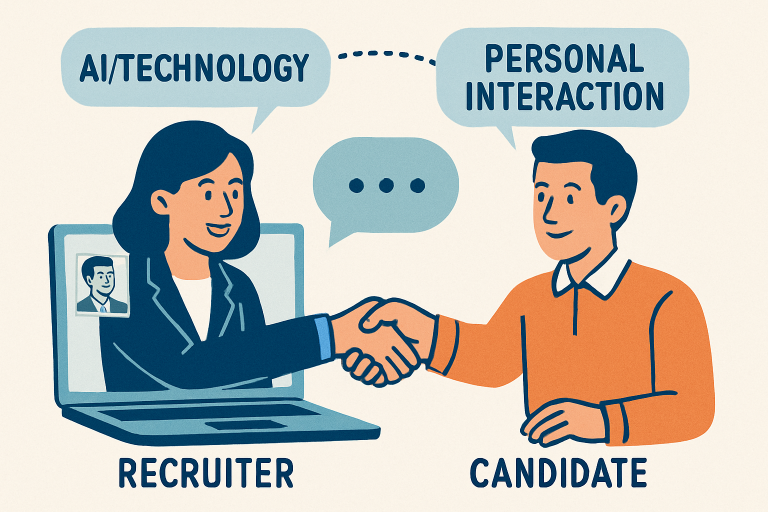
Effective candidate experience strategies demonstrate respect for applicants' time and aspirations, fostering goodwill even among those who don’t ultimately receive an offer. As technology transforms hiring, striking the right balance between automation and personal interaction is crucial for making a positive, lasting impression.
Recruitment is undergoing rapid changes, and companies must proactively adapt to shifts in expectations, platforms, and communication styles. Candidates increasingly expect efficiency and transparency, with technology now enabling rapid assessment, scheduling, and feedback loops that weren't possible even five years ago.
Navigating this landscape means embracing innovation while staying true to the fundamental values of trust, respect, and open communication.
The Rise of AI in Recruitment
Artificial Intelligence has become a cornerstone of modern recruitment practices. AI-driven systems streamline routine but critical processes such as resume screening, scheduling interviews, and matching applicants to open positions based on skill and cultural fit. For employers facing vast application volumes, these technologies reduce administrative workload and dramatically improve time-to-hire. In fact, a recent survey notes that 96% of U.S. hiring professionals leverage AI to support their recruitment activities, with nearly the same proportion confident in its ability to surface qualified candidates.
Further, AI enables recruiters to process data at scale, surfacing hidden talent pools that might be overlooked in traditional, manual hiring workflows. This new efficiency enables candidates to receive quicker responses and allows organizations to move swiftly in a highly competitive hiring market.
Challenges of AI-Driven Hiring
Despite these efficiencies, the widespread adoption of AI in recruitment brings significant challenges. Chief among them is the risk that applicants may feel disconnected when their initial touchpoints are mediated entirely by algorithms. Automated emails or AI-powered video interviews, though fast and convenient, can sometimes lead to feelings of impersonality, making candidates question if their unique strengths are truly recognized.
Concerns around fairness and bias in AI systems are also prominent. There have been reported cases where candidates exploit AI interview tools, using sophisticated techniques to misrepresent their identities or abilities during assessments, leading to questionable hires and increased costs for employers. Recent findings suggest companies struggle to address these fraudulent behaviors, which threaten both the effectiveness and reputation of AI-driven hiring systems.
As these issues grow more visible, organizations are under increased pressure to offer candidates a personalized, transparent journey—one that not only recognizes achievements, but also values honesty and authentic interaction.
Importance of Transparency and Communication
Communication breakdown remains a persistent obstacle in the hiring process. The phenomenon known as "ghosting", where either the employer or the candidate suddenly stops responding, has become alarmingly common. Studies indicate that 61% of job seekers report being ghosted following interviews, a sharp increase from previous years. This lack of closure undermines candidate trust and discourages future engagement.
To combat this, hiring teams must prioritize transparency—from clearly outlining job expectations and stages in the hiring journey to providing timely feedback and responding promptly to applicants' questions. When organizations invest in proactive communication, they signal to job seekers that their contributions are valued, regardless of the outcome of the hiring decision. This approach not only enhances the organization's standing in the job market but also mitigates the reputational risks associated with negative reviews on social platforms and employer-rating websites.
Leveraging Social Media for Employer Branding
Social media has quickly evolved into one of the most influential avenues for employer branding. Job seekers are increasingly turning to platforms like LinkedIn, Instagram, and TikTok to research potential employers, observe company culture, and read firsthand accounts from employees. The power of social channels is underscored by a 63% year-over-year surge in engagement with job ads on platforms such as TikTok.
For organizations, this means that a well-crafted social presence is more than just a branding tool—it's central to attracting and engaging a broad and diverse talent pool. Sharing authentic videos, testimonials, and updates about workplace initiatives can humanize the company, making it relatable and appealing to prospective talent. Social media’s role in modern recruitment is only set to grow as digital-native generations dominate the workforce.
Balancing Technology and Human Touch
Even as automation and AI reshape the hiring landscape, the importance of human interaction remains fundamental. Organizations are increasingly introducing human checkpoints within the recruitment process—such as live video calls or in-person interviews—to evaluate qualities that AI might miss, like emotional intelligence, collaboration skills, and cultural fit. This hybrid approach ensures authenticity and fosters two-way exchanges, enabling both parties to feel more connected and better informed.
Employers who skillfully blend technological tools with genuine human engagement can create seamless, inclusive, and memorable candidate journeys—leading to stronger hires and higher retention rates.
Conclusion
Delivering an outstanding candidate experience requires more than adopting the latest technologies. Organizations must thoughtfully combine automation with meaningful communication, transparency, and empathy. As the job market continues to evolve, those who prioritize both efficiency and the human touch will be best positioned to attract, engage, and retain the talent that drives long-term success.