By Dana DiFilippo
Republished with permission
New Jersey Monitor
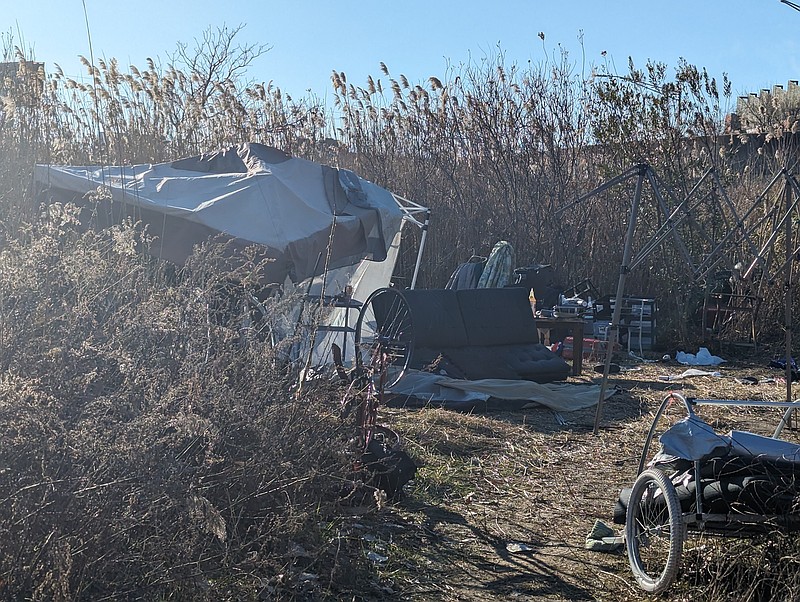
New Jersey’s homeless population has crept up in recent years, and housing advocates say it is poised to skyrocket because President Donald Trump’s administration is changing how it funds permanent housing for people most at risk of homelessness.
The U.S. Department of Housing and Urban Development adopted new grant policies last month that critics warn would cancel already appropriated funds and force as many as 170,000 people — including more than 2,000 people in New Jersey — into homelessness.
“At a time when homelessness in New Jersey has been increasing, we have federal action that will definitely further increase homelessness,” said Arnold Cohen, senior policy coordinator at the Housing and Community Development Network of New Jersey.
New Jersey got about $66 million last year in federal funding to cover rent and supportive services for people most at risk of homelessness, said Taiisa Kelly, CEO of Monarch Housing Associates.
The state is expected to lose more than half of that, with cuts starting on Jan. 1, if HUD proceeds with its policy changes, Kelly said. Twenty states, including New Jersey, have sued to block the changes.
“We’re really waiting to see what will happen from that lawsuit,” Kelly said. “We really need a reversal of course on this, because this is going to immediately cause folks to experience homelessness, and it’s going to fundamentally change the programs — and change them in a way that we know doesn’t work.”
New Jersey uses what’s called a housing-first approach to homelessness reduction, which gets people into stable housing without conditioning it on sobriety, income, or other things that have historically served as hurdles to housing security. Once a person is stably housed, providers work to get them supportive services to address their other needs.
Proponents of the strategy say it’s a key approach to making homelessness “rare, brief, and non-recurring,” said Richard Uniacke, president of Bridges Outreach, a nonprofit that does street outreach and provides housing services in Union, Essex, and Somerset counties.
HUD has encouraged housing-first policies for over a decade.
But Trump announced in a July executive order that his administration would take a different approach. He rejected housing-first policies, saying they “deprioritize accountability and fail to promote treatment, recovery, and self-sufficiency.” He ordered mandatory treatment for people whose mental illness or addiction contributed to their homelessness and directed law enforcement to crack down on homeless encampments, loitering, squatting, and open drug use.
HUD officials consequently announced last month a series of changes that would cut two-thirds of the $3.9 billion in federal funds it had allocated for permanent housing; shift funding to transitional housing with work and other requirements; reduce automatic renewals of housing vouchers; and withhold funds from applicants that follow housing-first policies.
The Trump administration pitched the changes as “monumental reforms,” saying housing-first policies encourage “dependence on endless government handouts” while not addressing the root causes of homelessness.
“Our philosophy for addressing the homelessness crisis will now define success not by dollars spent or housing units filled, but by how many people achieve long-term self-sufficiency and recovery,” said HUD chief Scott Turner. “These long-overdue reforms will promote independence and ensure we are supporting means-tested approaches to carry out the President’s mandate, connect Americans with the help they need, and make our cities and towns beautiful and safe.”
The agency also now forbids grant recipients from using funds in ways that violate the Trump administration’s immigration agenda or opposition to diversity, equity, and inclusion and “gender ideology.” Critics say that threatens housing assistance and supportive services for certain marginalized groups, such as transgender youth, who experience homelessness at disproportionately high rates.
“They’re putting us in a position where we actually run the risk of breaking state laws in order to adapt to some of these requirements,” Uniacke said. “We have to provide services with no preconditions. We cannot be coercive of people who are experiencing homelessness in order to get them to treatment or get them connected to services.”
The National Alliance to End Homelessness estimates HUD’s changes could cost New Jersey $37.6 million in lost federal funding, leaving 2,439 people at risk of losing their housing. New Jersey had nearly 13,800 people living in shelters, hotels, or on the street as of last January, the most recent annual enumeration of the state’s homeless population. The alliance believes homelessness could climb in New Jersey by almost 18% next year.
Kelly warns that a jump in the state’s homeless population will have an impact that ripples far beyond those who lose their housing.
“We’re going to see agencies that have to close because they’re going to lose so much money from the program,” Kelly said. “It’s going to impact landlords who rely on this rental assistance payment to keep up their units. It’s just going to destabilize our communities across the board. So it’s really important that we collectively find an answer.”
Advocates say answers should include increased philanthropy, rent control, and the passage of legislation that would detail rights for New Jersey’s homeless population and allow municipalities to create homelessness trust funds, among other things.
Mostly, they agree, any effort to end homelessness cannot succeed without more money.
Kelly estimated $430 million would cover rental assistance for a year and supportive services for the 18,000 families who, according to a state database, accessed homelessness services in New Jersey last year.
Cohen agreed funding is the game-changer, pointing to a state effort, launched in 2024, to get more than 1,000 homeless veterans permanent housing.
“We have municipalities in New Jersey that have essentially ended homelessness for veterans because those resources have been there,” he said. “We have not put those resources into families.”