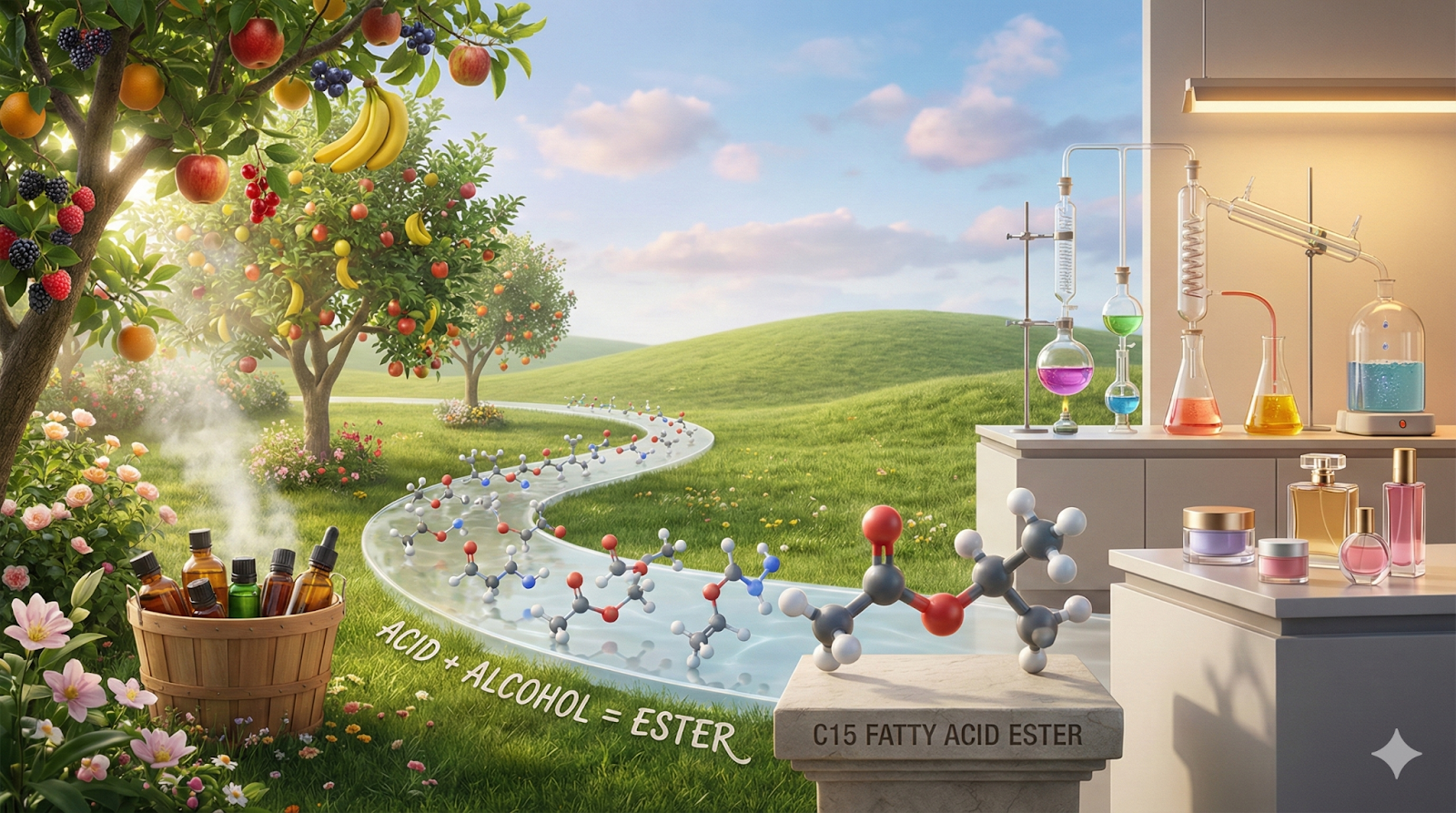
Esters are among the most versatile and widely used compounds in chemistry, appearing in nature and manufactured products alike. They are responsible for many of the scents, flavors, and textures encountered every day, from the aroma of fruit to the smooth consistency of certain cosmetic products.
At the molecular level, esters are formed when an acid reacts with an alcohol, creating a new compound with distinct characteristics. Their formation and structure determine much of their chemical behavior and usefulness.
In both nature and industry, fatty acids play a central role in ester creation, and certain specialized molecules (such as C15 fatty acid) serve as building blocks for producing biologically significant and commercially valuable esters.
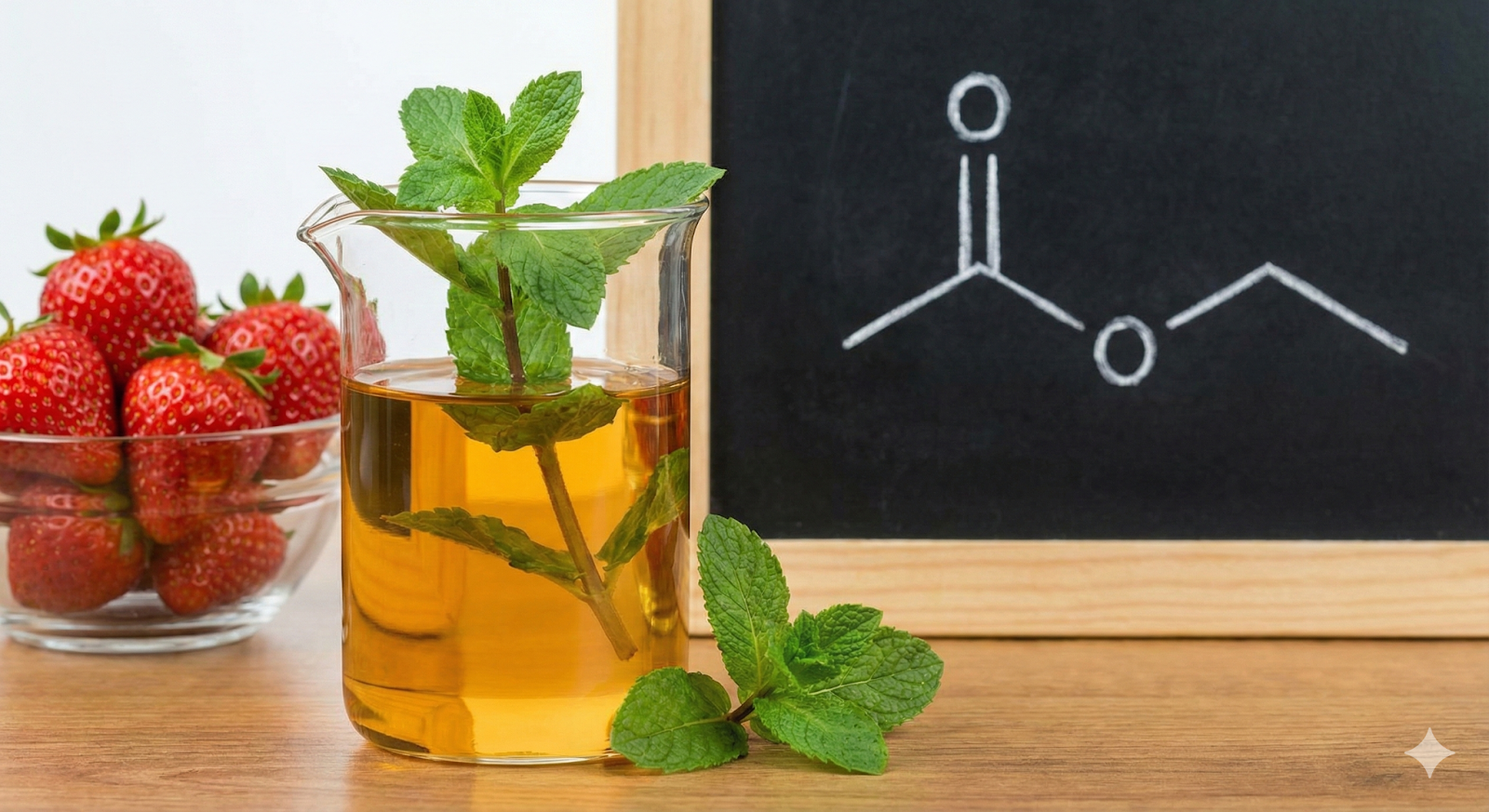
An ester is an organic compound derived from the chemical reaction between a carboxylic acid and an alcohol. This process, called esterification, produces both an ester and water. The defining feature of esters is their functional group, written as –COO–, which links the carbon of the acid to the oxygen of the alcohol.
This structure creates a balance of polar and nonpolar characteristics that influences how esters behave in different environments. Their unique structure determines their volatility, solubility, and even scent. Smaller esters tend to have distinct, often pleasant odors, while larger esters are more stable and less volatile.
This range of properties allows esters to be useful across a wide array of applications, from simple flavoring agents to essential components of industrial materials. Some esters occur naturally through biological processes, while others are produced synthetically for use in manufacturing and consumer goods.
Esters occur naturally in an impressive variety of settings, from ripe fruit to essential oils. The characteristic aromas of apples, bananas, pineapples, and strawberries can often be traced to specific esters present in their natural composition.
For instance, ethyl butanoate gives pineapples their recognizable scent, while isoamyl acetate contributes to the smell of bananas. These organic compounds are produced in plants through enzymatic processes that combine acids and alcohols generated during metabolism.
Beyond their sensory contributions, esters also serve important biological functions. In the animal kingdom, esters can act as pheromones, influencing communication and behavior. In plants, they often play roles in signaling and defense mechanisms. In human applications, naturally derived esters are used in foods and fragrances to replicate or enhance the smells and tastes found in nature.
The industrial synthesis of esters takes advantage of the same basic chemistry found in nature, but on a much larger and more controlled scale. Esterification and transesterification are the two most common production methods.
In esterification, a carboxylic acid reacts with an alcohol in the presence of a catalyst, usually an acid such as sulfuric acid, producing an ester and water. Transesterification, on the other hand, involves exchanging one alcohol group for another, allowing chemists to create specialized esters with targeted properties.
Industrial ester production requires careful control of reaction conditions. Temperature, pressure, and catalyst concentration all influence yield and purity. The resulting esters are refined and used in industries ranging from cosmetics and food manufacturing to energy and plastics.
There is also a growing emphasis on producing esters from renewable and biodegradable sources, such as vegetable oils or bio-based feedstocks. These sustainable methods help reduce environmental impact and dependence on fossil fuels, aligning with the broader goals of green chemistry.
The usefulness of esters lies in their wide range of physical and chemical properties. In consumer products, they are found in perfumes, lotions, and cleaning supplies, valued for their ability to carry and release scents effectively. Their light, pleasant fragrances make them ideal for personal care items and household products.
In the food industry, esters are used to replicate natural flavors and enhance taste profiles. Because many natural esters are safe for consumption, they are often preferred as flavor additives in candies, beverages, and baked goods. In industrial contexts, esters function as solvents, lubricants, and plasticizers. Their solubility in both organic and polar compounds allows them to dissolve a variety of substances, making them essential in paints, coatings, and adhesives.
Esters also play a crucial role in the development of biofuels. Biodiesel, for example, is composed mainly of fatty acid methyl esters (FAMEs), which are produced through the transesterification of plant oils or animal fats. These fuels burn more cleanly than petroleum-based alternatives, contributing to reduced emissions and greater sustainability. Through such applications, esters demonstrate their versatility and growing importance in the transition toward environmentally responsible technologies.
Esters represent a connection between the molecular world and everyday experiences. Found in food, fragrance, fuel, and even human biology, these compounds illustrate how chemistry underpins countless aspects of modern life.
From the scent of a fruit to the function of a biofuel engine, esters demonstrate how structure dictates behavior and how simple reactions can yield wide-ranging effects.