GALLOWAY TOWNSHIP - A new partnership between Stockton University, Rutgers University, New Jersey Economic Development Authority and marine technology company Ocean Power Technologies Inc. will bring new life to a historic ocean research program off the Jersey Shore.
The collaboration is expected to deliver significant economic and innovation benefits for New Jersey. By combining cutting-edge marine technology with academic research, the project will create opportunities for workforce training, attract investment in ocean science and position the state as a leader in sustainable marine innovation. A critical component will be providing infrastructure and support for startups and inventors driving the ocean economy, fostering an environment where innovators can develop solutions that advance marine sustainability and growth.
The first step in the effort will be the deployment of a high-tech research buoy in early 2026 about three miles off the coast of the Rutgers Marine Field Station in Tuckerton.
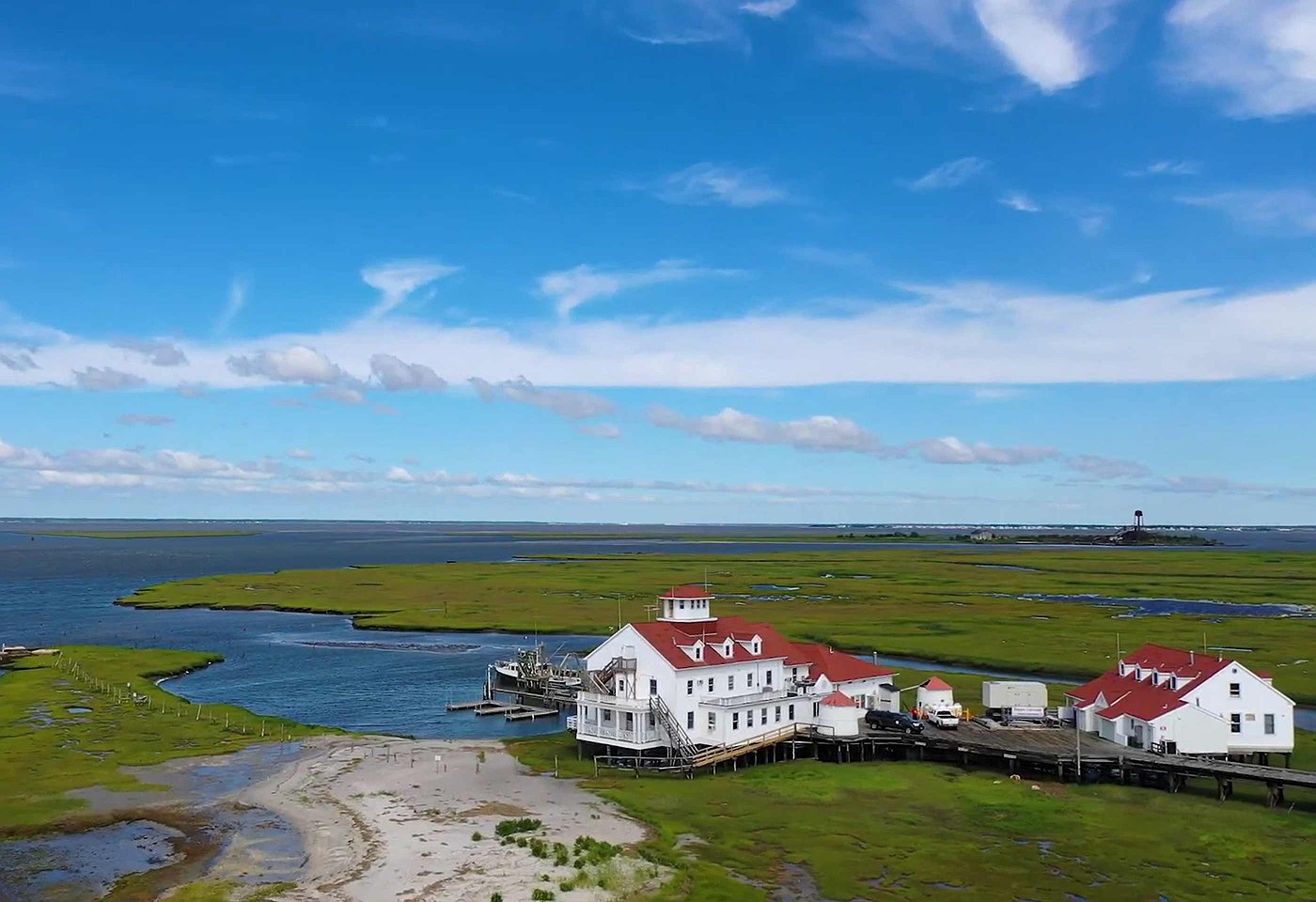 RUTGERS/The PowerBuoy will be deployed in early 2026 about three miles off the coast of the Rutgers Marine Field Station in Tuckerton.
The buoy, called the PowerBuoy®, will be anchored at the Long-Term Ecosystem observatory site. Once in place, it will begin collecting real-time data on ocean conditions and provide additional ports for scientists and educators to connect their own instruments.
Josh Kohut, a marine scientist and dean of research for the Rutgers School of Environmental and Biological Sciences, said the new technology will enable New Jersey-based coastal research and innovation.
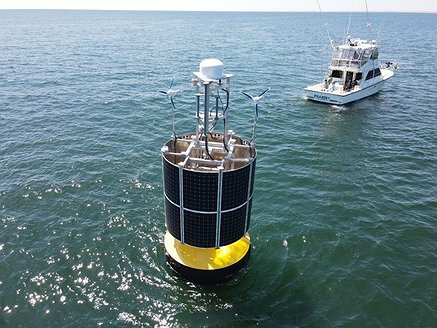 STOCKTON/The PowerBuoy, will be anchored at Rutgers’ Long-Term Ecosystem observatory site. Once in place, it will begin collecting real-time data on ocean conditions and provide additional ports for scientists and educators at Rutgers and Stockton to connect their own instruments.
“The PowerBuoy® is set to usher in a new era of marine and coastal research,” said Kohut, who also is the New Jersey Agricultural Experiment Station director of research. “And it will be a critical element in the rebirth of LEO.”
The LEO program, once known as LEO-15, was started in 1996 as a pioneering ocean observatory that delivered real-time data from its two cabled seafloor platforms, or nodes, and supported studies on storms, sediment transport, phytoplankton and fish ecology, and coastal dynamics. The number 15 referred to the fact that the research station was in waters 15 meters (about 50 feet) deep. It was among the first systems in the world to integrate cabled observatories with autonomous underwater vehicles for data collection.
As technology advanced in the mid-2000s, LEO-15 underwent upgrades, and its legacy continued through Rutgers’ leadership in ocean observation by integrating multiple technologies to tackle pressing challenges facing coastal communities. Deployment of this new monitoring system will revitalize the historic ocean site, ensuring it remains a cornerstone for innovation in coastal science.
Stockton University’s Marine Field Station is a critical partner in the revitalization effort. Steve Evert, director of the station, said the project will provide experiential learning and new insights into near-shore ocean conditions.
“The proximity of LEO to Stockton’s programs creates incredible opportunities for students,” Evert said. “They’ll gain experience with hydrographic surveys and real-world applications of marine technology - skills that translate directly into workforce readiness.”
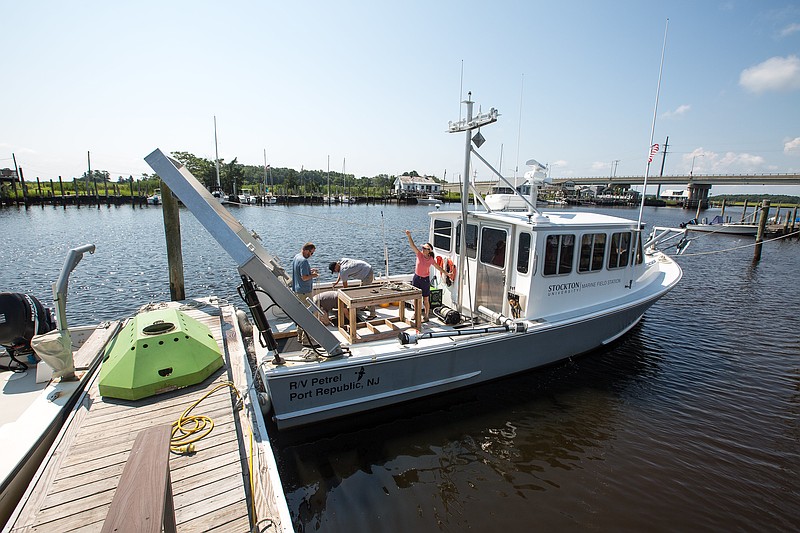
The Stockton Marine Field Station is located on a tributary of the Mullica River about 7 miles from Little Egg Inlet and a short drive from the university’s Galloway Township and Atlantic City campuses. The station houses offices, teaching and research spaces, and a fleet of research vessels, including the R/V Petrel, a near-shore oceanographic workboat that will be used to access the LEO site.
“Stockton brings deep expertise in coastal zone monitoring to this project, from hydrography to advanced vessel-mounted and field-deployable instruments,” Evert said. “Our focus at the LEO site is understanding estuary-to-coastal dynamics - how physical oceanography shapes the movement of larvae and sediments. These insights are critical for managing and sustaining healthy coastal ecosystems.”
Research at Stockton’s field station includes sediment transport, tidal dynamics, seafloor mapping, water quality monitoring and cultural resource investigations.
“Stockton’s capabilities will greatly complement Rutgers’ expertise in ocean observing technologies and help provide a complete picture of coastal ocean dynamics,” Kohut said.
Powered by solar and wind energy, the PowerBuoy® will serve as a floating data hub for scientists and educators. The PowerBuoy® system being deployed at the LEO site is a compact offshore platform, altogether approximately the height of a tall streetlight, with a small surface footprint designed to support long-duration ocean monitoring and research. Positioned above the waves, a small, round platform supports solar panels, communications equipment and a weather station, enabling continuous monitoring and data transmission.
“We’re proud to support the revitalization of the LEO observatory with our PowerBuoy® platform,” said Philipp Stratmann, president & CEO of Ocean Power Technologies. “This partnership highlights how government, academia, and industry can work together to strengthen ocean science and accelerate innovation.
Stratmann explained how building on that commitment will deliver tangible benefits for research and innovation.
“By providing persistent, renewable offshore power and real-time data capabilities, the PowerBuoy® will enable researchers, students, and emerging blue-tech companies to develop and test new solutions that advance coastal resilience and the ocean economy,” he said.
Both Rutgers’ and Stockton’s marine field stations will serve as launch points for PowerBuoy®.
The Rutgers facility is in the Mullica River-Great Bay estuary, one of the most pristine estuaries on the East Coast. Researchers there study fish ecology, coastal impacts and how storms affect the environment. The buoy project will strengthen these efforts by adding continuous offshore data to complement long-term estuary observations, creating a more complete picture of coastal dynamics.