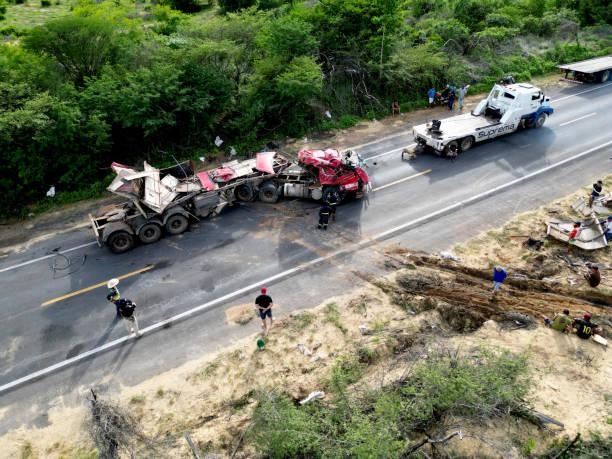
An oversized load is basically anything a truck carries that’s bigger or heavier than the usual legal limits. Big construction equipment, prefabricated houses, huge bridge beams, or even wind turbine blades.
These loads need special permits to be on the road. They’re dangerous because if something shifts or the driver miscalculates, it can hit other cars or even flip over.
After an oversize load truck accident, it’s important to know that the clock starts ticking from the moment the accident happens. But the thing is, lots of people don’t realize how fast that clock moves until it’s almost too late.
You’ve got injuries to deal with, insurance companies calling, medical bills piling up, and maybe you can’t even think straight.
By the time you look at the calendar, months could have passed. And once the time runs out, the law won’t let you file anymore. It’s like the door just slams shut.
Most states will give you a two-year window, starting from the day the accident happened, to file a claim. But then, this window can be shorter or longer depending on where you are and the type of claim.
In Florida, for example, you usually have two years from the date of the crash. Wrongful death claims also follow two years from the date of death. Property damage might give you more time, usually four years.
If a government vehicle is involved, sometimes you have only six months or a year. If you’re a minor, the clock doesn’t start until you turn 18. If you’re seriously injured and can’t handle legal matters, the clock may pause until you recover.
And if the driver hides or leaves the state, sometimes the court can pause the clock, too. But these pauses are rare and tricky to prove.
Every state is different. Some give you one year, some two, some four. That’s why talking to a lawyer is smart. They know the rules for your state and can make sure you don’t miss a deadline.
California and Nevada have specific rules for oversize loads, including travel permits, height limits, weight limits, and travel restrictions. Crossing state lines triggers federal rules. Knowing all this helps make sure your claim is filed correctly.
Even if the law says you have a couple of years, waiting isn’t smart. Evidence disappears, witness memories fade, debris is cleared from the road. Black box data from the truck can be lost. Insurance companies start building their defense early. Waiting too long can make your case weaker.
That’s why lawyers always tell people to start fast, even if you’re still healing. You want to gather evidence while it’s fresh. You want witnesses to remember what happened. You don’t want to rely on exceptions or tolling. It’s safer to move quickly.
Sometimes the law pauses the deadline. This is called tolling. It happens if the injured person is a minor, incapacitated, or the at-fault driver is hiding.
But it’s not automatic. You have to prove it, and courts watch closely to see that you do. So you can’t just sit around and hope the clock stops. Start early anyway.
● The statute of limitations usually lasts two or three years, depending on the state where the accident happened.
● If the truck were a government vehicle, or if you’re a minor, the time changes.
● Evidence disappears fast, so start your claim as soon as you can.
● Tolling can pause the clock, but it’s rare and not guaranteed.
● If you’re working with a lawyer, you’re less likely to miss the filing deadline.