Coastal real estate has always come with a mix of emotion and math. Ocean views, walkability, and community identity sit alongside insurance premiums, maintenance costs, and long holding periods. Today, that balance feels more delicate. Climate risk is no longer abstract. Migration patterns are shifting. Remote work has altered where people choose to live, and insurance markets are rewriting the rules.
For homeowners and investors along the shore, the question isn’t whether coastal property still holds value. It’s how that value is formed, tested, and preserved over time.
This article breaks down the forces shaping long-term property values in shore communities, starting with broad market signals and narrowing to what they mean at the local level. The goal isn’t speculation. It’s clarity.
Coastal housing markets are undergoing a recalibration driven by risk awareness and data availability. Buyers, lenders, and insurers now have access to granular projections that didn’t meaningfully factor into pricing decisions a decade ago.
That shift matters.
According to the National Bureau of Economic Research, housing transaction volume in the most sea-level-rise-exposed U.S. census tracts was 16%–20% lower than in less-exposed tracts between 2013 and 2018. By 2020, prices in those same markets were 5%–10% below trend compared to similar, lower-risk areas, as detailed in the NBER Digest on residential property markets and exposure to rising sea level.
The timing is telling. The divergence began around 2013, when climate risk became a regular part of public discourse and underwriting conversations. Demand didn’t disappear. It became selective.
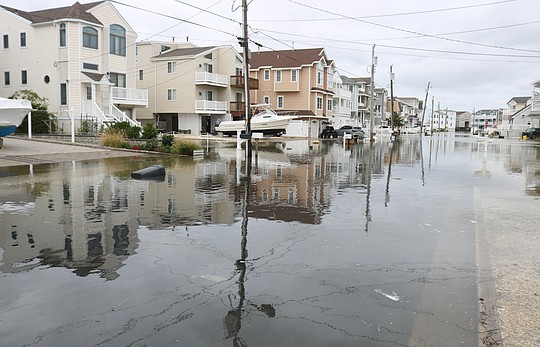
Sea level rise is no longer treated as a distant concern that only affects future owners. Markets are pricing long-horizon risk today.
Research published in the Journal of Financial Economics found that homes exposed to sea level rise sell for roughly 7% less than otherwise comparable properties. Even homes not expected to flood until late in the century showed an average 4% price discount, signaling that buyers factor long-term exposure into current offers. The study, Disaster on the Horizon: The Price Effect of Sea Level Rise, is available via ScienceDirect.
The Federal Reserve Bank of Richmond reinforces this point. In its 2025 Economic Brief on sea level rise and effects on house prices, researchers estimate that 2.8 million single-family homes fall within the 0–10 foot sea level rise risk range. When projected inundation data is paired with actual sales, homes with higher exposure consistently sell at measurable discounts, even after adjusting for size, age, and location.
That’s not panic pricing. It’s adjustment.
Not all coastal properties are affected equally. Natural and built protections are becoming value differentiators.
A 2025 NBER working paper, Financial Value of Nature: Coastal Housing Markets, Mangroves, and Climate Resilience, analyzed property-level transaction data from Zillow across Florida coastal counties. The findings were concrete. Homes near mangroves were up to 7 percentage points less likely to experience a value drop of 25% or more after major hurricanes. The paper is accessible via SSRN.
For a $1 million home, that protection translated into roughly $20,000–$60,000 in preserved value after severe storm events.
This reframes resilience planning. It’s not just about environmental stewardship or infrastructure budgets. It’s about how well a community’s physical features help protect homeowner equity over decades.
Insurance used to be a closing line item. Now it’s a gating factor.
Premium increases, coverage restrictions, and carrier exits in coastal states have altered affordability calculations. Buyers aren’t only asking what a home costs today. They’re asking what it will cost to hold.
Higher insurance expenses can:
● Reduce purchasing power
● Narrow the buyer pool
● Lengthen listing times
● Increase price sensitivity during negotiations
This doesn’t mean values collapse across the board. It means volatility rises, particularly in submarkets with fewer mitigation measures or outdated building stock.
For sellers, this has created more variation in motivation. Platforms that track homeowner signals, such as a motivated seller lead platform, are often used by investors to identify areas where holding costs are pressuring owners to sell sooner rather than later.
The pandemic-era relocation wave hasn’t fully reversed. Remote and hybrid work models gave many households the option to choose lifestyle over proximity to an office.
Coastal towns benefited, but unevenly.
Markets with:
● Reliable broadband
● Healthcare access
● Year-round services
● Strong local governance
saw more durable demand than seasonal-only communities.
At the same time, some long-time residents relocated inland, driven by tax burdens, insurance increases, or rebuilding fatigue. The result is a churn effect that affects pricing stability more than headline averages suggest.
Remote work didn’t just shift demand. It altered how long buyers expect to stay.
Second homes became primary residences. Short-term plans became open-ended. That matters because longer holding periods make buyers more sensitive to future risk.
When someone plans to own for 20 or 30 years, projections from NOAA or the Federal Reserve aren’t academic. They’re personal.
This has led to:
● More scrutiny of elevation and flood maps
● Greater interest in resilient construction
● Higher premiums placed on neighborhoods with adaptation plans
Large investors aren’t exiting coastal markets wholesale. They’re adjusting.
The PwC and Urban Land Institute report, Emerging Trends in Real Estate: The Global Outlook for 2025, highlights how inflation, demographic shifts, and climate risk premiums are shaping capital flows across property sectors. While not limited to coastal assets, the report shows how long-term risk is being embedded into valuation models. The full report is available from PwC.
This trickles down. When institutional underwriting standards change, local financing conditions often follow.
One year can look strong. The next can stall.
That pattern is becoming familiar in shore communities where weather events, insurance announcements, or zoning debates quickly influence sentiment. Volatility doesn’t eliminate long-term appreciation, but it does change the path.
Historically, coastal property values benefited from scarcity. There’s only so much shoreline. That still holds. What’s different is how risk-adjusted returns are calculated.
No two coastal markets are alike.
Elevation, tidal patterns, local planning, and economic base all play a role. A barrier island with limited evacuation routes faces different pricing pressures than a mainland coastal town investing in drainage and natural buffers.
This is where localized analysis becomes necessary. National averages miss these nuances.
For homeowners:
● Value preservation increasingly depends on community-level planning
● Insurance literacy matters
● Long-term resale value is tied to resilience as much as aesthetics
For investors:
● Entry price isn’t the only variable
● Holding costs and exit liquidity deserve equal weight
● Micro-location analysis is no longer optional
Short sentences.
Because clarity matters.
Coastal real estate is not becoming obsolete. It’s becoming more selective.
Data from academic research, federal banks, and transaction records all point to the same conclusion. Markets are adjusting based on risk awareness, not fear. Demand remains, but it’s shaped by insurance costs, migration patterns, resilience features, and how communities respond to long-term environmental pressures.
For shore communities that invest in adaptation and communicate clearly with residents, long-term property values have a stronger foundation. For those that don’t, price volatility and buyer hesitation are likely to persist.
Coastal market trends are reshaping how long-term property values are formed, tested, and defended. Climate risk is now visible in pricing. Natural and built resilience show measurable financial benefits. Insurance costs influence both demand and motivation. Remote work has lengthened holding periods and sharpened buyer scrutiny.
The takeaway isn’t pessimism. It’s precision.
Understanding these forces helps homeowners, investors, and community stakeholders make decisions grounded in data rather than assumptions. Along the shore, value still exists. It just demands a clearer view of what lies ahead.