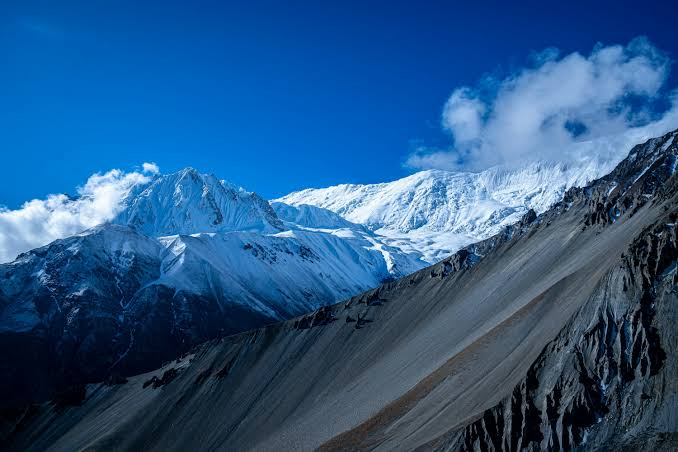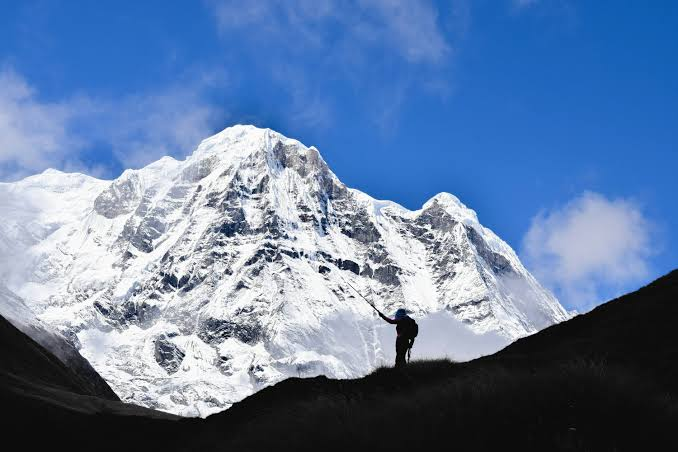

The Himalaya always calls. The mountains are so tall, the rivers so wild, and the villages so calm. Travelers come from every side of the world to see these great lands. Nepal is the heart of the Himalaya, where three mighty treks stand together—the Manaslu Circuit Trek, the Annapurna Circuit Trek, and the Annapurna Base Camp Trek. These three make the full circle of beauty, culture, and nature. They take you through snowy passes, deep valleys, and warm smiles of mountain people. This is the Complete Himalayan Tour, where every trail tells a story and every morning brings a view you never forget.
The Manaslu Circuit Trek is one of Nepal’s most stunning and less-crowded high-altitude adventures, circling the world’s eighth-highest peak, Mount Manaslu (8,163m). This trek blends natural beauty with deep cultural experiences, taking travelers through remote Himalayan villages, suspension bridges, dense forests, and breathtaking mountain passes. The journey usually begins in Soti Khola and ends in Besisahar, tracing the ancient salt-trading route along the Budhi Gandaki River. Trekkers pass through Tibetan-influenced villages like Sama Gaon and Samdo, where prayer flags flutter against dramatic snow peaks. The highlight is the crossing of the Larkya La Pass (5,160m), a challenging yet rewarding climb that offers panoramic views of Himalchuli, Cheo Himal, and Annapurna II. With its perfect mix of adventure, scenery, and cultural richness, the Manaslu Circuit is often called the “new Annapurna Circuit.” Restricted permits help preserve its pristine environment, ensuring a peaceful, authentic trekking experience. Ideal for seasoned trekkers seeking solitude and adventure, this trek remains one of Nepal’s best-kept secrets.
The trek starts from Soti Khola and goes through green hills, rice fields, and rivers. You walk beside the Budhi Gandaki River. It goes narrow between cliffs. There are wooden bridges and waterfalls everywhere. The trail passes villages like Machha Khola, Jagat, Namrung, Sama Gaon, and Samdo. Each village shows a different face of mountain life.
When you reach Sama Gaon, you can see Mount Manaslu so near. Many trekkers go on short hikes to Pungyen Gompa or Manaslu Base Camp for a view. After that, the trail climbs to Larkya La Pass (5,160m) – one of the highest and most dramatic passes in Nepal. On top, everything is snowy and windy. The mountain stands like a white wall around you. Then you descend down to Bhimtang and finally to Dharapani, where you join the Annapurna region.
The people in Manaslu are mainly of Gurung and Tibetan origin. You can see their old monasteries, prayer wheels, and colorful flags. They live simply, close to nature. Their food like dal bhat, noodles, and butter tea, warms your heart. It is not just a trek; it is meeting with the spirit of the Himalaya.
The Annapurna Circuit Trek is a classic Himalayan journey that loops around the magnificent Annapurna Massif, offering one of the most diverse trekking experiences in Nepal. Beginning in the lush lowlands of Besisahar, the trail gradually ascends through terraced farms, subtropical forests, and remote mountain villages before reaching the arid highlands of Manang and Mustang. The trek’s highlight is the challenging Thorong La Pass (5,416m) — the highest point of the circuit — which rewards trekkers with jaw-dropping views of Annapurna I, Dhaulagiri, and Manaslu peaks. Beyond the natural beauty, the trek offers deep cultural encounters with Gurung, Thakali, and Tibetan-influenced communities. The route also visits spiritual landmarks like Muktinath Temple, an important pilgrimage site for both Hindus and Buddhists. With its combination of cultural diversity, dramatic landscapes, and adventure, the Annapurna Circuit is considered one of the world’s greatest long-distance treks.
The trek usually starts from Besisahar or Ngadi, and then you move slowly up through villages like Chame, Pisang, Manang, Yak Kharka, and Thorong Phedi. The highest point is Thorong La Pass (5,416m) – a big challenge but so beautiful. When you stand on the pass, you see both the Annapurna Range and the Dhaulagiri Range shining together.
After crossing the pass, you go down to Muktinath, the holy temple for both Hindus and Buddhists. The prayer flags fly in the cold wind. Then the trail moved toward Jomsom and Kagbeni, the gateway to Mustang. Some people fly from Jomsom to Pokhara; others keep walking.
This trek shows so many different landscapes. In the lower part, there are rice terraces and waterfalls. Then pine forests and apple farms appear. Near Manang, land becomes dry and rocky like Tibet. After Thorong La, it feels like a desert. You pass through all weather, from warm to freezing.
The trail crosses many ethnic groups—Gurung, Thakali, Manangi, and Tibetan. Every village has a different look, a different taste of food, and a different way of talking. People are kind and help trekkers with a smile. You will see monasteries, mani walls, and prayer flags in every corner.
The Annapurna Base Camp Trek is a breathtaking Himalayan journey that leads directly into the heart of the Annapurna Sanctuary, surrounded by towering snow-capped peaks. Starting from Pokhara, the trail winds through picturesque Gurung and Magar villages, rhododendron forests, and terraced fields. The gradual ascent allows trekkers to enjoy diverse scenery, from subtropical valleys to alpine landscapes, before reaching the base of Mount Annapurna I (8,091m) — the world’s tenth-highest mountain. Standing at 4,130m, the base camp offers a 360-degree panorama of Annapurna South, Hiunchuli, Machhapuchhre (Fishtail), and Gangapurna, creating one of the most iconic mountain views in Nepal. The trek also provides insight into the local lifestyle and warm hospitality of Himalayan communities. Compared to longer and more remote routes, the ABC trek is moderate in difficulty, making it accessible to both beginners and experienced trekkers. With its rich mix of natural splendor, cultural charm, and close mountain encounters, the Annapurna Base Camp Trek remains one of Nepal’s most beloved trekking adventures.
The trek usually starts from Pokhara, the lovely lake city. Then the route goes to Nayapul, Ghandruk, Chhomrong, Bamboo, Deurali, and finally to Annapurna Base Camp (4,130m). On the way, trekkers pass through a green forest full of rhododendron, bamboo, and oak. Waterfalls splash from cliffs and birds sing everywhere.
At the base camp, you stand surrounded by mountains on every side. It feels like you stand in the middle of heaven. The sunrise from ABC is unforgettable. The snow turns gold, and the peaks look alive.
The Gurung and Magar people live around this region. They are known for their kindness and bravery. You can enjoy local food like thukpa, momo, or simple dal bhat. The teahouses are cozy and friendly.
This is flower season. Rhododendrons paint the hills red and pink. The sky is clear, and the mountain view is bright. Best time for photography.
This is the most popular season. The air is fresh, the sky is blue, and the weather is stable. Villages celebrate festivals like Dashain and Tihar.
Cold and snow, especially in passes. But lower regions are peaceful and clear.
Rainy and landslide risk. But Manaslu and parts of Upper Annapurna stay drier and are still good for real adventure trekkers.
Many trekkers now make a big plan—do the Manaslu Circuit, then move to the Annapurna Circuit, then end at Annapurna Base Camp. It can take around 45 to 50 days, depending on rest days.
Route can be like this:
This makes a full Himalayan circle experience, with a big mix of culture, climate, and people.
These treks are not easy. I need good stamina, training before trekking, and mental focus. Walking 5–8 hours per day, climbing, and crossing high passes need endurance.
For Manaslu, trekkers need:
For the Annapurna Circuit and ABC Trek, I need only ACAP and TIMS cards.
For Manaslu, a guide is compulsory because of the restricted zone. For Annapurna routes, the guide is not compulsory but very helpful. Porter helps carry bags and makes the trek easy.
All three treks have tea houses—small lodges with simple rooms and hot meals. You can get dal bhat, noodles, fried rice, tea, and soup. In higher areas, food becomes expensive due to transport costs.
From the green rice terraces of lower villages to the frozen passes of Larkya La and Thorong La, nature keeps changing. Every turn brings a new valley, a new color, and a new sound of a river or a yak bell.
All along these treks, you see culture alive. From Tamang in lower hills to Thakali in Mustang and Gurung in Annapurna, every group has its own dress, festival, and story. Prayer flags, spinning wheels, and chortens remind us of spiritual peace.
The Annapurna region is full of waterfalls and rivers. Gangapurna Lake, Marshyangdi River, and deep jungle give freshness. The Manaslu side has the Budhi Gandaki River, a narrow gorge, and old bridges.
When you walk on the Manaslu trail, you feel far from the world. You hear wind and rivers only. When you walk on the Annapurna Circuit, you feel like you are crossing all worlds in one trek—jungle, desert, snow, and temples. When you reach Annapurna Base Camp, you stand in a circle of gods.
Every trek gives something different. Manaslu gives peace. Annapurna Circuit gives adventure. Annapurna Base Camp gives emotion. Together, they make The Complete Himalayan Tour, where the body walks but the soul flies.
All treks have teahouses. Simple but warm. Rooms with twin beds, blankets, and sometimes Wi-Fi. Food is basic but tasty.
Common meals: dal bhat, noodles, fried rice, momo, soup, omelet, tea, and coffee. In Manaslu, food choices are smaller but more authentic. In the Annapurna Circuit, there are more varieties like pizza or pasta. In ABC, cozy teahouses with good energy.
You may see blue sheep, yaks, Himalayan tahr, and maybe snow leopards if lucky. Birds like the Danphe (Nepal’s national bird) fly near forests. Rhododendron forests are bright and colorful. Rivers like Marsyangdi and Budhi Gandaki sing all along the way.
You meet monks chanting in the monastery, farmers drying barley, and children waving “Namaste.” In Muktinath, you see both Hindu and Buddhist pilgrims. In Sama Gaon, you hear Tibetan prayer bells. In Ghandruk, women wear traditional dresses and always smile. This is real Nepal—mixed with love, religion, and simplicity.
After finishing all three treks, your heart fills with memory. You realize the Himalaya is not just mountains—it is an emotion, a lesson, and a home. You have walked with yaks, crossed frozen passes, and shared tea with strangers who became friends. You feel strong, humble, and full of peace.
The Complete Himalayan Tour—Manaslu Circuit Trek, Annapurna Circuit Trek, and Annapurna Base Camp Trek—is like reading three books of the same story. Each one is different, but together they complete the soul of Himalaya.
Nepal’s Himalaya gives something no other place can give. These three treks show every face of the mountain—the wild, the grand, and the gentle. From Manaslu’s silence to Annapurna’s diversity and the deep heart of ABC, all blend like one song.
So, pack your bag, lace your boots, and walk where the sky touches the earth. The mountain is waiting. The journey starts with one step, but the memory stays forever.
This is the Complete Himalayan Tour—a walk through dream, faith, and endless beauty.