Forensic science thrives on precision, but few disciplines demand as much exacting detail - or as much interpretive skill - as shooting reconstruction. It sits at the intersection of physics, mathematics, material science, and human behavior. Every trajectory line, bullet path, or impact pattern tells part of a larger story, but it takes a trained mind to weave those fragments into a coherent truth. That’s what makes the field both intellectually rigorous and deeply consequential.
Moments in crime scene investigation happen in a split second. However, the reconstructionist's task is to use the quantifiable, repeatable logic of science to reverse-engineer those brief seconds, not by hunches or intuition. Experts in physical forensics like Luke Guinee, whose knowledge includes fingerprint recognition, bloodstain pattern analysis, and shooting reconstruction, treat every scene as a three-dimensional puzzle that is controlled by data rather than conjecture.
Every shooting scene is an exercise in geometry. Trajectories are mapped, distances calculated, and surfaces analyzed to determine the origin, direction, and sequence of fire. But the science doesn’t end with angles - it begins with understanding how variables interact.
There are other factors outside the weapon or ammunition that affect the bullet's behavior. The final trajectory of a projectile is influenced by a number of factors, including air resistance, ricochet potential, surface composition, and even environmental circumstances. These need to be assessed by a reconstructionist with the accuracy of an engineer and the prudence of a scientist in their interpretation.
At its core, shooting reconstruction is about validating hypotheses against measurable data. Laser trajectory mapping, stringing methods, and 3D scanning now allow analysts to visualize scenes with unprecedented accuracy. However, the quality of the technology depends on the analyst's ability to distinguish between important details and background noise.
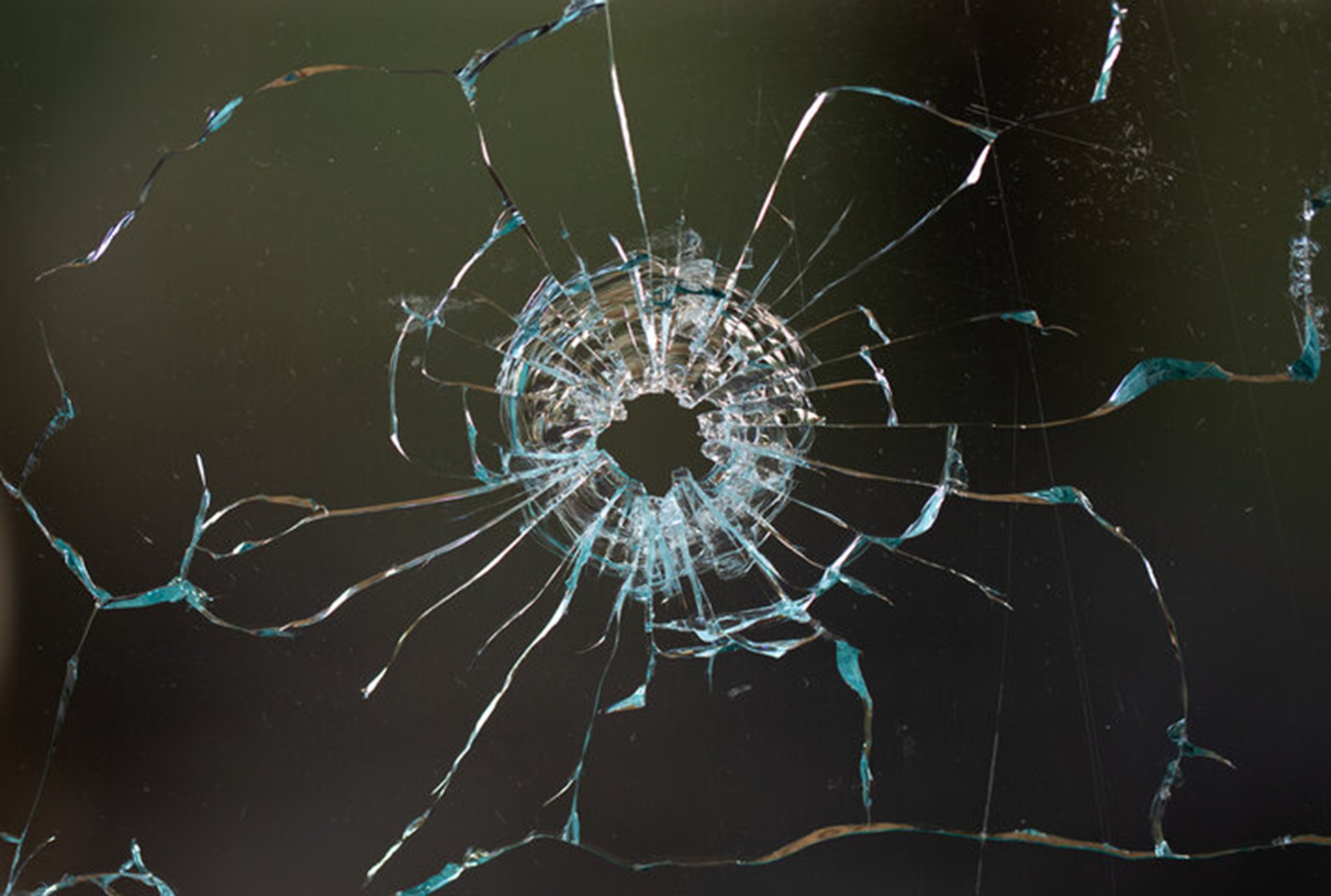
Great forensic reconstruction is distinguished by the discipline of thinking rather than the sophistication of the tools. If analyzed separately, dozens of data points from a well-documented gunshot scene, such as bullet holes, shell casings, glass cracks, and impact residues, could all point to various conclusions.
The true challenge lies in synthesizing them into one defensible narrative. Analysts like Luke Guinee apply not just procedural rigor but also strategic insight, approaching each finding as part of a dynamic chain of cause and effect. Was the shooter stationary or in motion? Did the victim move during the exchange? Were shots fired through an obstruction, or did they deflect upon contact? Every answer refines the sequence, and every uncertainty demands humility before science.
Professional credibility is defined by this harmony between certainty and skepticism. Not only must reconstructionists present facts, but they must also explain them exactly, impartially, and with clarity in courtrooms where expert testimony frequently determines whether justice is served or denied.
Without a question, technology has increased the field's potential. Forensic modeling has become more accurate in the actual world because to 3D laser scanning, photogrammetry, and ballistic simulation software. Ammunition types and firing sequences may now be identified with exceptional specificity thanks to advanced chemical analysis of residues.
Yet, the essence of shooting reconstruction remains unchanged - to transform physical traces into a logical reconstruction of events. The introduction of technology enhances verification, but it cannot replace human discernment. Algorithms process data; they don’t interpret context. A trained analyst knows when a pattern represents a fact - and when it represents coincidence.
There are few professions with more moral significance. A single mistake in interpretation can change the course of a lawsuit or even a person's life. The fact that their findings affect justice and accountability is a continual reminder to forensic reconstructionists. It's a science that requires both confidence and self-control.
Because of this, the most successful professionals have a neutral ethic. They aim to show what the evidence can and cannot support, not to establish guilt or innocence. This characteristic frequently distinguishes a true forensic scientist from a technician.
Precision, patience, and intellectual honesty form the foundation of this discipline. Those who practice it with care, like Luke Guinee, know that the ultimate goal is not to dramatize what happened but to reconstruct reality as faithfully as possible.
Shooting reconstruction serves as a reminder that, in a day when technology promises quick fixes and rapid outcomes, the truth frequently comes to light gradually through layers of methodical observation. Every mark, perspective, and residue gives the narrative a voice. It is the analyst's responsibility to listen, not to dictate.
Science, at its most powerful, doesn’t rush to conclusions. It measures, tests, and respects uncertainty. In the high-stakes world of forensic reconstruction, that discipline is what turns evidence into understanding, and understanding into justice.