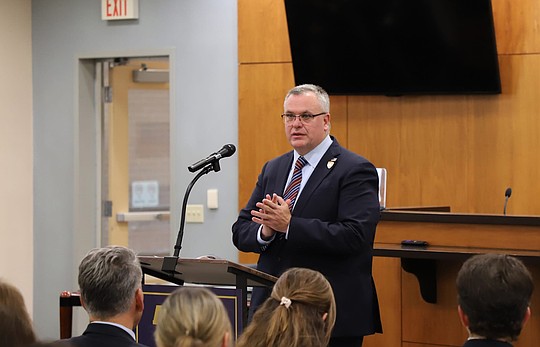

Georgia’s first House Study Committee on Gaming meeting in Watkinsville didn’t feel like just another legislative hearing. Legislators, lobbyists, and pastors packed the Oconee County Administrative Building to debate whether Georgia should join most other states in legalizing casinos, sports betting, and horse racing. Committee member Ron Stephens, who has championed gambling for decades, quipped that he’s been talking about this issue since his hair was black.
The reason they’re back at it is a proposed constitutional amendment that survived the last session. It would put gambling on the ballot and dedicate the proceeds to education and other public services.
The plan has rekindled interest from developers who say Georgia is missing out. At Monday’s hearing, a racetrack executive pitched a “destination resort” near Hampton that could employ roughly 3,000 construction workers and as many as 3,000 permanent staff. Supporters claim that similar projects would keep Atlanta‑area commuters working closer to home and create new revenue streams for rural counties. Future hearings will take up online sports betting and horse racing, but the discussion quickly moved beyond job numbers.
Gaming backers argue that the case for Georgia lies in cold numbers and in how people already wager. Lacking a local casino, many residents bet offshore and load cash into play via voucher services like CashToCode. For example, directories of cash to code casinos show how simple these platforms make it for players to fund an account overseas. Those out-of-state transactions raise a core question for lawmakers: Will Georgia continue to watch its money flow elsewhere or bring casinos under a regulatory umbrella and channel the proceeds to scholarships and oversight?
Commercial gaming revenue nationally hit a high of $60 billion in 2022, and since then, sports betting is now legal in 33 states and Washington, D.C. For further context, in the past five years, the annual U.S. commercial gaming revenue record has been broken twice, which shows how much money is already flowing through legal gambling elsewhere.
Polls also show Republican voters want a chance to decide, and U.S. sports betting revenue jumped about 72.7% last year to $7.5 billion. Backers say a regulated local market would capture those dollars at home and direct them to scholarships. The lottery-funded HOPE Scholarship has awarded more than $15 billion to 2.1 million students since 1993 and now distributes about $841 million annually, and proponents see gaming as an extension of that model.
Lawmakers noted that unregulated wagering does happen in a few instances. Analysts estimate Americans bet about $500 billion illegally each year, and Georgia sees some of that through fantasy contests, office pools, and quick trips across state lines. Committee chair Marcus Wiedower said he wants guardrails around behaviour that already exists rather than slot machines on every corner, while Rep.
Yasmin Neal argued that gaming proceeds could replace lost federal dollars and support rural hospitals and schools. Plans under consideration would limit casinos, require hotels and entertainment venues, and dedicate licensing fees to oversight and treatment programs.
Critics said projections could overlook social costs, and Paul Smith of the conservative group, Citizen Impact, told legislators that an expanded industry might make it harder for community voices to be heard.
Opponents argued that Georgia would become dependent on and at times an unpredictable industry, and that some might not play by the advertising rules for betting apps, and ads would flood screens and college campuses.
Even supporters concede the details are messy; advocates noted some service‑sector jobs might offer lower pay or fewer benefits, clergy discussed gambling losses in their communities and lawmakers debated whether to select sites locally or statewide and how to oversee fast‑evolving sports betting apps. A report noting that slot machines and table games still account for most gaming revenue prompted some to question whether sports betting alone can sustain the program.
For instance, a recently published report on federal grant cancellations and university lobbying shed further light on the matter. When the committee adjourned, no one had changed their mind. Members will travel the state and must deliver recommendations by 1 December. Any ballot measure would still push casino or sportsbook openings years into the future.
Over the coming months, the debate will hinge on whether scholarships and jobs outweigh potential social harm, and whether Georgia follows its neighbours or keeps sending money across borders.
Attendees recognised there’s still a long road ahead as the committee plans stops in Macon, Savannah and north Georgia; they’ll hear from mayors, hospital leaders and maybe even high schoolers, and you figure it out as you go because that’s just how Georgia politics works, the back and forth might feel never ending, but that’s just how it is here.