Republished with permission from New Jersey Monitor
"My unit on a New Jersey prison’s west side is a hard place, both literally and figuratively," Kory McClary wrote in an essay last year about his time in New Jersey State Prison.
The Atlantic City native has been there since 2013, after he was convicted of killing two teenagers in a 2008 drive-by.
"I maintain I’m innocent," McClary wrote. "I believe the guilty verdict and my 130-year sentence is a result of me not telling the authorities who actually committed the crime."
The essay gave insight into the ongoing issues at the State Prison in Trenton, as it closes in on its second century.
"The unit was built in 1836, and it shows," McClary wrote in the essay for the Prison Journalism project. "The dense metal bars — no solid metal doors, like you find in more recently constructed units — form cages for rotting men. In my cell, I can feel the metal rack through the worn-out mat that I sleep on. Every day I wake up with a crick in my neck."
 Kory McClary (N.J. Department of Corrections)
More than a century ago, New Jersey corrections officials and advocates called on lawmakers to demolish and replace the state prison in Trenton, declaring the facility outdated, inadequate, and “wholly unsuited for the present needs either of the inmates or of the officers.”
Lawmakers did not act on that 1918 call to action or several subsequent pleas for change, and today, more than 1,300 people are incarcerated in New Jersey State Prison — considered the oldest operating prison in America, according to a new watchdog report.
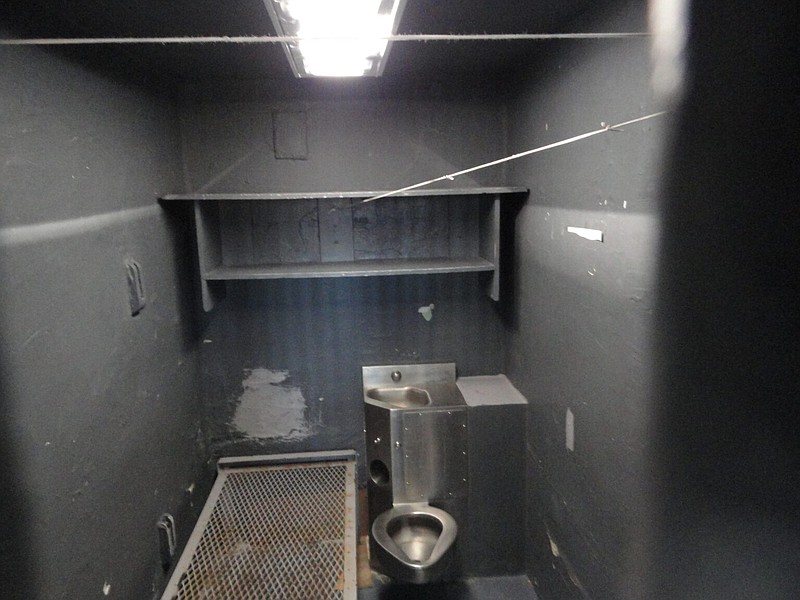
Now the state corrections ombudsperson’s office has joined the chorus urging lawmakers to raze and rebuild the maximum-security lockup’s oldest wings, where people have spent decades in closet-sized cells with no hot water, no privacy, no recreation space or day room, and such sweltering temperatures in the summer that many sleep on the floor to stay cool.
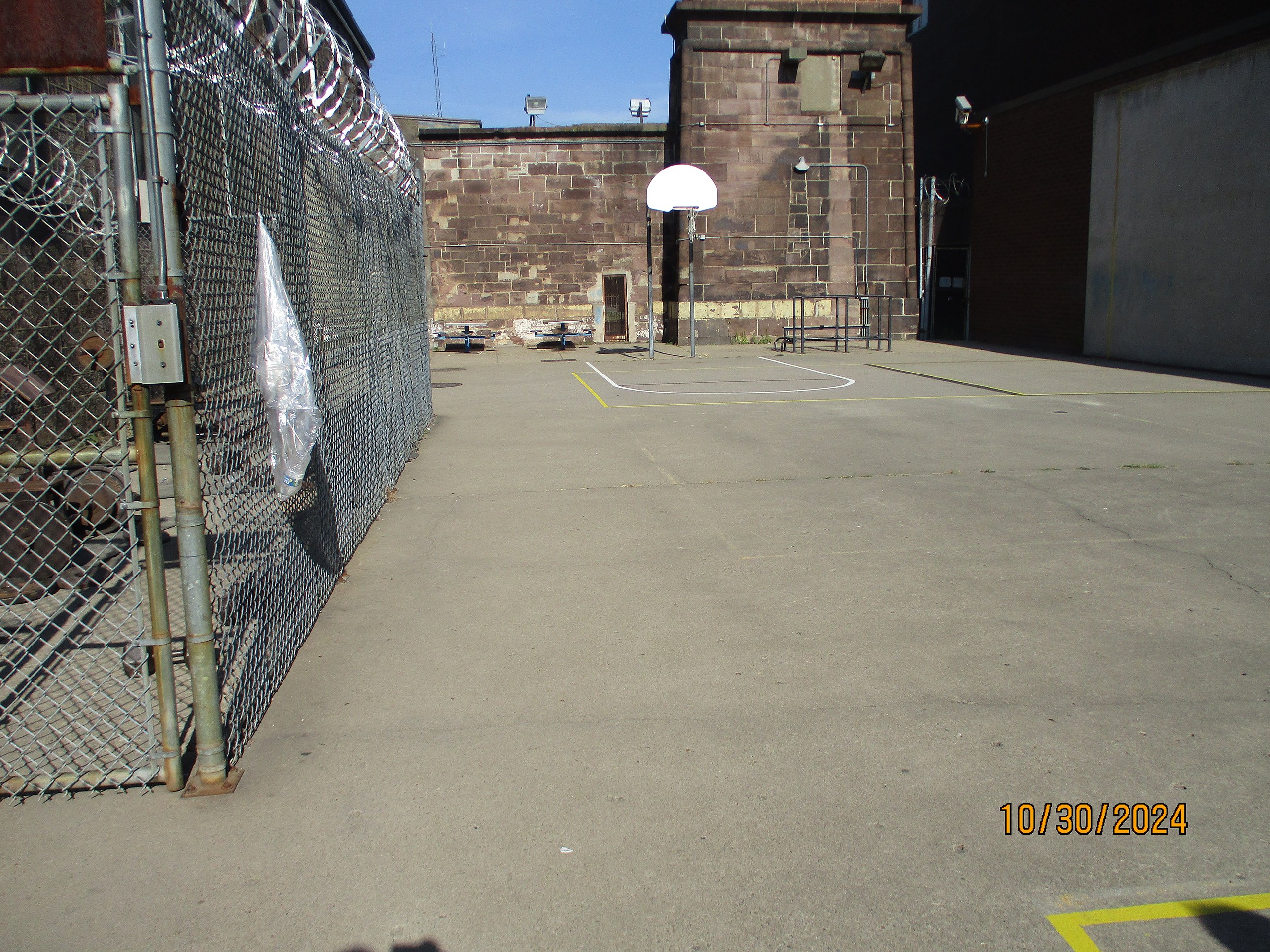
“Hundreds of people are living in the prison’s West Compound in cells small enough that they can extend their arms and touch both side-walls and the ceiling,” state Ombudsperson Terry Schuster wrote in a report released Tuesday. “The buildings in the West Compound were constructed nearly 200 years ago, and have been called antiquated and inhumane by New Jersey correctional leaders, policymakers, and subject matter experts for at least the last 100 years.”
Department spokespeople did not respond to a request for comment.
While two of the prison’s three compounds were built in the 1980s with modern temperature control and housing unit design, its west compound has seven housing units that were built between 1836 and 1905, according to the report. The compound’s smallest cells measure just four feet by seven feet, and its oldest housing units were designed for solitary confinement, the report says.
More than 600 people live there, with over a third of its general-population residents serving life sentences, according to the report.
Living there is “like living in an abandoned building,” McClary wrote.
“I'm in a single cell about the size of a small walk-in closet — half the size of the cells in the south compound. With my books and coolers strewn around the cell, I only get two steps into my pacing before I have to turn around. The windows rattle, creak and swing back and forth when the wind blows. Guys holler all day.”
After prison riots in 1952, a committee held public hearings and issued a report to then-Gov. Alfred Driscoll that denounced the prison as “one of the most archaic in the United States” and exhorted lawmakers to build a new facility rather than taking “piecemeal and temporary measures to stave off the ravages of old age,” the report says.
It was slated for demolition at least twice before. Its end was so expected in the 1980s that preservationists photographed the building for historic building archives, the report says. And in 2011, the Department of Corrections sought state funds to demolish and rebuild it, citing class-action litigation over confinement conditions and warning that inaction would compromise security and force officials “to maintain the old systems at extremely high costs.”
“Maintaining the West Compound of the prison has required immense effort on the part of the facility’s staff and leadership over the last century-plus, and has cost New Jersey taxpayers hundreds of millions of dollars,” Schuster wrote.
Schuster urged lawmakers and department officials to prioritize and fund the demolition and reconstruction of the west compound. Past estimates for such work have ranged from $200 million to $400 million, he added. Absent that, officials should relocate west compound residents to safer, more modern housing units, Schuster recommended.
Lawmakers also should adopt standards for the size of single- and double-occupancy cells to ensure prison conditions are humane, Schuster said. He noted that the state’s administrative code regulates the size of county jail cells, requiring a minimum of 35 square feet of free floor space in a single-occupancy cell, yet has no minimum standard for the size of state prison cells.
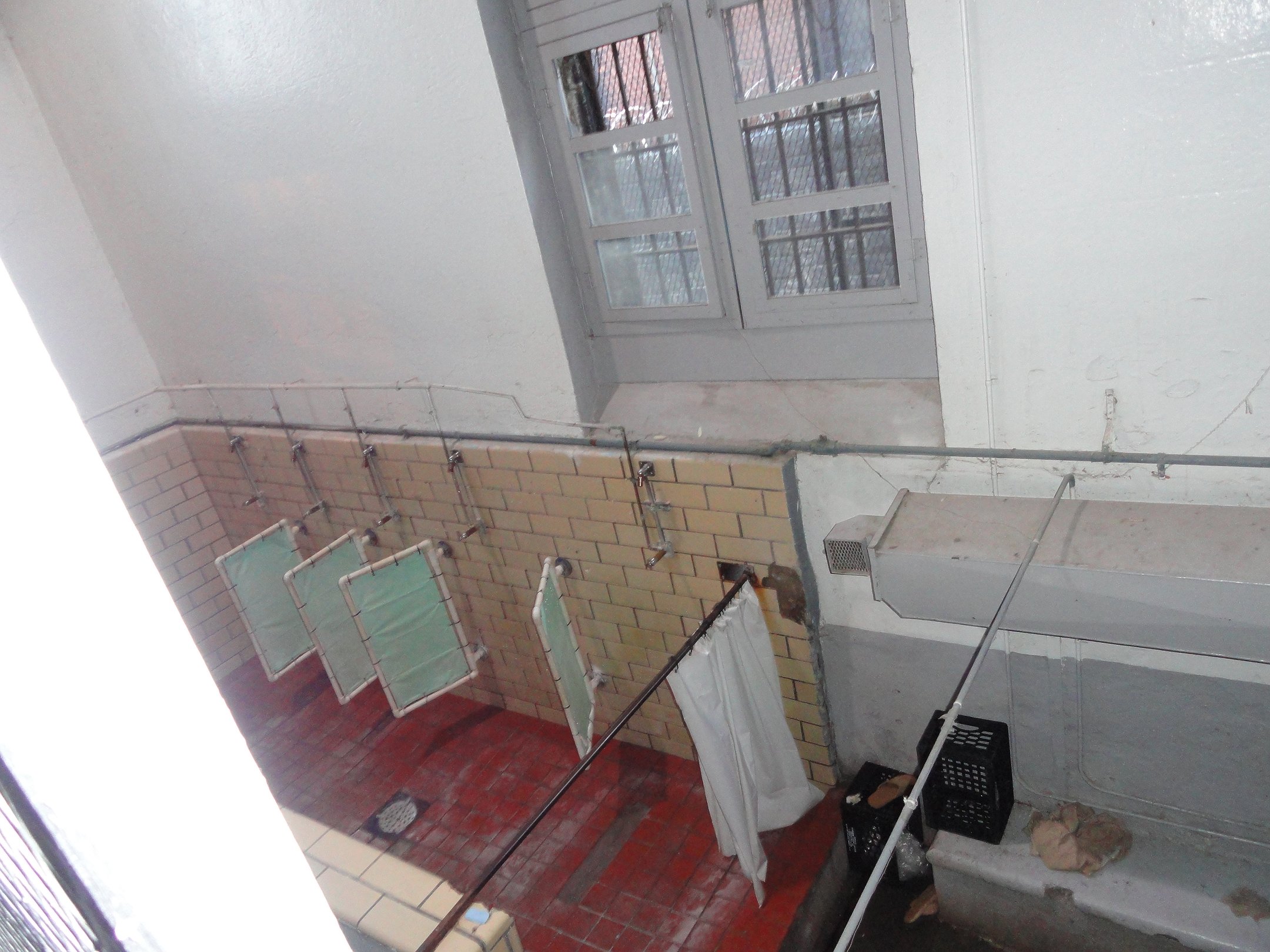
He also recommended that department officials create more privacy in the compound’s showers and provide residents with free, standard-size bath towels, instead of the smaller towels they now get. Prison staff told Schuster’s investigators that many residents bathe in their underwear for privacy in a washroom that has just small dividers between showering spaces.
Corrections officials have closed a number of state prisons in recent years, including Jones Farm in Ewing and Southern State Correctional Facility in Delmont. Officials also plan to close the East Jersey State Prison in Woodbridge and the Edna Mahan Correctional Facility for Women in Clinton.
Like New Jersey State Prison’s west compound, though, the state has stumbled and stalled in its efforts to close other abhorred lockups, including two prisons for juveniles.