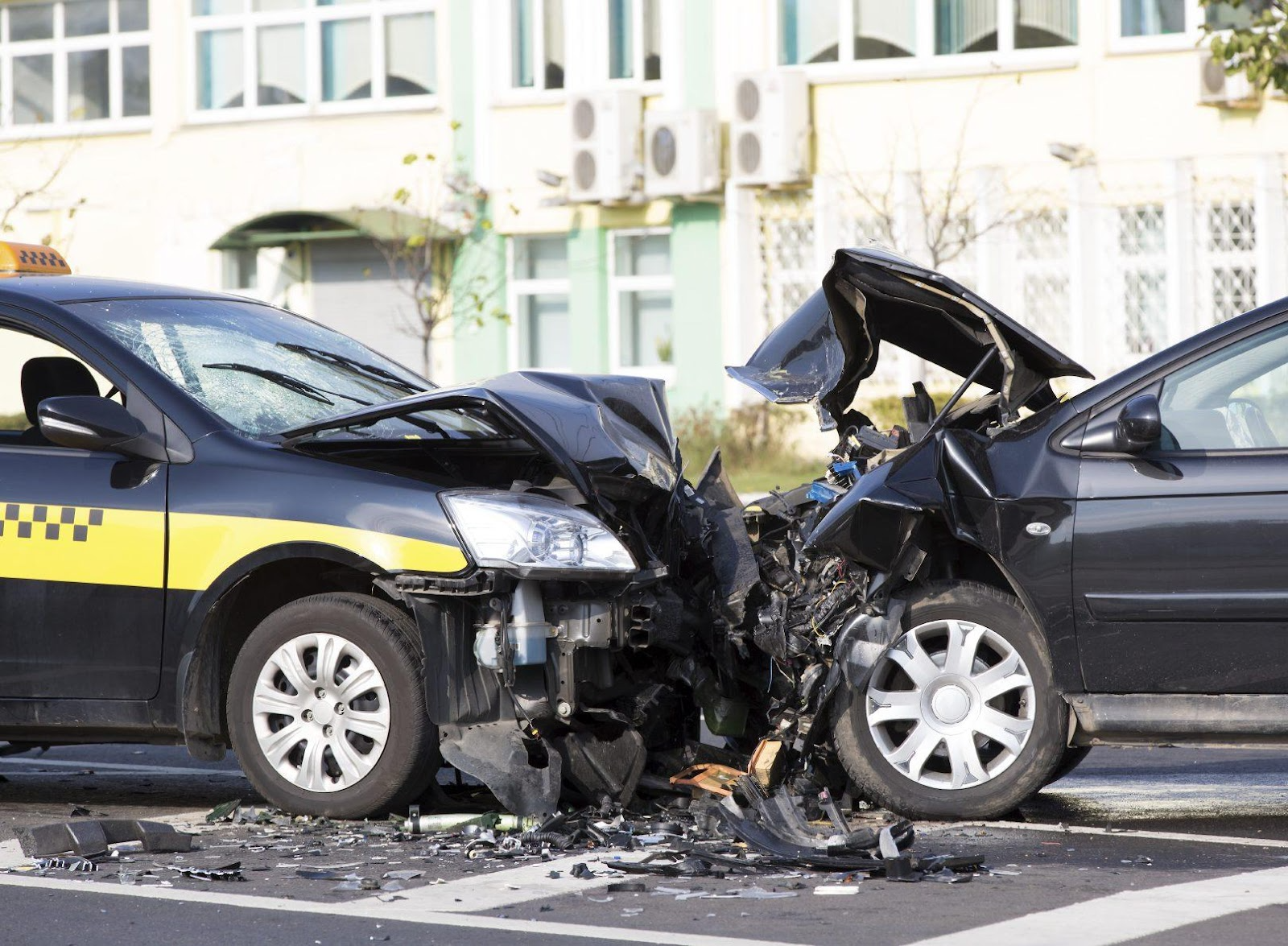
Head-on collisions rank among the most severe types of traffic accidents, which end in significant injuries and extensive vehicle damage. Drivers involved in these crashes face complex challenges when assigning blame, because the circumstances unfold quickly, evidence can be scattered, and eyewitness accounts may conflict.
Determining responsibility requires careful attention to vehicle positions, skid marks, and traffic signals, as well as any available surveillance footage. In cities with heavy traffic congestion, drivers must act decisively and document the scene thoroughly after an accident to protect their interests and clarify fault.
The pressure and confusion in these moments make it challenging to ascertain a transparent chain of events, highlighting why proving liability in head-on crashes challenges even experienced investigators.
Head-on collisions present investigators with multiple, contradictory perspectives that make assigning fault challenging:
These factors illustrate why proving fault in head-on accidents requires meticulous analysis rather than relying solely on verbal accounts.
Vehicles involved in head-on collisions sustain extensive damage, which can destroy critical evidence such as skid marks, vehicle deformation patterns, and dashcam footage. Road conditions, lighting, and weather further affect the visibility of important indicators.
Investigators must act quickly to gather evidence before it fades or degrades, making timing essential to proving liability.
Determining fault requires analyzing complex accident dynamics, including vehicle speed, angle of impact, and braking patterns. Small differences in measurement or calculation can lead to vastly different conclusions.
Experts must reconstruct the accident scene using physics principles and software models, yet discrepancies may arise due to incomplete data or assumptions about driver behavior.
Head-on collisions sometimes involve multiple drivers or contributing factors, such as road hazards, poor signage, or vehicle malfunctions. Assigning fault may require separating each party’s contribution to the accident. Courts or insurers may allocate responsibility in percentages rather than assigning full blame to a single driver, which complicates settlements and liability claims.
Police officers rarely witness the accident firsthand. They rely on statements from drivers, passengers, and witnesses, as well as available evidence at the scene. If a report lacks critical details or contains errors, proving fault becomes more challenging. Accurate and detailed reporting plays a crucial role in establishing liability, but gaps exist due to the chaotic nature of head-on collisions.
Excessive speed or driver distraction frequently contributes to head-on crashes. Detecting these factors requires analysis of skid marks, vehicle data recorders, and cellphone or GPS records. Proving that a driver exceeded speed limits or failed to pay attention sparks disputes, since insurers or defense attorneys may question the validity of the evidence or argue alternative causes.
Accident reconstruction experts provide crucial insights, recreating collisions to determine the sequence of events and points of impact. Without professional testimony, establishing fault relies on limited physical evidence and subjective accounts. Experts strengthen claims but introduce additional complexity and cost, which may delay resolution.
Proving fault in head-on accidents challenges even seasoned investigators due to conflicting accounts, damaged evidence, and complex dynamics. Multiple contributing factors and inconsistent reports usually cloud the truth.
Success requires meticulous documentation, expert analysis, and careful evaluation of all evidence to reveal who truly caused the collision. In these cases, clarity emerges only when each detail receives careful attention and scrutiny.