Manufacturers worldwide are under pressure to deliver precision, speed, and reliability while keeping costs under control. Traditional welding methods, even when automated, can struggle with variability in materials or operating conditions. This is where artificial intelligence (AI) and machine learning (ML) come in.
By combining advanced data analysis with the power of the industrial laser welder, factories are moving toward self-correcting, adaptive systems that minimize defects and maximize efficiency. From predictive maintenance to closed-loop control, AI and ML are unlocking new possibilities that will define the future of smart manufacturing.
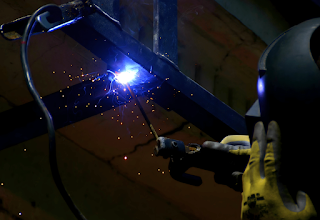
AI models analyze signals from optical, thermal, and acoustic sensors to assess weld quality in real time. Deep learning systems can detect porosity, cracks, or incomplete penetration before they cause costly rework.
Instead of relying on static programming, ML algorithms adjust laser power, beam oscillation, and speed mid-process. Reinforcement learning has already shown promise in adapting welding strategies to unpredictable material surfaces.
By studying long-term sensor data, AI systems predict equipment wear and prevent unplanned downtime. Models using acoustic and thermal inputs can spot misalignments or cooling issues before they become critical.
Efforts are underway to create AI models that work across different machines, plants, and materials. Transfer learning allows a model trained in one setting to adapt to another, reducing the cost of retraining from scratch.
Modern welders use optical coherence tomography, thermal cameras, and acoustic emission sensors to capture more granular data. Combined with big data frameworks, these enable high-speed analysis.
Fusing traditional physics-based welding models with ML produces more reliable predictions. For instance, Bayesian ML can estimate peak temperatures and heat-affected zones in aluminum alloys with high accuracy.
Digital twins simulate welding processes virtually, integrating ML for continuous optimization. These models help minimize trial-and-error, shorten development cycles, and ensure more consistent output.
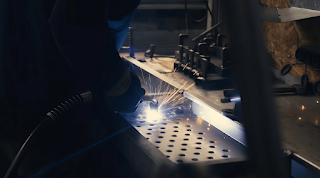
If you are considering an industrial laser welder, choosing a system that can grow with AI and ML capabilities is key. Denaliweld’s machines are designed with:
These features help ensure that your investment remains competitive as the industry shifts toward AI-driven manufacturing.
AI and machine learning are reshaping how industrial laser welders operate. Instead of rigid, pre-programmed routines, we are entering an era of adaptive, data-driven welding systems that promise fewer defects, higher throughput, and predictive reliability.
For manufacturers like you, this shift means stronger ROI, better quality control, and a pathway toward fully autonomous production lines. With these providers, the opportunity to harness AI-driven welding is no longer a distant vision—it’s the next logical step in your smart manufacturing journey.