Choosing between email and calling in real estate recruiting often looks like a tactical choice, but it’s usually a strategic decision. When recruitment slows down, brokerages tend to blame the channel, even though the real issue is how that channel fits into the overall recruiting approach.
Real estate agents operate their own businesses, have active pipelines and commitments. An outreach process that fails to understand this fact produces opposition, while one that respects it produces interest. Understanding when to use email and when to call is helpful to recruiters so they can initiate relevant yet not intrusive conversations.
This blog will go through email and calling thoroughly to understand which channel works best for recruiting real estate agents.
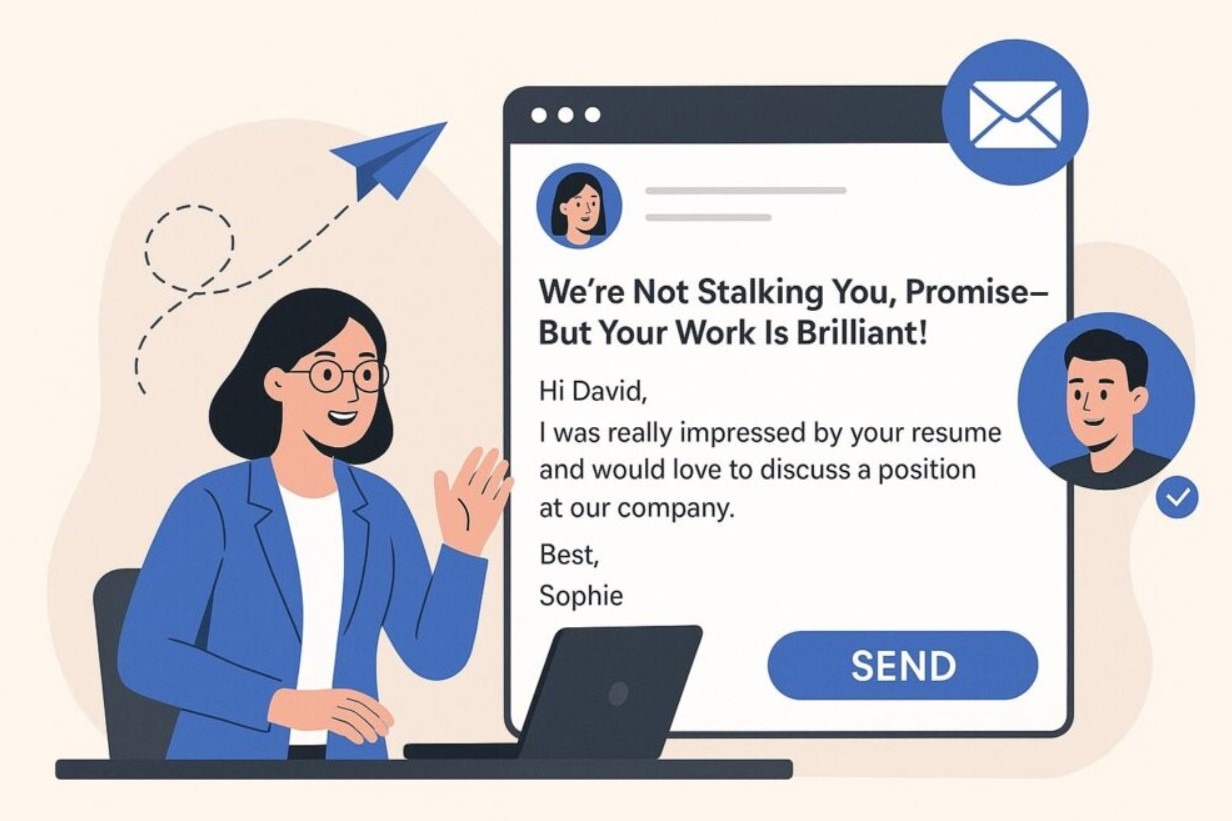
In intense competitive hiring scenarios, such as for high-performing real estate agents, emails are often used as the first touchpoints.
A thoughtful real estate recruiting email template provides structure for outreach without forcing recruiters to use inflexible or salesy language.
Email works effectively because it allows recruiters to control their messages. It helps the agents in such a way that they can read, pause, ignore or revisit the message without any pressure. For early-stage awareness, that sense of control matters.
Situations where email tends to work best:
Email also creates a written record. Agents can forward it, reread it, or compare it with other opportunities. This makes email particularly useful during the research phase, when agents are quietly evaluating options.
At the same time, email has clear constraints.
Common reasons recruiting emails fail:
Email should rarely attempt to persuade. Its real role is to establish relevance and earn the next interaction.
Calling introduces immediacy that email cannot replicate. A phone conversation creates emotional context, which is often where real recruiting progress happens.
Through calls, recruiters can:
Calling becomes especially effective once an agent has some familiarity with the recruiter or brokerage. A cold call with no context often feels disruptive. A call that references prior interaction feels purposeful.
Still, calling is not without friction.
Challenges recruiters regularly encounter:
Calling works well when the hiring objective is clear and the scripts have clarity.
A short but conveying conversation can lead to a follow-up meeting rather than a long pitch.
From the agent’s point of view, email and calling trigger different psychological responses.
Email often feels:
Calling often feels:
Neither response is inherently positive or negative. The difference lies in readiness. Agents who are curious but cautious prefer email. Agents who are actively questioning their current setup respond better to conversation.
Recruiting improves when outreach matches this readiness instead of forcing momentum.
Relying on only email or only calling creates blind spots.
Email-only recruiting often stalls because:
Call-only recruiting struggles because:
Neither channel is flawed. The limitation comes from isolation.
The strongest recruiting systems use email and calling as complementary steps, not competing tactics.
A commonly effective flow looks like this:
This sequence changes how agents perceive outreach. Instead of a cold interruption, the interaction feels like a continuation of an existing conversation.
Familiarity lowers resistance. Even agents who decline initially are more likely to engage later when the relationship feels established.
Many recruiting efforts fail not because of messaging, but because of timing.
Email tends to perform better:
Calling tends to perform better:
Recruiters who pay attention to timing often see improved results without changing scripts or tools.
The same idea should not be delivered the same way across channels.
Effective email messaging:
Effective call messaging:
When messages are aligned but not duplicated, outreach feels intentional rather than repetitive.
Volume metrics rarely reflect recruiting quality.
More meaningful indicators include:
These metrics reveal whether agents are moving closer to engagement, not just interacting superficially.
Email and calling are not opposing strategies in real estate recruiting. They serve different purposes at different stages of the agent decision process.
Email creates space for consideration. Calling creates clarity through conversation.
Brokerages that understand how to connect both channels thoughtfully build stronger recruiting pipelines without increasing pressure, noise, or burnout for their teams.