Sometimes numbers don't exactly explain the success or failures of teams, no matter the sport. They do lend to some facts, certainly to strong opinions, but rarely to total resolutions.
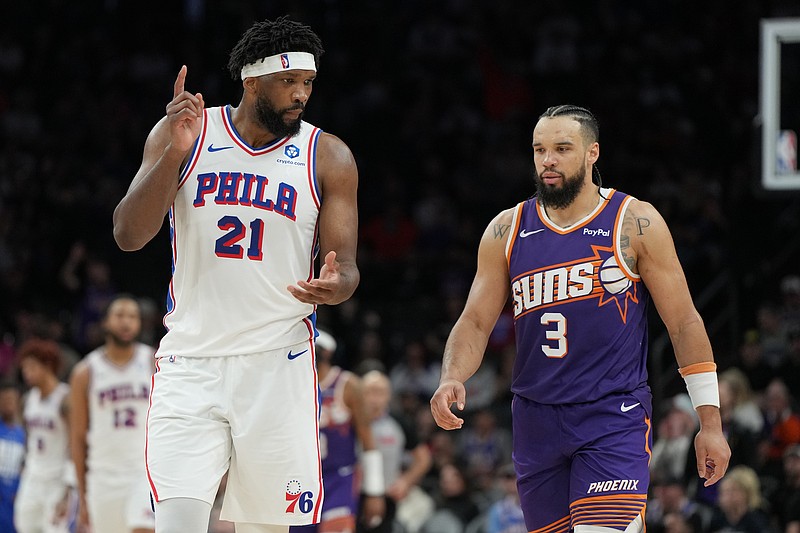
The staggering numbers that are facing the 76ers when it comes to the third quarter do all of that. Monday, it couldn't have been more clear why the team lost the last of a five-game, West Coast trip. Without starters Joel Embiid and Dominick Barlow, along with leading bench scorer Quentin Grimes, the Sixers still fought themselves to a 65-64 lead over the Portland Trail Blazers.
And that's when the proverbial wheels fell off. Again.
In what has become an alarming trend, the Sixers were thoroughly beaten in the 12 minutes following halftime by a score of 49-22. Though tired legs after a grueling road trip can perhaps be used as an explanation as to why it happened in this particular instance, there seems to be more to the almost game-by-game collapses that happen to this team after halftime.
But let's first look at the numbers from Monday during that game-changing quarter. The Sixers allowed Portland to make 16 of its 26 shots (61.5 percent), including eight of their 15 three-pointers (53.3 percent). The Trail Blazers scored 13 points off offensive rebounds and scored eight points directly from three blocked shots.
"So just a really bad third quarter."
Nick Nurse explains everything that went wrong in the second half for the Sixers. | @Kia pic.twitter.com/J0Qv2hdPTs
For the season, the Sixers have been outscored in the third quarter by 234 points. Now when you break it down, over the span of their 53 games so far this season, that only comes down to a differential of 4.4 points. Which doesn't seem to be too big of a deal, right? Well, when you consider that the second-worst team in third quarter point differential is the Utah Jazz at 137, it sticks out a lot more.
Monday's third quarter blitz by Portland can be explained by numbers, as can many of the bad third's played by the team. But when you look at the overall picture, the questions don't stop with the numbers. It's bigger than that. And why it may never be able to be explained.
How come the 2019-2020 Sixers team, coached by Brett Brown and coming off two 50-plus win seasons, dominated at home with a 31-4 record but were just 12-26 on the road in the shortened season? Why is it that Cody Ross, a journeyman baseball player, destroyed the Phillies in the 2010 National League Championship Series with three home runs and other timely hits? Why did Eli Manning seem to own the New England Patriots in Super Bowls?
Sometimes there may be no real physical explanation to problems, which is why you have to look elsewhere. And that leads to the mental aspect of it all.
A player for that 2019-2020 Sixers team tried to explain to me why they were so bad on the road that season. It wasn't because they played the game differently on the road, or because they were staying in hotel rooms and away from the comforts of their own homes. They were all used to that. He said it was all mental. He said the positive thoughts the team possessed at home that season, of 'How are we going to win this game,' sometimes changed to the negative on the road of 'How are we going to lose this game?'
The Sixers decision to subtract at the NBA Trade Deadline is already hurting the team.
They also might be the worst 3rd quarter team in NBA history.#76ers #Sixers #NBA 🔵🔴 pic.twitter.com/gH5oq72BCj
It's similar to the Sunday scaries, the anxiety one gets before having to go back to work or school on Monday, which could lead to many uneasy feelings, including pressure to perform.
Not a lot changes from before a game to halftime in an NBA locker room. Strategy is altered a little, sometimes, and matchups may be changed. But players don't forget how to play. Coaches aren't out-coaching their opposing coach by that much in a 12-minute span.
It now appears to be as much mental as anything when it comes to the Sixers' woes after halftime. Sure, some physical things can be done better, maybe more tweaks here and there by coach Nick Nurse. But there is probably that thought, as much as they'll deny it, in just about every player's head that when that third quarter comes, something bad is going to happen. And you can be sure the New York Knicks, Wednesday's opponent in the final game before the All-Star break, are well aware of that 12-minute demon that has haunted the Sixers much of the season.
It's something the Sixers must figure out, and quickly. Unlike figuring out a shooting slump that can be ironed out with repetitive work, this is different.