Radar guns are essential tools used by law enforcement to measure the speed of moving vehicles and ensure road safety. Understanding how a radar gun works can help demystify this common piece of technology and highlight its role in traffic enforcement.
A radar gun is a device that emits radio waves to detect the speed of an object. It operates on the principle of the Doppler effect, which is the change in frequency or wavelength of a wave in relation to an observer moving relative to the wave source. When a radar gun is pointed at a moving vehicle, it sends out a radio wave that reflects off the vehicle and returns to the device. If the vehicle is moving toward the radar gun, the frequency of the reflected wave increases; if it is moving away, the frequency decreases. The radar gun measures this frequency shift and calculates the speed of the vehicle based on the difference.
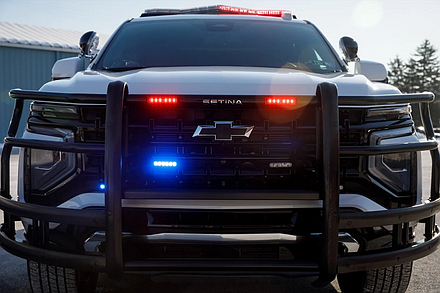
Radar guns are commonly categorized into two types: stationary radar guns and moving radar guns. Stationary radar guns are set up along roadsides or fixed locations and measure the speed of vehicles as they pass by. Moving radar guns, on the other hand, are used by officers in patrol vehicles. They can measure the speed of other vehicles relative to the moving patrol car, allowing officers to monitor traffic while on the move. Both types rely on the same basic radar technology to provide accurate speed measurements.
Modern radar guns are highly precise and can measure speeds from a considerable distance. They often come with features that help reduce errors, such as automatic calibration, digital displays, and built-in targeting systems. Many newer models are also equipped with laser technology, known as LIDAR (Light Detection and Ranging), which uses light pulses instead of radio waves to detect vehicle speed. While LIDAR offers even more pinpoint accuracy, traditional radar guns remain widely used due to their reliability and ease of operation.
In addition to speed enforcement, radar guns serve other purposes. For example, they are used in sports to measure the speed of balls, in industrial applications to monitor machinery movement, and even in scientific research to track moving objects. However, in the context of traffic enforcement, the primary goal of a radar gun is to ensure that drivers adhere to posted speed limits, reducing the risk of accidents and promoting safer roads.
Despite their widespread use, radar guns are sometimes subject to scrutiny. Drivers may question their accuracy or challenge readings in court. Law enforcement agencies counter this by using well-maintained devices, conducting regular calibrations, and ensuring that officers are properly trained in radar gun operation. Legal protocols often require documentation of device settings and conditions during speed enforcement to uphold the integrity of radar-based citations.
Using a radar gun effectively requires understanding both the technology and the context in which it operates. Factors such as vehicle angle, distance, weather conditions, and surrounding traffic can influence readings. Officers are trained to account for these variables to ensure that speed measurements are accurate and reliable.
In conclusion, radar guns are critical instruments for measuring vehicle speed and maintaining road safety. By emitting radio waves and calculating changes in frequency, a radar gun can provide precise speed measurements for stationary or moving vehicles. Beyond law enforcement, radar technology has broad applications in sports, industry, and science. For drivers, understanding how radar guns work highlights the importance of adhering to speed limits and recognizing the role of technology in promoting safe driving practices.