In the landscape of the modern smart home, we often prioritize connectivity over utility. We buy bulbs that change color and speakers that answer questions, yet many "smart" households still rely on analog tools for the most labor-intensive tasks: cleaning.
There is a strange dichotomy in 2026. We have self-driving cars on the horizon, yet people are still pushing mop buckets around their kitchens.
For the efficiency-minded homeowner, the goal is to reduce the "Time Cost" of maintenance to near zero. However, achieving this requires navigating a trade-off between two technological philosophies: Autonomous Maintenance and High-Performance Intervention.
To truly optimize home care, you cannot rely on just one. You need a system that balances the "set-and-forget" convenience of a vacuum and mop robot with the raw, unbridled power of a wet and dry vacuum.
The first pillar of this system is Automation. The economic argument for a robot is simple: it decouples the result (a clean floor) from the effort (human labor).
If you spend 20 minutes a day sweeping and spot-mopping, that is over 120 hours a year—three full work weeks—spent on a task that a machine can do better.
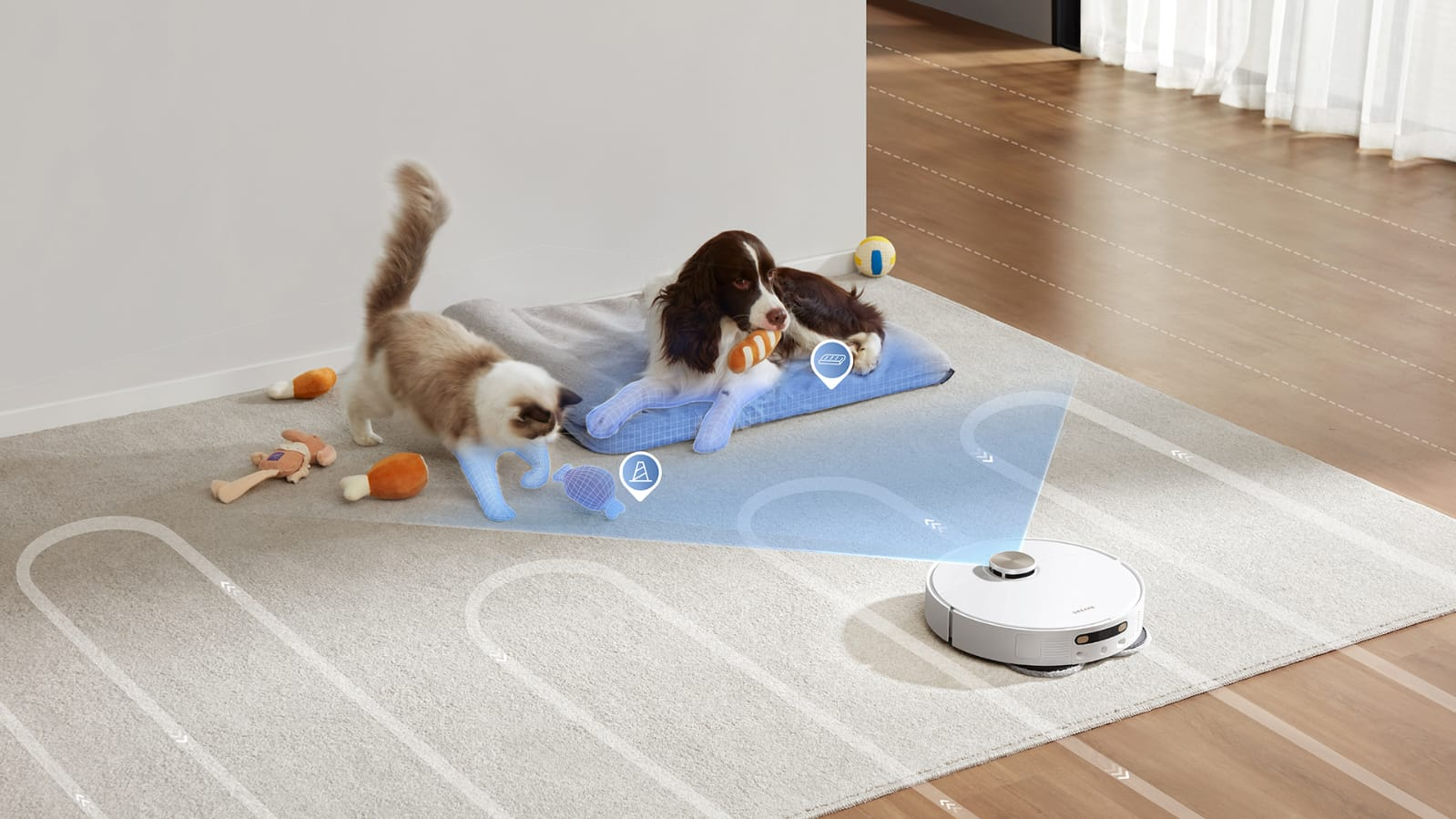
The modern robot is not a novelty; it is a sophisticated data-gathering device. Using LiDAR and visual SLAM (Simultaneous Localization and Mapping), these devices create a digital twin of your floor plan. They navigate efficiently in neat rows, avoiding obstacles and adapting to changes in furniture layout.
Crucially, the "mop" function on these robots has evolved from a passive cloth dragging across the floor to active scrubbing systems. They apply consistent pressure and water flow, maintaining the floor’s hygiene baseline without human intervention.
For the tech enthusiast, the value lies in the "Scheduled Routine." You program the robot to run at 10:00 AM after the house empties. It handles the daily accumulation of dust and light stains. You return to a home that is perpetually "reset" to a neutral state. The ROI is immediate: you simply stop thinking about the floor.
However, automation has physical limits. A robot is constrained by form factor. To fit under sofas, it must be slim. To run for 90 minutes, it must prioritize battery efficiency over raw suction wattage. To move autonomously, it cannot carry gallons of water.
This creates a "Performance Gap."
A robot is perfect for dust and dried coffee spots, but it cannot handle "Dynamic Messes." If a pipe leaks, a bowl of cereal drops, or a pet has an accident, the robot is outmatched. Its sensors might avoid the mess, or worse, try to clean it and spread the disaster, gumming up its own internal mechanics.
Furthermore, deep cleaning requires torque. Removing sticky, polymerized grease from a kitchen tile requires a heavy roller spinning at high RPMs and significant downward pressure—physics that a lightweight autonomous puck simply cannot generate.
This is where the second pillar—High-Performance Intervention—comes in. If the robot is the "preventative medicine," the wet/dry vacuum is the "emergency surgery."
A wet/dry vacuum is designed without the constraints of autonomy. It prioritizes power. It uses distinct tanks for clean and dirty water, ensuring that you are never recycling grime. It features high-torque motors that can inhale solids (cheerios, vegetable scraps) and liquids (milk, wine, mud) simultaneously.
From an engineering standpoint, the wet/dry vacuum solves the "moisture management" problem. Traditional mopping leaves water on the floor, which evaporates and leaves mineral streaks or water spots. A powered wet/dry unit vacuums the water off the floor immediately after scrubbing. This leaves the surface dry to the touch in seconds, protecting the substrate of your flooring (especially wood or laminate) from water damage.
The most efficient smart homes utilize a "90/10" split.
90% of the Work: The Robot
10% of the Work: The Wet/Dry Vacuum
By integrating these two, you eliminate the inefficiencies of the old "broom and mop" era. You don't waste time sweeping because the robot did it. You don't waste time scrubbing stubborn stains because the wet/dry vac handles them in a single pass.
In the quest for the ultimate smart home, we often overlook the infrastructure. We buy smart locks and cameras, but we ignore the dirt under our feet.
True home efficiency is about systems. It is about recognizing that "cleaning" is actually two different problems: maintenance (which should be automated) and restoration (which requires power).
By investing in both a robotic platform and a wet/dry powerhouse, you close the loop. You ensure that your home is not just "connected," but genuinely cared for—with the absolute minimum amount of human effort required.