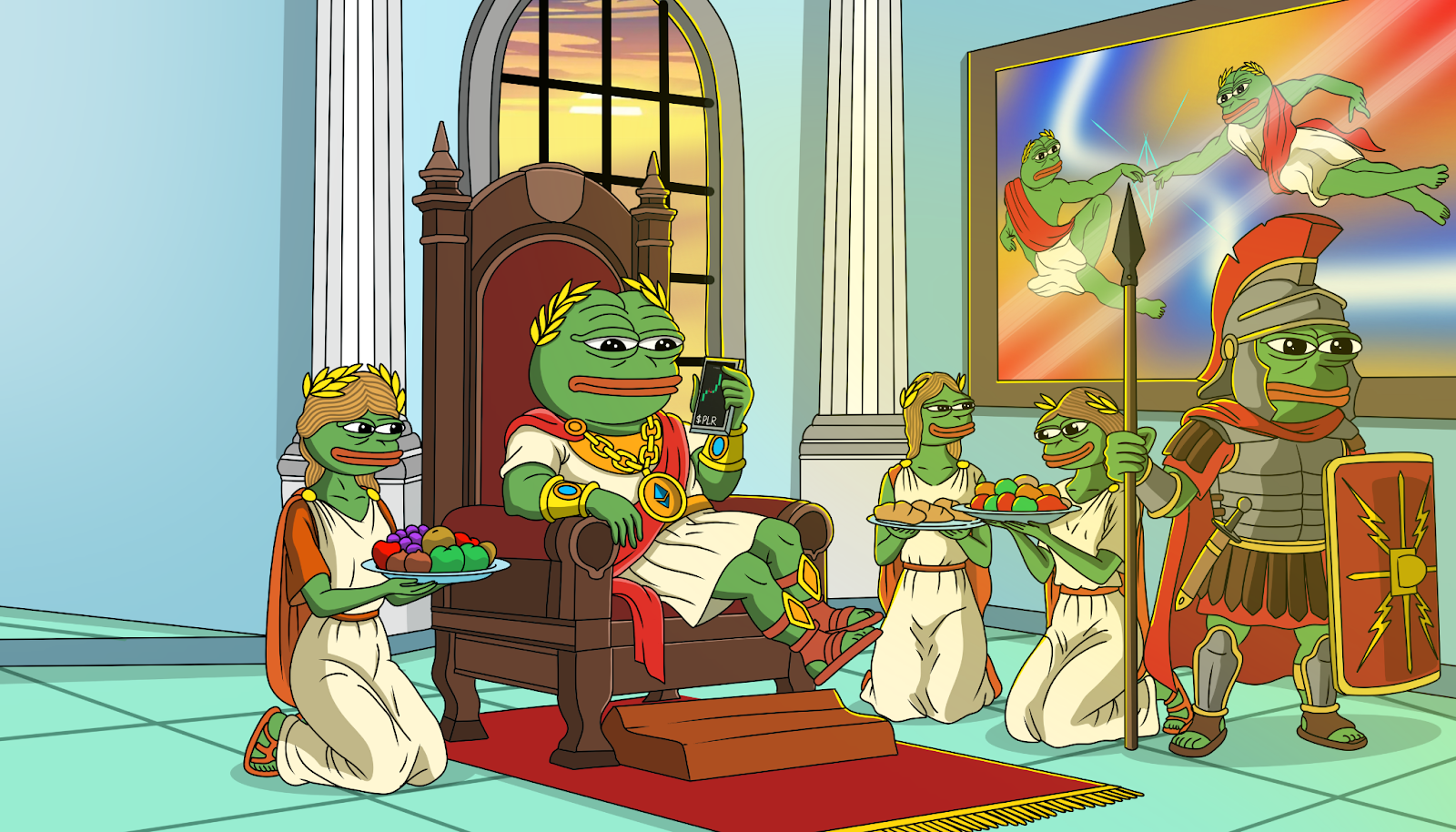
When people hear the word “ecosystem” in crypto, it often sounds big and confusing. However, in simple words, an ecosystem just means everything working together. For PepeEmpire, it means apps, users, creators, and tools all living on the same network. So, instead of being only a token you buy and forget, PepeEmpire wants to be a place where real activity happens every day.
This ecosystem focuses on three main parts: dApps, NFTs, and staking. Together, they shape how people use the network. Because fees stay low and actions stay fast, users can actually enjoy using apps and moving assets. So, in this article, we will look at how these parts work, why they matter, and how they fit into the bigger PepeEmpire system.
The PepeEmpire ecosystem is the full world built around its Layer 2 network. It is not just about sending tokens. Instead, it is about people using apps, creating assets, and earning rewards on the same system.
So, when someone opens a dApp, mints an NFT, or stakes $PEMR, they are using the ecosystem. Everything connects through the same network. Because of that, users do not jump between chains or tools. Things stay in one place.
This ecosystem also runs on PepeEmpire’s Layer 2 design. So, actions stay fast and fees stay low. At the same time, users do not need to think about technical steps. The system handles most of that in the background.
Main parts of the PepeEmpire ecosystem:
dApps are apps that run on a blockchain instead of a normal server. In simple words, they work like regular apps, but no single company controls them.
On PepeEmpire, dApps are built to feel smooth and easy. Because fees stay low, users can click, send, and trade without worrying about high costs. Also, because actions stay fast, apps do not feel slow or broken.
This makes a big difference. When apps feel simple, people use them more. So, developers can build real tools instead of worrying about user frustration.
NFTs are digital items that people can own, trade, or collect. On PepeEmpire, NFTs are meant to feel easy, not expensive or slow.
Because fees stay low, minting an NFT does not burn money. So, creators can launch art, game items, or digital passes without stress. At the same time, users can buy and trade NFTs without paying more in fees than the item itself.
Speed also matters here. When transfers happen fast, NFTs feel usable. So, games, marketplaces, and communities can work without long waits.
Staking means locking your tokens to support the network. In return, users earn rewards. On PepeEmpire, staking uses the $PEMR token.
The idea stays simple. Users stake $PEMR. The network grows stronger. Users earn rewards over time. So, it is a win for both sides.
Staking is optional. So, no one is forced to lock tokens. However, for users who want to take part in the system, staking offers a simple way to stay involved.
Nothing in the PepeEmpire ecosystem works alone. Each part supports the others.
dApps bring users to the network. People use apps to send payments, play games, or trade assets. NFTs add ownership. Users collect items, trade art, or use game assets. Staking supports the system. Users lock $PEMR and help keep the network healthy.
So, when someone uses a dApp, they often use $PEMR. When someone trades an NFT, they use the same network. When someone stakes, they support both the apps and the assets.
Everything connects through one system.
Here is a simple way to see how they fit:
So, dApps create activity. NFTs create value. Staking creates stability.
Together, they form the PepeEmpire ecosystem.
The PepeEmpire ecosystem is built to feel easy.
It stays fast. It stays cheap. It stays simple.
Because of that, users do not fight with high fees or slow actions. Also, they do not jump between chains or tools.
Here is what users and builders get:
So, instead of building something only for experts, PepeEmpire builds something for everyday users.
The PepeEmpire ecosystem is not built for only one type of user.
It is built for everyday people who just want things to work.
It is built for beginners who feel lost when they see chains, bridges, and gas fees.
It is built for developers who want fast execution and low fees without confusing users.
It is built for NFT creators who want cheap minting.
It is built for game builders who need smooth actions.
It is built for Web3 startups that want easy onboarding.
So, this ecosystem is not a niche toy. It is a general-use system.
If you can use a mobile app, you should be able to use PepeEmpire.
Getting started with PepeEmpire is meant to feel simple.
First, you create a crypto wallet like MetaMask or Trust Wallet.
Then, you fund your wallet with ETH or USDT.
After that, you connect your wallet on the official PepeEmpire site.
Once connected, you can buy $PEMR or stake it.
Then, you can start using dApps or minting NFTs.
So, you do not need special tools or long steps.
Here is the basic flow:
The PepeEmpire ecosystem brings dApps, NFTs, and staking into one simple system. So, instead of jumping between chains and tools, users stay in one place. Apps run fast. Fees stay low. NFTs feel usable. Staking feels simple. At the same time, the network stays tied to Ethereum for security. Because of that, PepeEmpire feels fun on the surface and serious underneath. It works for beginners, everyday users, creators, and builders. So, if someone wants a blockchain that feels normal to use, this ecosystem makes a strong case.