
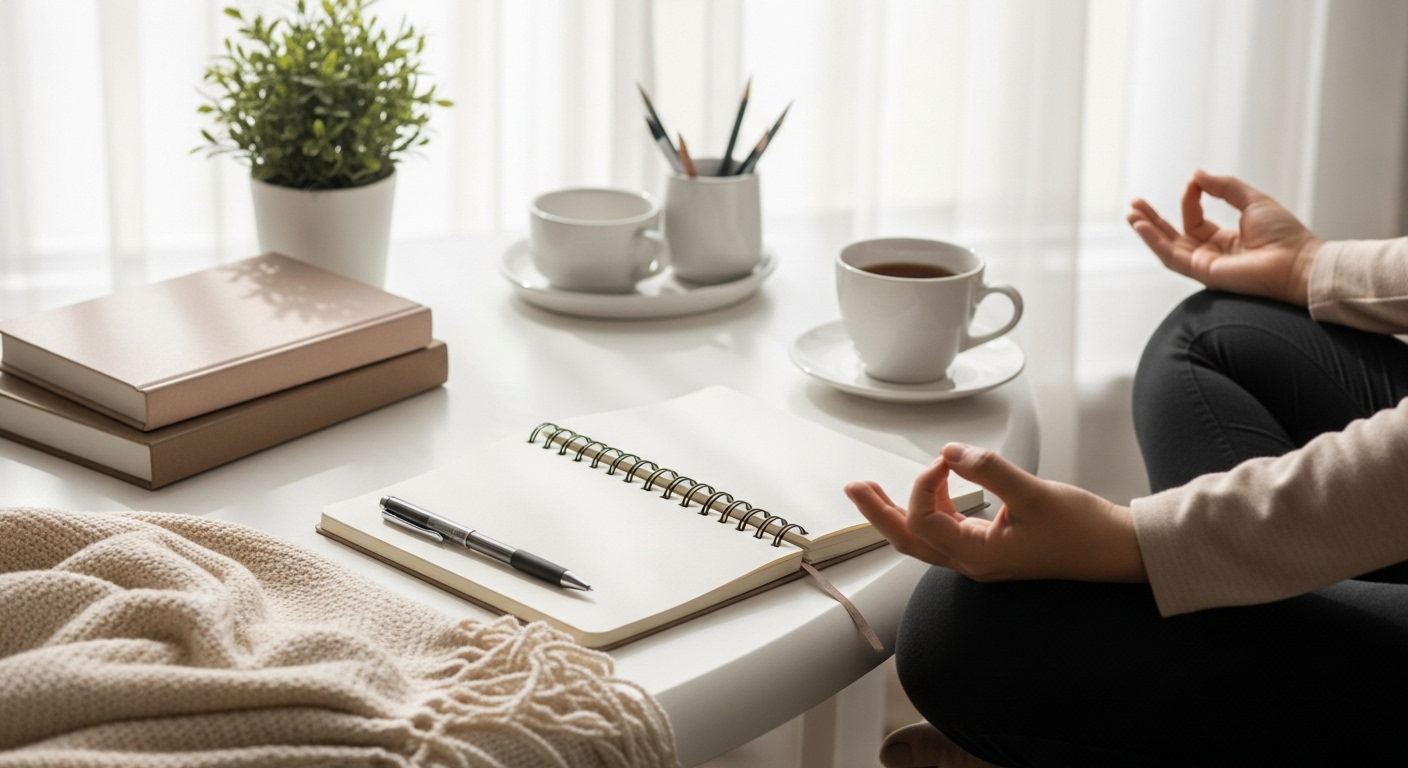
Stress is everywhere, so much so that most people don’t even notice it until their body starts to complain. Gallup says 49% of Americans feel significant daily stress, and the American Psychological Association’s latest report found that most people know it’s hurting their health.
But here’s the good news: the best antidotes aren’t big, expensive fixes. They’re tiny, repeatable habits that pull you out of your head and back into the present.
Forget the wellness industry’s big promises. The real magic is in the small stuff you do every day. A five-minute breathing break, a mindful cup of tea, a short walk—these are the things that actually stick.
The brain changes through repetition, not intensity. Tiny habits, done daily, build the pathways that make calm your new normal.
One deep breath doesn’t change your life. But a hundred, taken over weeks, does. The same goes for a short walk or a few minutes of journaling.
These habits add up, building what researchers call “stress resilience.” People who practice regularly don’t avoid stress, they just bounce back faster.
How you start your day matters. If you roll out of bed and check your phone, you’re already reacting to the world.
But if you take ten minutes for yourself, stretch, breathe, or just sit with your coffee, you set the tone. You’re in charge, not your notifications.
Pick what feels good. Some people need movement, others want stillness. Maybe you journal, maybe you just sit quietly.
The best ritual is the one you’ll actually do. And if your phone is the first thing you reach for, try leaving it in another room until you’re done.
Coffee or tea isn’t just a caffeine hit—it’s a chance to slow down. Listen to the water boil, breathe in the aroma, feel the warmth of the mug. If you care about what goes in your cup, check out this guide to mycotoxin-free coffee.
Choosing beans that are free from mould and pesticides means your ritual supports your health, not just your energy. A mindful cup in the morning can anchor your whole day.
You don’t need a yoga mat or a quiet room. Just breathe—slowly, deeply, on purpose. Box breathing (inhale, hold, exhale, hold for four counts each) or 4-7-8 breathing (inhale for 4, hold for 7, exhale for 8) both work. Even a few rounds can flip your body from “fight or flight” to “rest and digest.”
Don’t wait for a meltdown. Use these between meetings, before a tough call, or anytime you notice your jaw clenching. The more you practice, the faster your body learns to calm down.
Anxiety lives in the future, regret in the past. The present? Usually manageable. Grounding tricks pull you out of your head and into your senses.
It’s simple, but it works. By the end, you’re back in your body, not lost in worry.
Takes less than a minute, but it’s a reset button for your brain.
Stress is physical. Your body tenses, your heart races. Move, and you process it. Walk, stretch, dance, do yoga—whatever gets you out of your chair. It doesn’t have to be a workout. Just move.
Pick something you’ll actually do. A daily walk beats a gym membership you never use. If you can, get outside—nature multiplies the benefits.
Don’t wait for a workout. Stand up every hour, stretch, and walk while you’re on the phone. These brief breaks help prevent stress from building up.
You don’t need a forest. A park, a garden, even a few trees on your street, help. Twenty minutes outside lowers stress hormones and clears your head. If you can, leave your phone behind and just notice what’s around you.
No time for a hike? Eat lunch outside. Put a plant on your desk. Open a window. Small doses count.
Writing things down gets them out of your head. It doesn’t have to be deep. Jot a few lines about what’s on your mind, what went well, or what you’re grateful for. Over time, you’ll see patterns—and progress.
If your stress stems from feeling overwhelmed, end your day by listing tomorrow’s top priorities. A good planner helps. There are journals out there designed for this—simple, structured, and made for real life.
Phones and screens are stress machines if you let them be. Set boundaries: no phone for the first hour, no screens before bed, and turn off notifications you don’t need. You’ll sleep better and feel less frazzled.
You don’t need to know everything, all the time. Pick one trusted news source, check it once, and move on. Your brain will thank you.
The afternoon slump is real. Instead of fighting it, work with it. Do easier tasks, take a walk, or have a healthy snack. Some people find that functional foods help.
For example, microdose mushrooms chocolate is gaining popularity for its gentle support of focus and mood—an approachable way to try functional ingredients without a big commitment.
Sleep is the best stress reliever. Protect it. Start winding down an hour before bed: dim the lights, read, stretch, or listen to music. Keep screens out of the bedroom and stick to a regular schedule.
Pick a few calming activities and do them every night. The routine tells your body it’s time to rest.
No one habit fixes everything. But a few simple ones, done daily, can change your life. Start small, keep it up, and add more as you go. The best habits are the ones you’ll actually do—even on your worst days.
Key principles:
Breathing exercises—such as box breathing or the physiological sigh—can take effect within minutes. Try them when you feel tension rising.
Most people feel better within a few days, but real change takes a few weeks of consistency. Stick with it.
One you’ll actually do. Avoid your phone, move a little, have a mindful drink, and set an intention for the day.