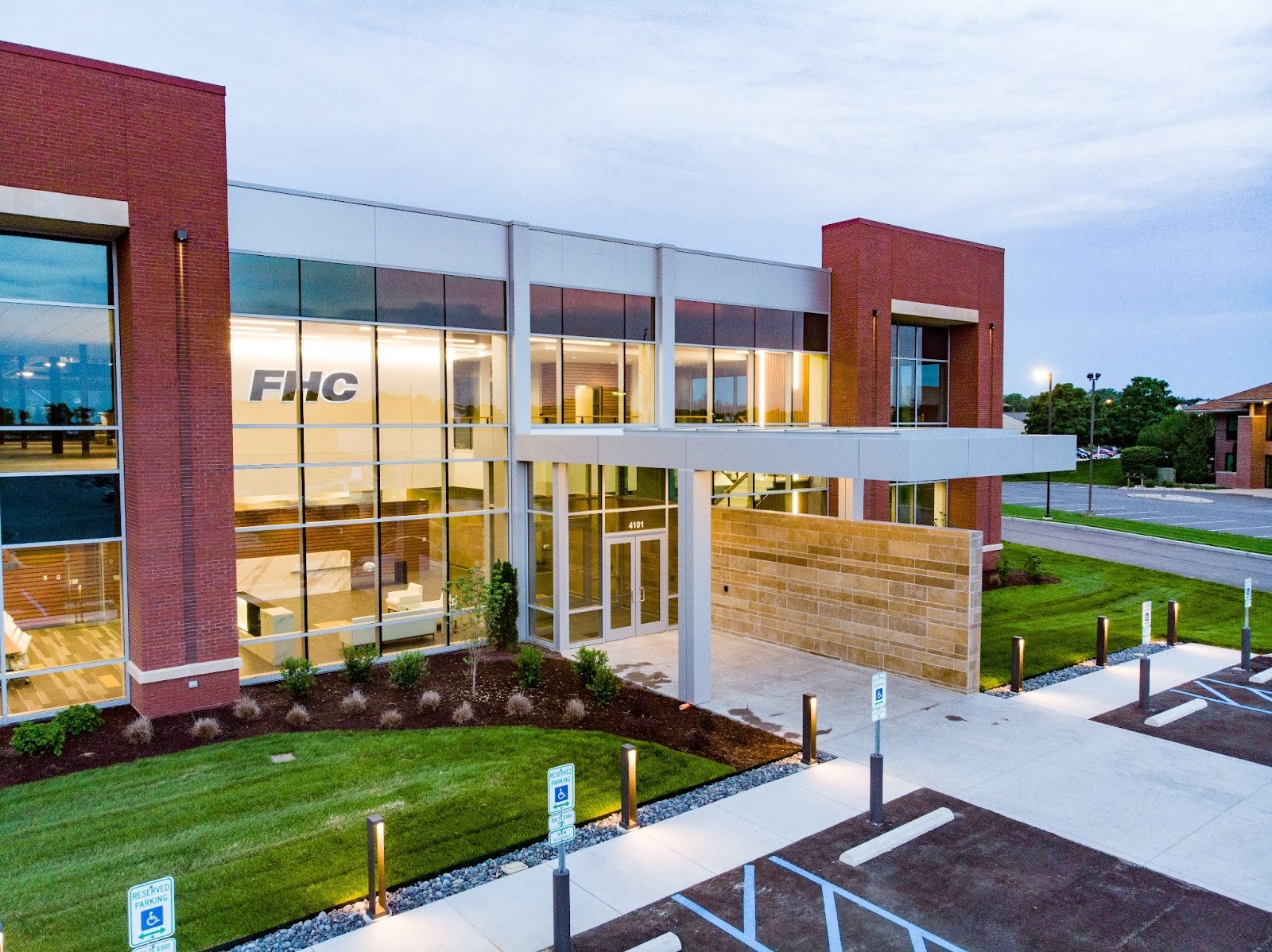
In an industry increasingly shaped by consolidation, private equity roll-ups and standardized platforms, First Heartland® occupies a position that has become both rare and quietly influential. Founded in 1984 and still privately owned more than four decades later, the firm has built its reputation not by trying to outgrow competitors, but by protecting something many financial professionals feel they are steadily losing: independence.
That focus has turned First Heartland® into a long-term home for registered representatives, advisors and insurance agents who want scale without surrender, support without control and growth without being absorbed into a corporate machine.
First Heartland’s core idea is deceptively simple. Financial professionals should be able to run their own businesses, serve clients objectively and still have access to institutional-grade infrastructure. Where many firms approach independence as a branding exercise, First Heartland® operationalizes it.
The firm operates as a registered investment advisor, full-service broker-dealer and brokerage general agency under one roof. That structure allows professionals to manage fee-based assets, securities and risk-based products without splitting their practice across multiple firms. The result is a unified platform that removes friction rather than adding it.
Just as important is what First Heartland® does not impose. There are no proprietary product quotas, no mandated technology stacks and no pressure to conform to a house model. The firm is solution-agnostic by design, giving financial professionals latitude to choose tools, carriers and strategies that fit their clients rather than a corporate agenda.
One of the most persistent myths in financial services is that independence means being on your own. First Heartland® has spent decades proving otherwise.
The firm describes its model as a “virtual back office,” a phrase that understates how deeply its team integrates into the daily operations of an advisor’s business. Compliance, technology, underwriting coordination and case management are handled centrally, freeing professionals to focus on relationships and strategy rather than paperwork and process.
Compliance, in particular, is treated as a protective function rather than a gatekeeping one. Instead of operating as a department that says no, the firm’s compliance team works proactively with financial professionals to anticipate issues, pre-review applications and navigate complex regulatory requirements before they become obstacles. That approach reduces friction while helping protect both the financial professionals and the client.
Technology is one of First Heartland’s largest investments, second only to its people. But the firm’s philosophy runs counter to the prevailing trend of using software to replace human interaction.
Digital workflows, electronic signatures, and real-time case tracking are standard across the platform, allowing financial professionals to operate efficiently in all 50 states. During the pandemic, those systems allowed business to continue with minimal disruption, reinforcing the firm’s emphasis on resilience and continuity.
Yet, the technology is deliberately paired with accessibility. Leadership is not hidden behind ticketing systems or layered bureaucracy. Financial professionals are encouraged to pick up the phone and call, whether the issue is strategic, operational, or simply a question that needs a fast, informed answer. It is a “know-you-by-voice” culture that many professionals say is nearly impossible to find at scale.
The professionals who tend to succeed within First Heartland® share a common mindset. They are entrepreneurs first, financial professionals second. They value autonomy and take ownership of their brand, their client relationships and their long-term vision.
Many come from large firms where growth comes with increasing constraints. These “breakaway” professionals arrive with established practices but are looking for an environment that supports rather than dictates. Others operate full-spectrum businesses that blend wealth management with insurance and annuity solutions, finding efficiency in First Heartland’s integrated structure.
Across profiles, the unifying trait is a preference for collaboration over command-and-control management. Financial professionals who thrive here want access to experienced partners, not supervisors. They expect accountability, transparency and respect for their judgment.
In an industry where ownership changes are often framed as progress, First Heartland’s uninterrupted private ownership stands out. The firm has never been sold, merged, or recapitalized by outside investors. That continuity shapes decision-making in ways that are increasingly uncommon.
Without pressure from shareholders or private equity timelines, investments are made with decades in mind rather than quarters. Technology upgrades, staffing decisions and infrastructure expansion are evaluated based on whether they strengthen the firm’s ability to support independent professionals over the long term.
This long-view approach has allowed First Heartland® to grow steadily while maintaining its culture. From a three-person operation in 1984 to a national firm licensed in all 50 states, growth has been additive rather than transformative. The core mission has remained intact.
Relationships are not treated as a marketing slogan at First Heartland®; they are the operating principle. The firm positions itself as an advocate in the marketplace, negotiating with carriers, working directly with underwriters and navigating regulatory changes on behalf of its partners.
Because there are no proprietary products or preferred solutions, financial professionals retain credibility with clients. Recommendations are driven by suitability and outcomes rather than incentives. Over time, that objectivity compounds into trust, which the firm views as the most valuable asset a financial professional can build.
The same philosophy extends to industry peers and regulators. First Heartland® emphasizes transparency and proactive engagement, reducing surprises and reinforcing its reputation as a stable, credible partner.
Despite its national reach, First Heartland® is sometimes mistaken for a small regional firm with limited resources. In practice, its size allows for agility without sacrificing capability. Technology investments rival those of much larger competitors, while the absence of corporate overhead creates flexibility.
Another misconception is that independence requires complexity. By housing multiple business models under one umbrella, the firm simplifies operations rather than complicating them. Financial professionals are not forced to choose between autonomy and efficiency.
Perhaps the most persistent misunderstanding is that compliance slows growth. At First Heartland®, compliance is positioned as an enabler—one that helps financial professionals move forward confidently rather than cautiously.
First Heartland® does not measure success by headcount alone. Its leadership has consistently resisted the temptation to grow for growth’s sake. Instead, scale is defined by durability: the ability to support professionals through market cycles, regulatory shifts and personal transitions without forcing them to uproot their businesses.
For financial professionals who view their practice as a legacy rather than a book of business to be sold, that distinction matters. The firm is structured to be a permanent home, not a stepping stone.
As financial services become more centralized and automated, the appeal of true independence grows sharper. First Heartland’s relevance lies in its refusal to treat financial professionals as interchangeable producers. By combining institutional infrastructure with human accessibility, the firm has carved out a role that few competitors can credibly replicate.
For professionals searching for First Heartland, what they often discover is not just another platform, but a philosophy—one that assumes independence is worth defending, relationships are worth protecting and growth is most sustainable when it serves people rather than systems.