Interest in the best vegan dog foods is booming, and many of us now wonder whether our dogs need animal protein at all.
In July 2024, the British Veterinary Association confirmed that dogs can stay healthy on a well-formulated vegan diet, provided every nutrient box is ticked. That finding echoes recent studies showing modern plant-based recipes are complete, balanced, and often linked to fewer health issues than meat-based kibble.
In this guide, you'll get the evidence, the scorecard, and a curated top-five list so you can choose a food that supports your dog and your values—no nutrition guesswork required.
Ready? Let's dig in.
Dogs are opportunistic omnivores. They evolved beside humans, scavenging whatever we dropped, and that mixed menu shaped a metabolism that cares about nutrients, not ingredient labels. Meat is only one possible delivery system.
Protein tops most worry lists, so let's tackle it first. Modern vegan formulas blend legumes, grains, and cultured proteins such as nutritional yeast. Pair a lysine-rich pea with a methionine-rich grain and the amino-acid puzzle clicks into place, covering all ten essentials. Most leading vegan kibbles report 24 to 30 percent protein on the label, the same range you see in premium meat diets.
Heart health is next. Quality brands add taurine and L-carnitine outright rather than hoping precursors convert inside the body, keeping blood taurine levels in the normal range just as meat formulas do.
Vitamins follow the same logic. B12 arrives as the identical supplement used in conventional diets. Vitamin D shows up as plant-based D2 or algae-sourced D3. For omega-3s, formulators skip the fish and go straight to marine micro-algae, delivering DHA and EPA without mercury. Iron, zinc, calcium, and phosphorus arrive in chelated form for easy absorption and balanced ratios.
Does this work in real dogs, not just on paper? Yes. According to a 2022 survey published in PLOS ONE, well-formulated vegan diets were linked to the lowest rate of health disorders—36 percent versus 49 percent in meat-fed peers.
In short, today's plant-powered recipes replicate every building block once supplied by meat with precision, transparency, and a lighter environmental footprint. Up next, we'll show you exactly how we selected the five vegan dog foods that deliver on that promise.
We filtered every formula through four criteria: an AAFCO "complete and balanced" statement on the label, protein above 22 percent with added taurine, L-carnitine, and B₁₂, involvement of a board-certified veterinary nutritionist, and consistent positive owner feedback on taste, stool quality, and coat condition. Cost was weighed against extras like organic ingredients and compostable packaging—only when core nutrition held up. Five formulas cleared every bar.
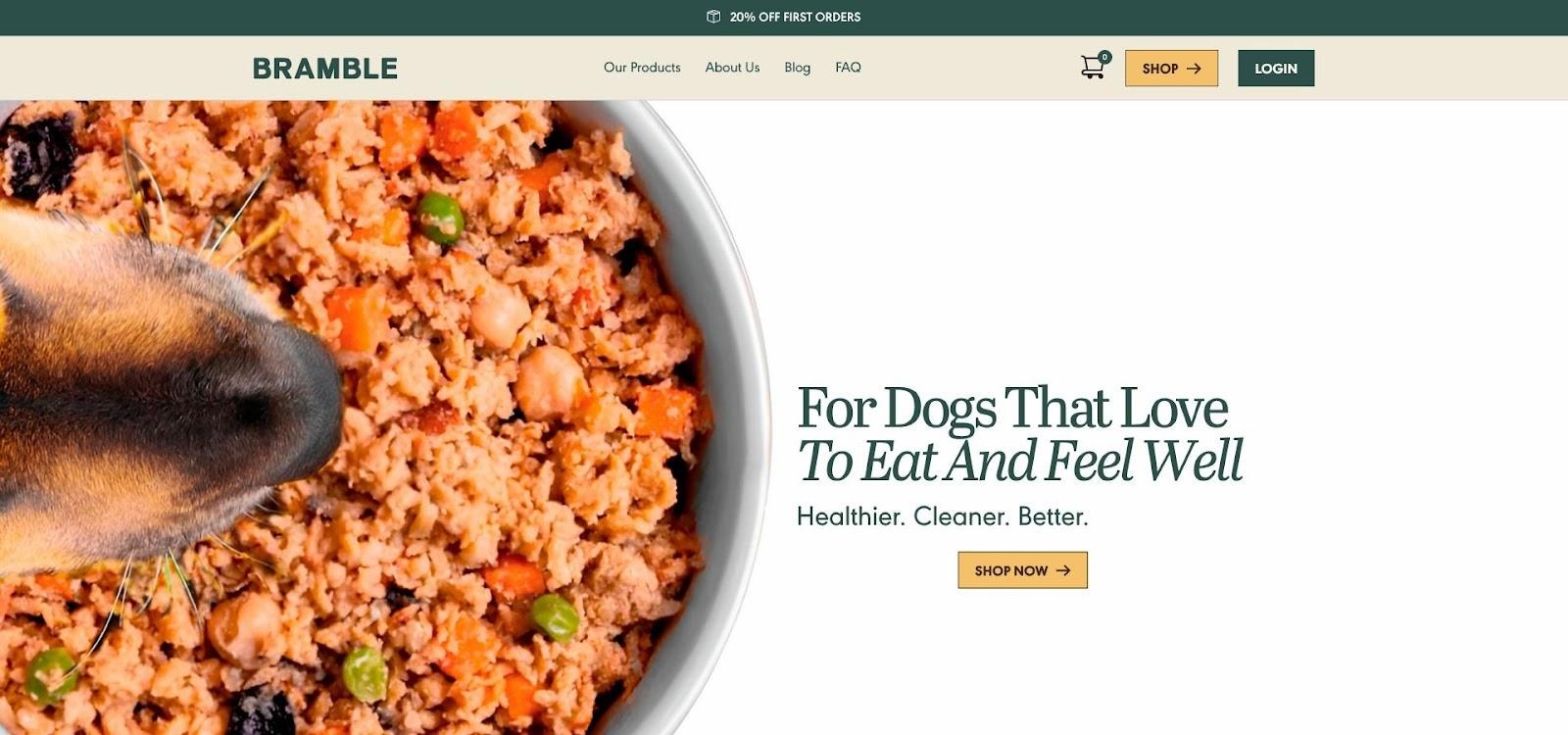
Bramble fresh vegan dog food official website hero.
Think of Bramble as chef-prepared meal prep for dogs. The company slow-cooks organic peas, lentils, and sweet potatoes in a USDA kitchen, freezes the portions, then ships them on dry ice. You thaw, scoop, and let your pup enjoy dinner that smells like Sunday stew.
Nutrition is locked in by design. Each pouch lands around 30 percent protein on a dry-matter basis, backed by added taurine, L-carnitine, and B₁₂. Fat comes from sunflower and flax oils, giving coats a glossy, omega-rich shine. Because the meals are moisture-dense, phosphorus stays lower than in most kibbles, which quietly supports kidney health; that same low-phosphorus approach is the backbone of Bramble's forthcoming renal dog food line for pups on veterinarian-recommended kidney diets.
Owners report itchy skin calming within weeks and energy rising without bloating. Picky seniors with dental quirks clean their bowls thanks to the soft texture and warm aroma.
The trade-off is price and freezer space. At about nine dollars a day for a medium dog, Bramble sits in the premium tier, and you will need enough cold storage for a month's supply. If you want human-grade ingredients, clear sourcing, and a homemade feel without cooking yourself, Bramble is the front-runner.
Ideal for adult dogs of any breed when guardians value fresh food, transparent sourcing, and deep nutrient support.
V-Dog has fed plant-powered pups since 2005, well before vegan pet food was trendy. Seventeen years of field use with zero recalls show the recipe works in real bowls, not just spreadsheets.
Pea protein, brown rice, and oatmeal form the backbone, lifting protein to 24 percent. Taurine and L-carnitine land high on the label, signaling deliberate heart support. Sunflower and flax oil keep the omega mix balanced, so itchy skin often cools within a month.
Guardians rave about allergy relief. When chicken, beef, or dairy triggers disappear, chronic paw licking and ear buildup usually fade too. Grain fiber keeps stools firm, and yucca extract tames backyard odors.
Cost seals the deal. At roughly three dollars fifty per pound on subscription, V-Dog delivers complete nutrition at a mid-shelf price. The moderately sized kibble doubles as a dental helper and suits most breeds, from terriers to labs.
Ideal for adult dogs that need an affordable, hypoallergenic staple available online today.
If you picture vegan kibble as bland or low powered, Wild Earth flips the script. The first ingredient is cultured yeast, nature's miniature protein factory, so every piece delivers 28 percent protein without animal or soy input.
That density matters for active breeds. Agility dogs, weekend hikers, and zoom-happy puppies get muscle fuel on par with meat "performance" diets, but with less saturated fat. Algae-derived DHA supports brain and joint health.
Taste tests show most pups devour it. Yeast adds a savory aroma, and Wild Earth seasons with sweet potato and turmeric for extra flavor. A small group may need a gradual transition to avoid early gas; a spoon of pumpkin can help.
Sustainability is the quiet win. Growing yeast in stainless-steel fermenters uses a fraction of the land and water needed for chicken farming, delivering measurable carbon savings plus transparent lab data on every bag.
Ideal for high-energy dogs or guardians who want a climate-smart diet that rivals meat formulas in protein.
Petaluma approaches dog food like a climate-literate chef. The team bakes organic chickpeas, oats, and real peanut butter into airy clusters, then slips the kibble into fully compostable bags. Life-cycle data show each pound uses up to 75 percent less water than a chicken-based diet.
Protein lands at 28 percent, provided by chickpeas, potato protein, and brewer's yeast. Algae-sourced DHA teams with flaxseed for coat shine and joint cushion, while miscanthus grass fiber keeps digestion steady. Oven baking produces a light, crunchy texture that small mouths and seniors appreciate.
Open a bag and you smell warm peanut notes closer to a snack bar than a feed sack. Picky eaters who shunned other vegan brands often flip once they taste Petaluma.
Price reflects the organic roster at about four dollars forty a pound, yet the environmental return and dog-approved flavor create loyal fans. Guardians report firmer stools, shinier coats, and less dog-park breath, likely because rendered fats are absent.
Ideal for guardians who weigh carbon footprint alongside nutrition and want kibble that smells kitchen-fresh.
If you prefer a mainstream pet-food lab behind your vegan choice, Gather delivers. Petcurean, the Canadian maker known for premium meat lines like NOW! and GO!, crafted Endless Valley with the same quality controls but swapped animal protein for certified-organic plants.
The first five ingredients are peas, barley, oats, lentils, and sunflower oil, all organic and non-GMO. Protein sits at 22 percent minimum, climbing to about 29 percent on a dry-matter basis thanks to supplemental lysine and methionine. Taurine and L-carnitine meet modern cardiac guidelines.
Palatability surprises skeptics. The kibble smells like granola, not peas, and the small disk shape suits Chihuahuas through German Shepherds. Guardians note smooth digestion and less gas, crediting balanced grain fiber.
Because ingredients are organic and Canadian-sourced, price sits at the top end, around six dollars a pound. Many shoppers mix it fifty-fifty with a cheaper vegan kibble to stretch value while keeping that organic halo.
Ideal for dogs with multiple food sensitivities or guardians who want certified-organic ingredients backed by robust research.
Choosing between five strong options can feel like splitting hairs, so use the table below as a shortcut. Find the factor that matters most—protein, price, cooking method—then circle back to the full review if you need detail.
Every formula on this list meets AAFCO standards, adds the supplements dogs need, and comes from teams that understand canine nutrition. Bramble leads for guardians who want fresh, human-grade meals with deep nutrient support. V-Dog wins on value and allergy relief. Wild Earth delivers the highest protein. Petaluma owns sustainability. Gather offers certified-organic peace of mind.
Start with the brand that matches your dog's needs and your household's priorities, transition slowly over seven to ten days, and watch for the telltale signs of a good fit: firm stools, bright eyes, and a coat that shines.
Costs reflect the largest bag or subscription option available in March 2026 and may vary by retailer.