TRENTON – Members of a coalition of environmental advocates, including two members of Sustainable Margate, testified Monday about a bill in the legislature that would require building contractors to use containment devices to prevent the spread of pollutants into the environment.
 Steve Jasiecki
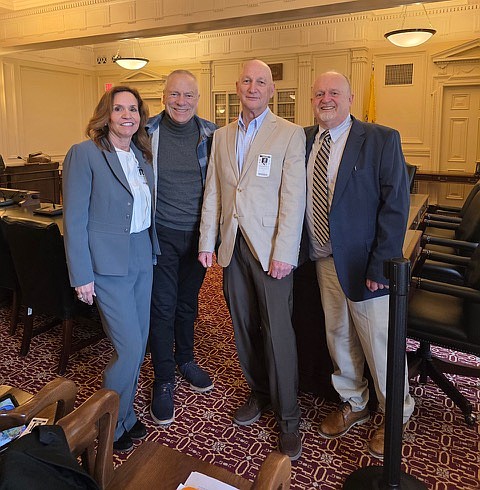
 Sustainable Margate Chairman Steve Jasiecki and green team volunteer and environmental advocate Sherri Lilienfeld, also known as Sustainable Sherri, testified before the NJ Assembly Environment and Solid Waste Committee at the State House in Trenton.
Other advocates of the bill include representatives of Clean Ocean Action, Sierra Club, Surfrider Foundation, and the NJ League of Municipalities Resolution Committee recommended adoption during its annual conference last November in Atlantic City.
They were there to support adoption of Assembly Bill 3763, which was sponsored by Committee Vice-chairwoman Alixon Collazos-Gill of the 27th Legislative District. The legislation was modeled after the ordinances adopted in numerous municipalities, especially in shore communities where rebuilding has been constant since Hurricane Sandy.
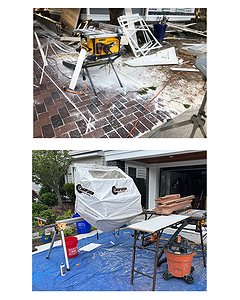
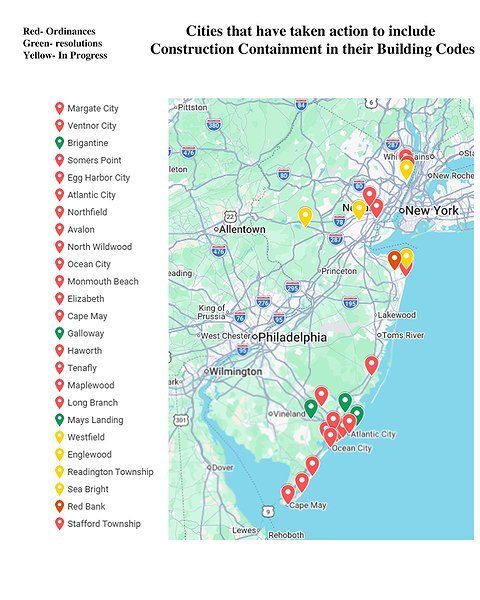 The bill, which replicates language in ordinances passed in 18 municipalities, would require building contractors to use containment devices, such as tents, tarps and saw hoods, wet saws and vacuums when cutting potentially contaminating materials such as Trex, AZEK, fiberglass and treated lumber to prevent microplastics and other pollutants from ever getting into the environment.
More than an enforcement action, the bill is considered a containment bill that will reduce pollution of the air, ground and water.
Jasiecki spoke about his discovery of microplastic particles floating on the surface of the back bay waters of Margate while he was kayaking several years ago. He visited several construction sites to speak with contractors about allowing debris to get into the storm drains, and most of them were completely unaware of the dangers microplastics pose to the fragile marine ecosystem.
“This is what we call carpenter’s snow,” he said showing photographs of the pollutant covering the ground and a picture of a contractor using a leaf blower to move the dust into the storm drain. Contractors should be required to clean up the dust at the end of each work day and dispose of it as solid waste.
“This is the responsible thing to do, and that’s what we are asking,” Jasiecki said.
Lilienfeld, a chemical engineer turned real estate agent who cares deeply about the environment, called the legislation “practical and common sense” for protecting workers, residents, and the environment.
“This is called source-containment, a basic engineering principle. It’s a lot easier to contain a contaminant and take care of it at the source, than try to clean up once it’s in the ocean,” she said. “When these materials are not properly contained, they become airborne, settle in soil, enter storm drains, and eventually reach our waterways and infiltrate our bodies and food supply.”
Studies show that microplastics are being detected in human blood, lungs, organs, brains, and sex organs. The construction workers themselves are the most at risk breathing in particles. Also affected are neighbors, children and pets who pick up particles on their fur and paws and track it into the home.
Jeff Kolakowski, CEO of the Builders Association for residential construction, questioned the meaning of the word “dust,” which he said could be covered under other local littering laws,
New Jersey has a housing affordability crisis, and the law could add costs that make housing construction more expensive, he said.
Although detractors of the bill cited cost of contractors and sub-contractors purchasing containment devices and the fines imposed as penalties for not adhering to the law, Lilienfeld said that the containment practices outlined in the bill are not “complicated nor expensive” – at most about $150 for a one-time expense that can be used on multiple job sites.
“Because the debris is contained, cleanup becomes dramatically faster – often taking only about 10 minutes. Jobsites remain cleaner, neighbors and customers are much happier, and complaints are reduced. Most importantly, workers are better protected from harmful exposure, which means fewer health problems and fewer sick days,” Lilienfeld said.
Since Margate adopted its ordinance, contractors have been receptive to complying with the regulations since they realize the benefits of preventing pollution and protecting their workers.
The law would be regulated at the local level by code enforcement officers and building inspectors, and the added cost to purchase the appropriate equipment would be minimal, they said.
“Do you want a patchwork of ordinances across the state, or one unified law,” advocate Brian Thompson said.
The idea of the bill is to make structural changes to contractor procedures that become rote, Collazos-Gill said.
Following testimony, the Assembly Environment and Solid Waste Committee voted 4-2 to advance the bill and recommended amendments that would adjust the fines and language regarding work being done outdoors or indoors. The bill was referred to the Commerce and Economic Development Committee. It would be up to the chair of that committee to post the bill for review.
Read the bill 6239_I1.pdf
Listen to the hearing here.
Copyright Fideri News Network 2026