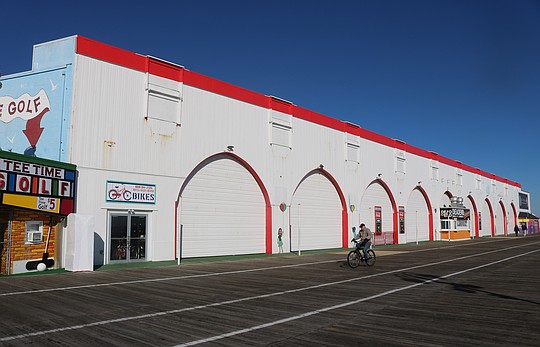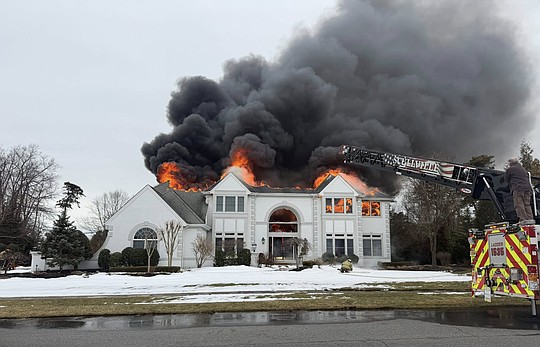
The New Jersey coastline is in the middle of a construction cycle that hasn't slowed down. From Atlantic City north through Ventnor and Margate, new residential towers, mixed-use hospitality projects, and entertainment venues are going up faster than at any point in recent memory. The density is increasing. The variety of uses packed into smaller footprints is increasing. And the acoustic conflicts that come with all of it are showing up in ways that weren't a factor when these corridors were built at a lower intensity.
Serious developers and contractors in the region have started treating acoustic measure as a non-negotiable early step — not an afterthought once complaints start rolling in. The shift is partly regulatory, partly market-driven, and partly the result of hard lessons from projects that got it wrong and paid for it later.
Shore construction operates in a specific environment that amplifies acoustic problems in ways that inland projects don't encounter at the same scale. Getting clear on the sources is essential before any measurement or mitigation work begins.
Coastal environments are acoustically harsh. Concrete boardwalks, glass building facades, asphalt parking structures and open water create a reflective landscape where sound travels farther and bounces unpredictably. Ocean wind loading on building envelopes adds dynamic pressure variation that standard construction details weren't always designed to handle.
The result is that a noise source that would be tolerable in a suburban context becomes genuinely disruptive near the water. A rooftop bar, a hotel pool area, a parking garage entrance — each of these radiates sound into neighboring units in ways that are difficult to predict without actual measurement data gathered on site.
The mixed-use format that dominates current shore development creates acoustic conflicts that are structural rather than incidental. Ground-floor commercial uses — restaurants, bars, retail with music — sit directly below residential units. Mechanical systems serving commercial kitchens share wall and ceiling assemblies with apartments above.
Impact noise, low-frequency bass transmission, plumbing sound — these are problems that don't announce themselves during a building inspection and don't show up until occupants move in. By then, fixing them is expensive, disruptive, and sometimes architecturally impossible without major remediation.
Acoustic measurement isn't a single test at project completion. It's a process that runs through the build and informs decisions at every stage. Understanding what each phase reveals makes it clear why skipping any of them creates risk.
Before any ground is broken, a baseline acoustic measurement documents the existing noise environment at the site. Ambient levels, dominant frequency ranges, time-of-day variation, nearby noise sources — all of this gets captured and quantified using calibrated sound level meters and frequency analyzers.
This data does several things at once. It establishes what the project is working against. It identifies which orientations and floors face the greatest noise exposure. It gives the design team real numbers to target rather than assumptions. And it creates a documented baseline that protects the developer if post-occupancy disputes arise about noise conditions that predate the building.
Construction conditions change the acoustic reality of a project continuously. Wall assemblies get modified in the field. Penetrations get added for mechanical and electrical runs. Isolation details get compressed under schedule pressure.
Mid-build testing catches these deviations before they're sealed inside finished walls. A flanking path discovered at rough-in costs a fraction of what it costs to address after drywall is hung and painted. Post-build testing then verifies that the completed building performs at the levels the design intended and the code requires.
One measurement at the end tells you what you have. Testing through the process gives you the ability to control what you end up with.
Regulatory compliance is the floor, not the ceiling. But understanding what the floor actually requires — and how it varies across shore municipalities — is essential groundwork for any serious development project in the region.
New Jersey's statewide noise code sets baseline limits for construction noise, operational noise, and residential sound transmission standards. But Atlantic City, Ventnor, Margate, and Longport each layer local ordinances on top of the state framework. Permitted hours for construction activity, maximum decibel levels at property lines, specific restrictions around hospitality and entertainment uses — these vary meaningfully from one municipality to the next and change periodically.
A developer operating across multiple shore communities can't assume uniform requirements. What passes in one jurisdiction may trigger a violation notice two blocks away across a municipal boundary. The only reliable approach is current, jurisdiction-specific research at the start of every project.
Post-occupancy failures are expensive in every direction simultaneously. Remediation work in an occupied building is disruptive, logistically complicated, and rarely produces results as clean as getting it right during construction. Legal exposure from tenant complaints and municipal enforcement actions adds cost and timeline uncertainty. Reputational damage in a regional market where developers work the same corridors repeatedly is real and lasting.
The pattern is consistent. Projects that skip rigorous acoustic measurement during design and construction are the ones that show up in post-occupancy complaints. Projects that invest in the process early rarely end up there.
Measurement without action is just documentation. The value of acoustic data is in how it shapes the decisions that follow — and those decisions happen at every level of a project.
Material Selection, Wall Assembly and the Role of Measurement
Baseline and mid-build measurement data directly informs which wall assemblies, floor-ceiling systems, and window specifications will achieve target performance levels. Without site-specific data, material selection defaults to generic specifications that may over-engineer some elements and underperform on others.
Real measurement tells you where the energy is concentrated — which frequency ranges are dominant, which transmission paths are most active, which surfaces are contributing most to the problem. That precision allows material investment to go where it actually matters rather than being distributed evenly across a building that has very uneven acoustic exposure.
It happens. Mid-build testing sometimes reveals that a wall assembly isn't performing at the level the design assumed, or that a mechanical penetration has created a flanking path that bypasses the isolation detail entirely. These findings require a response.
The response options available mid-project are significantly better than the options available after completion. Assembly modifications, additional damping layers, isolation detail corrections — all of these are manageable during construction. After occupancy, the same fixes require tenant coordination, finished surface demolition, and remediation costs that routinely run three to five times the original installation cost.
Acoustic measurement and remediation at a professional level requires equipment, methodology, and field experience that general contractors don't carry in-house. The shore development community has increasingly recognized that bringing in qualified specialists early produces better outcomes than waiting for problems to surface.
New York Soundproofing provides the full service range that shore developers and contractors need — from professional acoustic measurements and pre-construction consultation through complete soundproofing implementation for both commercial and residential projects. They work across the region, bring calibrated diagnostic equipment to every site assessment, and carry the kind of applied construction experience that translates measurement data into practical building decisions.
For developers who want to get it right the first time and avoid the remediation cycle entirely, the consultation starts before the foundation does. That's where the leverage is, and that's exactly where this kind of specialist earns their place on the project team.