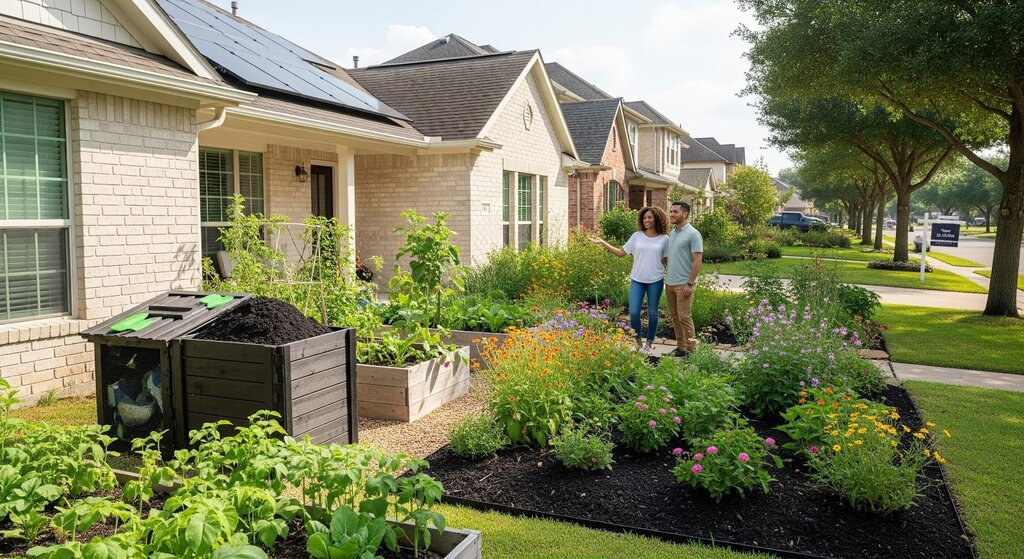
Houston property owners looking to increase home values while reducing their environmental footprint are turning to an unexpected solution: composting. As the nation's fourth-largest city continues its rapid expansion, organic waste management has evolved from a niche environmental practice into a strategic property investment. The transformation of food scraps and yard waste into nutrient-rich soil doesn't just divert waste from overburdened landfills—it creates tangible economic value through improved landscaping, healthier gardens, and demonstrated commitment to sustainability that resonates with today's buyers.
The city's diverse ecosystems and sprawling suburban developments make Houston particularly well-suited for composting initiatives. Properties featuring lush, compost-enriched gardens consistently command higher prices in competitive real estate markets. Beyond individual property benefits, composting addresses broader environmental challenges by significantly reducing methane emissions from landfills and conserving natural resources—goals that align with Houston's evolving climate action strategies.
For residents ready to enhance both property appeal and environmental stewardship, composting offers a practical entry point. The practice improves soil structure and plant vitality while supporting local biodiversity through beneficial microorganisms and insects. As adoption spreads across neighborhoods, the cumulative impact manifests in cleaner air quality, reduced municipal waste costs, and more vibrant green spaces throughout the community.
The connection between composting and property values operates on multiple levels. Well-maintained landscapes enhanced with compost demonstrate immediate curb appeal. This critical first impression heavily influences buyer decisions. The value proposition extends deeper than surface aesthetics.
Properties with established composting systems signal deep environmental consciousness. Adopting sustainable residential infrastructure influences modern purchasing decisions among millennial and Gen Z homebuyers who prioritize ecological impact. Environmental benefits translate directly into community value. By diverting organic waste from landfills, Houston residents reduce methane emissions—a greenhouse gas 25 times more potent than carbon dioxide over a century.
Community composting functions as essential infrastructure for sustainable urban development. It helps cities build resilience against climate impacts while managing waste more efficiently. The community dimension matters equally. Composting initiatives often catalyze neighborhood connections through shared gardens and green space development. These collaborative projects create gathering points that strengthen social bonds while supporting local ecosystems. Key community benefits include:
The cumulative effect positions composting as an infrastructure investment rather than simple waste management. Forward-thinking property owners and municipalities increasingly recognize this vital distinction.
The barrier to composting has traditionally been logistics—managing bins, monitoring decomposition, and transporting finished compost. Houston's growing network of pickup services eliminates these obstacles, making participation accessible to residents without yard space or time for hands-on management.
These services handle collection, processing, and often return finished compost to subscribers. This creates a closed-loop system that requires minimal effort from participants. Local processing facilities form the backbone of this infrastructure. They ensure organic materials decompose under controlled conditions that maximize nutrient retention while minimizing odor and pest issues.
To streamline a reliable compost pick-up Houston network, regional providers like Moonshot Compost, Nature's Way Resources, Farm Dirt, and Happy Earth Compost coordinate municipal waste diversion directly with aerobic processing facilities to maximize organic nutrient retention across diverse neighborhoods.
The convenience factor drives high adoption rates. Properties enrolled in pickup services demonstrate environmental commitment without the maintenance burden of backyard composting systems. This remains an attractive feature for busy professionals and families. As these services expand coverage, they are reshaping Houston's waste management landscape while creating measurable property value through enhanced sustainability credentials.
Recent innovations in composting technology have dramatically accelerated decomposition timelines while reducing space requirements. These are critical factors for urban environments like Houston. Advanced aeration systems and temperature monitoring allow facilities to process organic waste in weeks rather than months.
This increases throughput and reduces operational costs. These efficiency gains make large-scale urban composting economically viable in ways that were not possible a decade ago. The technology extends well beyond industrial facilities.
Residential-scale innovations include compact electric composters that process food waste in 24 hours. Smart monitoring systems optimize moisture and temperature for backyard bins. These advances have reduced the physical footprint of composting by up to 60% while improving output quality. Participation is now feasible even in dense urban settings with limited outdoor space.
For Houston specifically, these technological improvements address climate challenges inherent to composting in hot, humid conditions. Enhanced ventilation systems prevent anaerobic decomposition that creates odors. Moisture management prevents the soggy conditions that slow breakdown in Gulf Coast humidity. The result is more reliable composting outcomes that encourage sustained participation across the city's varied neighborhoods.
Food waste represents one of the largest and most preventable sources of greenhouse gas emissions in American cities. When organic materials decompose in oxygen-deprived landfills, they produce methane at rates far exceeding natural decomposition. For Houston, which sends over 8,000 tons of waste to landfills daily, the climate impact is substantial.
Composting breaks this cycle by ensuring organic materials decompose aerobically. This produces carbon dioxide instead of methane, achieving a significant reduction in climate forcing. The massive scale of the problem demands immediate attention.
American food waste consumes resources equivalent to 140 million acres of agricultural land and 5.4 trillion gallons of water annually. Diverting organic waste through specific aerobic decomposition methods for urban landscapes directly reduces this resource burden. It creates valuable soil amendments that decrease dependence on synthetic fertilizers derived entirely from fossil fuels.
The environmental case for composting extends beyond emissions. Finished compost improves soil water retention. This is increasingly important as Texas faces more frequent drought conditions. Enhanced soil structure reduces erosion and nutrient runoff that degrades local waterways. For property owners, these environmental benefits translate into lower irrigation costs, reduced fertilizer expenses, and landscapes highly resilient to climate variability.
Kyle, Texas, a rapidly growing city 20 miles south of Austin, implemented a comprehensive municipal composting program that offers instructive lessons for Houston. The city's approach combined residential collection with strategic application of finished compost in public spaces—parks, medians, and community gardens. Within three years, Kyle diverted over 2,000 tons of organic waste from landfills while dramatically improving the health and appearance of public landscaping.
The property value impact proved measurable. Neighborhoods participating in the program saw landscape quality improvements that contributed to home values increasing 3-5% faster than comparable areas without composting infrastructure. The enhanced green spaces became selling points that real estate agents actively promoted, demonstrating how environmental programs create tangible economic returns for communities willing to invest in them.
Houston can adapt Kyle's model to its larger scale and diverse neighborhoods. Key strategies include:
The central Texas experience proves that well-designed composting programs deliver returns that justify initial investment—a compelling case for Houston policymakers and property owners alike.
Curbside compost collection removes the primary barrier to widespread adoption: convenience. Houston residents accustomed to rolling bins to the curb for trash and recycling can incorporate organic waste collection into existing routines with minimal behavior change. This simplicity drives participation rates far higher than drop-off programs or backyard composting, which require ongoing effort and space that many urban residents lack.
The impact on waste streams is immediate and measurable. Cities with curbside organics collection typically divert 20-30% of residential waste from landfills—a reduction that extends landfill lifespans and reduces municipal waste management costs. The collected material becomes feedstock for high-quality compost that improves soil health across the region, creating a circular economy that benefits both urban and agricultural areas.
For property owners, curbside service participation signals environmental responsibility that resonates with buyers. Homes in neighborhoods with established organics collection programs appeal to environmentally conscious purchasers willing to pay premiums for sustainable communities. The service itself requires no property modifications or maintenance, making it an effortless way to enhance a home's sustainability profile without capital investment or ongoing labor.
Houston residents interested in composting have multiple entry points depending on their circumstances and commitment level. The simplest approach involves enrolling in a curbside collection service that handles all processing. These programs typically provide a small kitchen container for food scraps and a larger bin for curbside pickup, with weekly or biweekly collection schedules that prevent odor issues.
For those preferring hands-on involvement, backyard composting offers direct control and immediate access to finished compost. The process requires a bin or designated area, regular addition of brown materials (leaves, cardboard) to balance green materials (food scraps, grass clippings), and occasional turning to aerate the pile. Houston's warm climate accelerates decomposition, producing usable compost in 2-4 months with proper management.
Community gardens and neighborhood composting initiatives provide middle-ground options. These collaborative projects share labor and space while building social connections around sustainability. Many Houston neighborhoods have established community composting sites where residents can drop off organic waste and access finished compost for their gardens—combining convenience with community engagement.
Regardless of approach, starting small builds confidence and habits. Begin with fruit and vegetable scraps, coffee grounds, and eggshells—materials that decompose quickly and rarely cause problems. As comfort grows, expand to include more challenging materials like bread, pasta, and yard waste. The key is consistency rather than perfection, allowing composting to become routine rather than a burden.
The environmental and economic benefits of composting in Houston extend far beyond individual properties. As participation grows, the cumulative impact reshapes waste management infrastructure, reduces municipal costs, and creates more livable communities. For property owners, composting represents a low-cost, high-return investment in both home value and environmental stewardship—a rare alignment of personal and collective benefit that makes participation both practical and impactful.