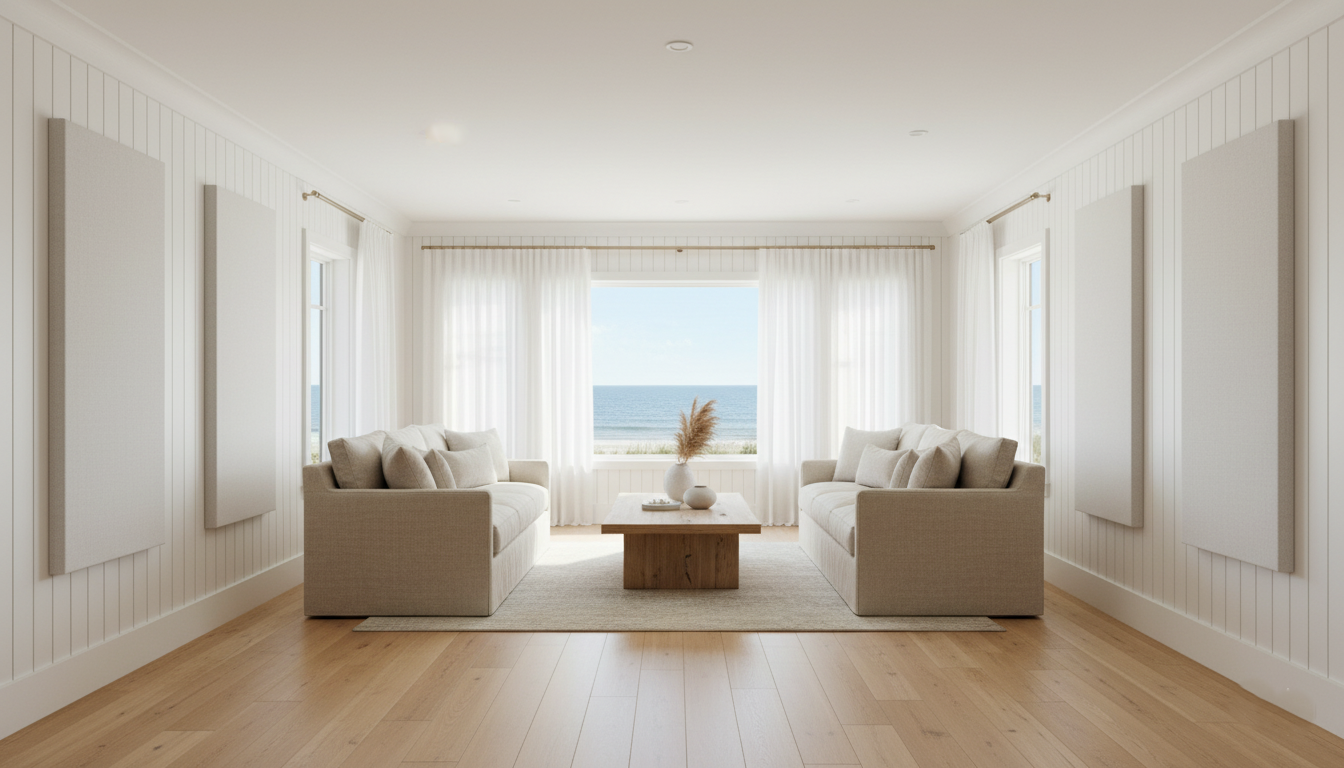
Shore house ownership in the Downbeach communities has shifted meaningfully over the last few years. The seasonal mentality — patch it up, rent it out, deal with it in the fall — is giving way to something more intentional. Owners are investing in interiors that work harder, feel better, and hold their value through multiple seasons of heavy use. The upgrades happening in Ventnor, Margate, Longport, and the surrounding areas aren't cosmetic. They're functional, and the best ones are invisible in the way that good design always is.
Among the most unexpected of those upgrades: white acoustic panels. Clean, minimal, and available in the kind of soft neutral tones that coastal interiors are built around, they disappear into the walls of a shore house so naturally that most guests assume they're a design choice rather than a performance solution. Which, at this point, they genuinely are both. Homeowners who installed them for acoustic reasons kept them for aesthetic ones. That combination doesn't happen often with functional upgrades, and it's driving real word-of-mouth among shore communities along the South Jersey coast.
Here's what's behind the trend, where it makes the most sense to apply it, and how owners are combining acoustic treatment with other practical upgrades without compromising the coastal character they bought the house for in the first place.
Shore houses weren't designed with acoustics in mind. They were designed to be easy to clean, easy to rent, and easy to enjoy during a two-week vacation. The features that make them practical create significant acoustic challenges for anyone spending extended time inside.
The typical Downbeach shore house runs an open-plan living and dining area with hardwood or tile floors, minimal soft furnishings, and walls that have seen more coats of semigloss than any room should. Every one of those surfaces reflects sound. Put a group of people in that space and the noise compounds fast. Add the constant background of ocean wind, which comes through older windows and under doors with impressive persistence, and the acoustic environment becomes genuinely fatiguing. It looks like paradise and sounds like a school cafeteria.
High ceilings in renovated properties make it worse. More vertical volume means longer reverb times and more pronounced echo on any hard surface below. The renovation that added the vaulted ceiling also added an acoustic problem that nobody mentioned during the walkthrough.
Peak season on the Downbeach strip brings foot traffic, neighboring rentals cycling weekly, outdoor events, and street activity that runs later than anyone planned for. A property that feels peaceful in October sounds completely different in July. Owners who rent their homes through the summer are hearing about it in reviews. Guests notice noise more than almost any other environmental factor, and negative mentions of noise in rental reviews have a measurable effect on booking rates. The acoustic problem isn't just personal comfort. For rental properties, it's directly tied to income.
Walk into any shore house that was renovated in the last fifteen years and you'll find the same aesthetic DNA: white walls, natural wood tones, linen fabrics, woven textures, plenty of natural light. It's a palette that works because it's simple, durable, and timeless. The problem with most acoustic products is that they were designed for recording studios and conference rooms, not beach houses. They look like they belong somewhere else entirely.
Foam wedge tiles in charcoal gray read as technical equipment, not interior design. They signal "recording studio" or "gamer bedroom" immediately and visually, regardless of where they're mounted. In a shore house that someone has spent real money decorating thoughtfully, foam panels are a jarring intrusion. Most owners who tried them removed them within a season. The acoustic benefit wasn't worth what they did to the room visually.
Fabric-wrapped panels in white, off-white, or soft natural tones behave completely differently in a coastal interior. The fabric texture reads as intentional, the color disappears into the wall, and the clean rectangular geometry looks like it was specified by the same designer who chose the light fixtures. Mounted symmetrically on a living room wall or flanking a bedroom window, they look like wall art that happens to be flush and simple. Guests consistently assume they're decorative. They're not wrong — they just don't know the full story.
This is where the acoustic problem is most acute and where treatment delivers the most noticeable return. Four to six panels distributed across the side walls and one ceiling cloud above the primary seating area reduce reverberation enough to make conversation at normal volume possible even when the house is full. The difference between a treated and untreated open-plan shore house living room during a summer gathering is dramatic. Less shouting, less fatigue, genuinely more enjoyable time in the space.
A bedroom in a rental property that sleeps poorly costs money in reviews. Two panels on the wall shared with the noisiest adjacent space — a hallway, another bedroom, or a living area — reduce transmission enough to matter. A door sweep closes the gap that lets sound travel freely under the door. These are small interventions with outsized returns in the context of a rental property where guest experience is the primary business metric.
Shore houses that double as part-time remote work locations need acoustic control for an entirely different reason. Video calls, client meetings, focused work — none of it functions well in a reverberant open-plan room. Owners who use their properties year-round have been the fastest adopters of wall treatment specifically because they experience the acoustic problem daily rather than seasonally.
Panels handle the reflective surfaces. The gaps handle the transmission paths. Both need attention for a shore house to perform well acoustically across all the ways it gets used.
Shore house interior doors are rarely well-sealed. The gaps at the bottom and sides of bedroom doors in older Downbeach properties can be substantial, and the door frames in houses that have settled over decades are rarely square anymore. A surface-mounted door sweep requires no contractor and no modification to the door itself. Compression seals on the jamb close the perimeter. For rental bedrooms especially, sealed doors translate directly into better guest sleep and better reviews.
A large area rug on a hardwood floor absorbs floor reflections passively. Heavy linen curtains extended beyond the window frame on all sides, adding absorption and light control simultaneously. An upholstered sofa rather than a leather one contributes to the overall absorption budget of the room without adding anything that reads as acoustic treatment. These choices are natural in a coastal aesthetic anyway. In combination with wall panels and a sealed door, they create a room that's genuinely quiet and genuinely comfortable without looking like anything other than a well-designed shore house.
Specialty acoustic retailers don't exist in Atlantic City or the surrounding Downbeach communities. The hardware stores carry basic weatherstripping. General home goods stores carry nothing that performs at the level a serious installation requires. Driving to Philadelphia or ordering blind from a general online retailer means guessing at specifications and hoping the color is what the screen showed.
Sound Pro Solutions carries professional-grade white acoustic panels, including inner-frame configurations that mount cleanly and hold their shape through seasonal temperature swings — relevant for shore properties that go unheated in winter. They ship nationwide, which makes them a practical source for South Jersey homeowners who want the right product without the trip. The range covers wall panels, ceiling solutions, and door sealing products, and the support team can help spec coverage for a specific room if the square footage or ceiling height creates any variables worth accounting for.
The shore house looks beautiful and sounds like it is entirely achievable. It just takes knowing which upgrades to make and where to source them.