By Sophie Nieto-Muñoz
Reprinted with permission
New Jersey Monitor
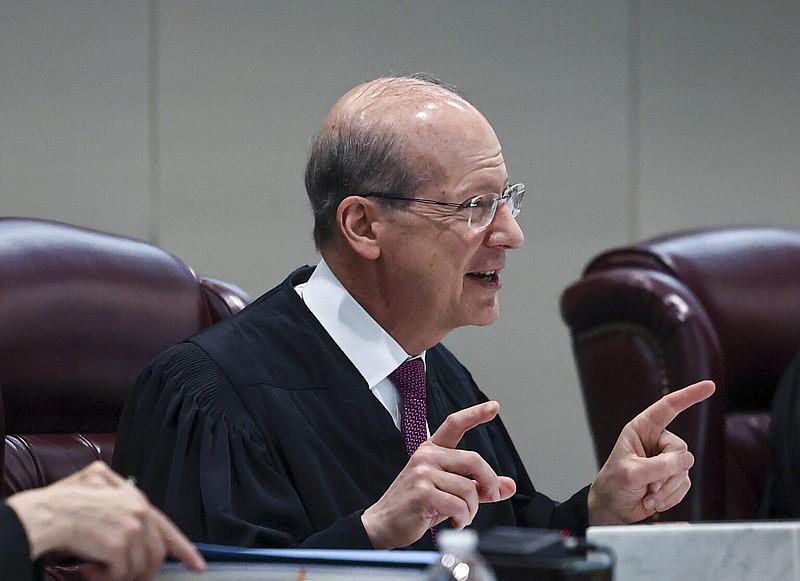
The state Supreme Court unanimously ruled Wednesday that employers must pay undocumented immigrants minimum wages required by state law, despite federal law barring employers from hiring workers who are in the United States illegally.
The 34-page decision, written by Chief Justice Stuart Rabner, centers around an undocumented immigrant from Newark who worked as a superintendent for a residential and commercial realty company for more than three years without collecting pay. The ruling reverses lower court rulings in the employer’s favor.
“If an employer hires an undocumented worker in violation of federal law, the employer is required to compensate the person in a manner consistent with state law for work they actually perform,” Rabner wrote.
The decision remands the case back to the trial court to determine damages owed to the employee.
Sergio Lopez, the undocumented worker, was hired in June 2015 by Mike Ruane, the owner of residential and commercial realty company Marmic. Lopez worked as the superintendent of two Marmic buildings in Newark.
Soon after Lopez was hired, Ruane discovered Lopez used an invalid Social Security number when he applied. Ruane then stopped paying Lopez the agreed-upon $400 weekly wage and instead said Lopez could live rent-free in a basement apartment in lieu of pay. Ruane told Lopez he couldn’t pay him because it would be against the law for him to pay someone who is undocumented.
In 2018, Lopez, who worked between 37 and 60 hours a week, filed a wage complaint with the state Department of Labor, which fined Ruane $750, later settled for $250. Lopez was fired in December 2018 and filed a lawsuit against Marmic in September 2019.
A trial court dismissed Lopez’s claims, saying he was not credible since he lied on his job application. An appellate panel affirmed that ruling, finding that because Lopez was undocumented, there “could be no employee-employer relationship between the parties.”
But Rabner said New Jersey’s Wage and Hour Law, which requires employers to pay the minimum wage established by law, and the Wage Payment Law, which requires that employers pay their workers the full amount they are owed, do not exclude undocumented immigrants from their reach.
Allowing employers to hire migrant workers and refuse to pay them would achieve the opposite of what federal immigration law intends, he added.
“Otherwise, certain employers would be incentivized to hire undocumented workers … and pay them less than the law requires,” he wrote.
The U.S. Supreme Court in 2002 ruled in Hoffman Plastic Compounds, Inc. v. National Labor Relations Board that federal immigration law bars awarding backpay to undocumented immigrants, saying to do so “trivializes the immigration laws” and condones and encourages future violations. But Rabner wrote that applies to backpay, not payment for work that employees have already performed.
Marmic argued that the parties’ barter agreement — a rent-free apartment in exchange for labor — created a legally distinct relationship outside of the employee-employer relationship contemplated by state wage laws. But Rabner said the bartered apartment neither satisfied nor voided the state’s laws.