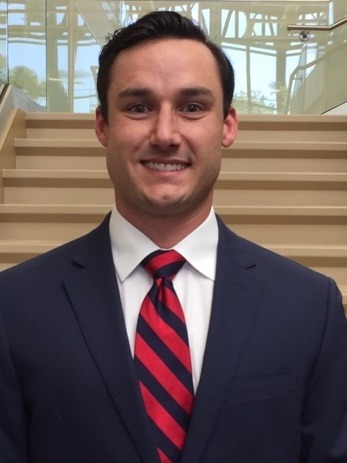
Bradley Swaim has spent his career learning that the exam room is only part of the job. The Doctor of Optometry, who trained at the Southern College of Optometry in Memphis, has built a clinical identity around something his father modeled long before he ever held a retinoscope: that good medicine is equal parts science and humanity.
“Patients don’t care how much you know until they know how much you care,” Swaim says, citing a lesson passed down from his father early in his training. It is a line he returns to often. And it shows up not just in how he runs an appointment, but in how he spends his time outside the clinic.
Bradley Swaim Optometrist earned his Doctor of Optometry degree in 2022 after completing rotations at the Eye Center at SCO and the Greenville VA Clinic, his training spanned adult and pediatric primary care, cornea and contact lens services, vision therapy, low vision rehabilitation, advanced ocular disease, and dry eye care. He also completed training in laser peripheral iridotomy and selective laser trabeculoplasty during his clinical years.
Before optometry school, he graduated from East Carolina University with a Bachelor of Science in Pre-Professional Health and Chemistry. He tutored organic chemistry. Precision, it turns out, has always been part of the picture.
But the piece of his story that tends to surprise people is the part that happens away from diagnostic equipment and patient charts.
Bradley Swaim optometrist has participated in community eye care outreach events designed to bring vision screenings to underserved populations. He frames this work plainly: vision is not a luxury. It is tied to safety, independence and basic quality of life. People who go without screenings do not just struggle to read, they lose function.
He does not overstate his role. He describes his outreach work as participation in broader efforts, not solo crusades. That restraint is deliberate. Swaim has been shaped by mentors who emphasized trust over volume, Dr. Neil Gailmard’s published philosophy being one example he references directly. The goal, in his words, has never been to rack up numbers. It has been to be useful.
That philosophy extends to how he thinks about community health access. Optometry, he argues, is well-positioned to serve as an entry point into the broader healthcare system. Eye exams can flag systemic conditions. Screenings catch what people do not know they are missing. For underserved populations, that access gap is not a footnote; it is the whole story.
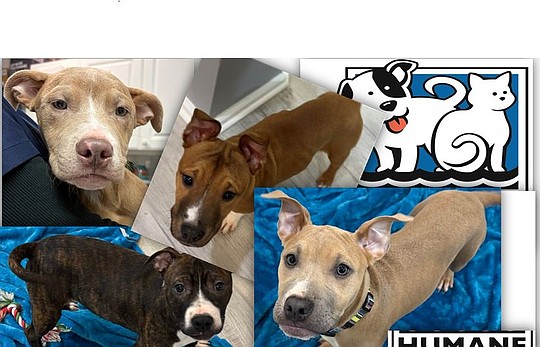
More recently, Swaim has been volunteering with Cause for Paws, an organization focused on supporting and rehabilitating animals in need. He describes it as personally meaningful work that sits comfortably alongside his clinical values. Compassion, he says, does not clock out.
The connection between animal welfare volunteering and a medical career might seem like a stretch. Swaim does not see it that way. He talks about his dogs in the same breath he uses to describe balance and presence. Caring for animals, he says, pulls him into the moment. Forces a kind of stillness that clinical work, with its pace and pressure, can erode.
He spent a recent afternoon playing paintball with his brother. He mentions it not as a boast but as evidence of something deliberate. He protects time away from the clinic. Not because he is disengaged, but because he believes showing up well for patients requires showing up well for himself first.
There is a story Swaim tells about a patient he encountered when he was still working as an optometric technician, years before he had a degree behind his name. The man had been struggling with troubling visual symptoms for months. He had seen multiple providers, undergone multiple evaluations, and been told, more than once, that nothing was wrong and that his concerns were exaggerated.
By the time he reached the clinic where Swaim worked, the patient was discouraged in the particular way people get when the system has repeatedly failed them. He had stopped expecting to be believed.
Swaim made a different call. He slowed down. He listened without assuming the previous assessments were the final word. The patient’s account was consistent and sincere, even if it had been dismissed elsewhere. So Swaim performed a confrontation visual field test, a simple screening that takes under a minute. The results were clearly abnormal and matched what the patient had been describing all along.
That small decision mattered enormously. It gave the doctor whom Swaim worked with enough clinical grounding to pursue urgent neuro-imaging and a specialty referral. The patient was ultimately diagnosed with a brain tumor that required treatment. His relief was profound, and it was not only about the diagnosis. It was about finally being taken seriously by someone in a clinical setting.
“It reinforced that our greatest impact does not always come from complex procedures or advanced technology, but from listening, believing our patients, and being willing to investigate rather than dismiss,” Swaim says.
He was not yet a doctor when that happened. He was a technician who decided not to assume. The outcome changed a man’s life, and it changed something in Swaim, too. It was a reminder that presence and attention are also clinical tools.
Bradley Swaim optometrist defines success the way someone does when they have thought carefully about what the word actually means. Not productivity. Not revenue. Lasting impact while staying in alignment with one’s values.
That framing carries into how he talks about the future. He wants to keep expanding access through outreach. He wants to continue volunteering. He talks about the profession’s responsibility to reach people who do not already have a path to care, and he is direct about the fact that optometrists are positioned to do that in ways that other specialties sometimes cannot.
He draws on a roster of mentors when he describes what excellence looks like. Dr. Borgman at SCO showed him what empathetic clinical reasoning looked like in practice. The published work of Dr. Ron Melton and Dr. Randall Thomas shaped how he approaches diagnosis and disease management. Gailmard reinforced his resistance to treating patient care as a volume exercise.
What ties these influences together is not a technique or a tool; it is a posture. You show up fully. You listen before you conclude. You advocate for the person in front of you.
“I would tell my younger self that a shortcut is often the longest road,” Swaim says. It applies to clinical decisions. It applies to community involvement. Do the work right the first time and the results tend to compound.
That is the throughline in the career Bradley Swaim is building. Small decisions, consistent choices, and a standard he intends to hold.