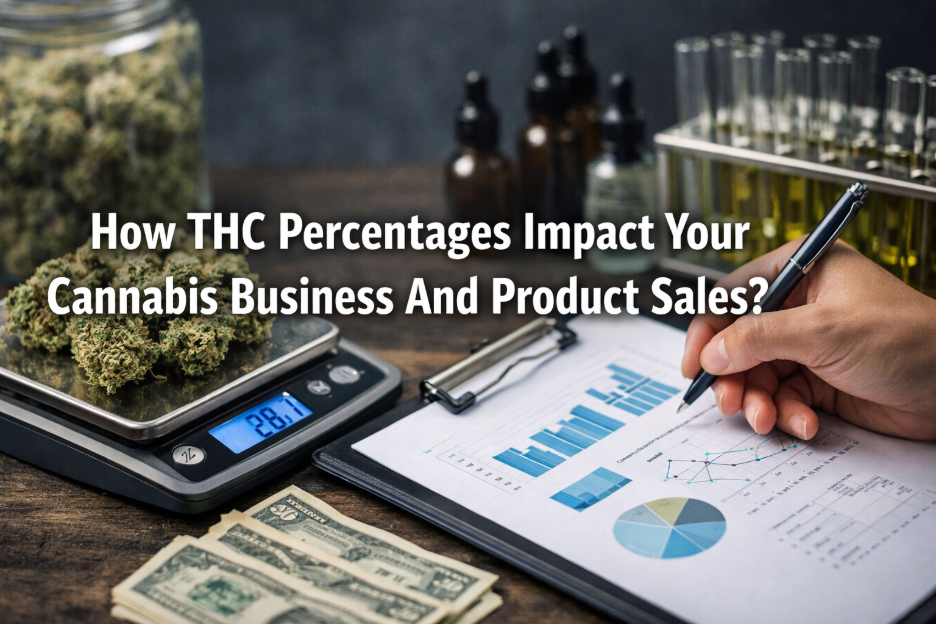
Running a cannabis business requires constantly balancing the quality of product, customer expectations, and competition in the market. Yet one factor continues to influence the purchasing decision more than even many retailers expect: THC percentage.
Customers often check product labels for potency levels, while retailers have to determine how to mark, price, and market products based on numbers.
However, depending on high THC percentages can cause confusion for buyers, as well as lost opportunities for businesses. Some customers equate the potency with quality, while others seek balanced or moderate experiences. As a result, it becomes important to understand the impact of THC percentages on perception, product positioning, and sales strategy.
When the THC approach is strategically positioned, it can become a great tool in product differentiation and customer education.
This article covers how the percentage of THC affects your cannabis business and product sales, and how you can use this information to make better retail decisions for your cannabis business.
1. Shape Customer Expectations
When customers walk into a dispensary or visit products online, one of the first things they are looking for is potency. THC percentages are a good, quick reference point to help buyers get a rough idea of the strength of a product before buying it. Because of this, many businesses take advantage of resources such as a THC Percentage Guide, which will help their customers understand what these numbers really mean.
However, THC percentages can be easily interpreted incorrectly. A customer may think that a product with 28% THC is inherently better than a product with 18%. In reality, potency is not what makes for overall experience or quality. Factors such as terpene profile, strain type, and individual tolerance also play a part in how a product feels.
Therefore, educating your customers becomes very crucial. When retailers educate consumers on how THC levels occur in various experiences, the consumers are more comfortable with their purchases. This confidence often also results in a stronger customer loyalty and in repeat sales.
In addition, clear explanations reduce unrealistic expectations. When customers know about potency ranges and how they affect the product, they are less likely to be dissatisfied with their purchase.
2. Influence Product Pricing Strategies
THC percentages also have a large role in pricing. In many cannabis markets, products with higher levels of THC are considered to be higher-quality products. As a result, retailers often charge more for these products compared to those that have moderate or less potency.
While this strategy can be used to increase margins, it also presents challenges. If customers were only to look at potency, they might not consider products with excellent taste, balanced effects, or therapeutic benefits. This can result in slower movement of certain inventory items.
A better approach is to price based on overall product value and not just THC. For example, products with rich terpene profiles or carefully cultivated strains may warrant higher prices even with moderate THC amounts.
At the same time, offering a range of price points means that you can appeal to different customer segments. Some buyers are more focused on potency needs while others like to consider low cost or balanced effects.
By making THC content available along with other product characteristics, you enable your customers to make better decisions and keep the product mix healthier.
3. Affect Product Positioning
Another important factor is how the percentages of THC affect product positioning. Cannabis consumers have a wide range of experiences and preferences. Some customers are looking for strong experiences, while others prefer more mild or controlled ones.
Therefore, classifying products by potency can help you make your offerings quicker for people to navigate. For example, a lot of retailers organize products into categories such as:
This structure assists customers in quickly identifying products according to their comfort level. Beginners may prefer lower THC ranges, while experienced consumers may gravitate towards stronger products.
In addition, clear positioning helps your staff better guide your customers. When budtenders understand potency categories, they can use these to make recommendations that are aligned to individual needs.
As a result, customers receive better service and feel more confident to try new products.
4. Drive Marketing and Product Descriptions
THC percentages frequently become a central part of cannabis marketing. Product listings, packaging, and promotional materials often highlight potency to attract attention.
However, focusing only on THC can oversimplify the product experience. While potency matters, many consumers also care about flavor, aroma, and overall effects.
For this reason, effective marketing combines THC percentages with additional context. For example, product descriptions may include:
When customers see THC levels explained alongside these details, they gain a fuller understanding of what the product offers.
Furthermore, informative marketing builds credibility. Instead of simply promoting the highest numbers, your brand becomes known for helping customers make informed choices.
Over time, this approach strengthens brand trust and encourages repeat business.
Conclusion
THC percentages play a powerful role in shaping cannabis purchasing decisions. They influence customer expectations, pricing strategies, product positioning, and marketing messages. At the same time, misunderstanding potency can lead to confusion or unrealistic expectations.
For cannabis businesses, the key lies in balancing potency information with clear education. When customers understand how THC levels relate to experience, they make better decisions and feel more satisfied with their purchases.
By presenting THC percentages transparently, explaining their significance, and highlighting other product characteristics, your business can create a more informed and confident customer base.
In the long run, this approach transforms THC percentages from a simple number on a label into a strategic tool that supports stronger product sales and long-term brand growth.