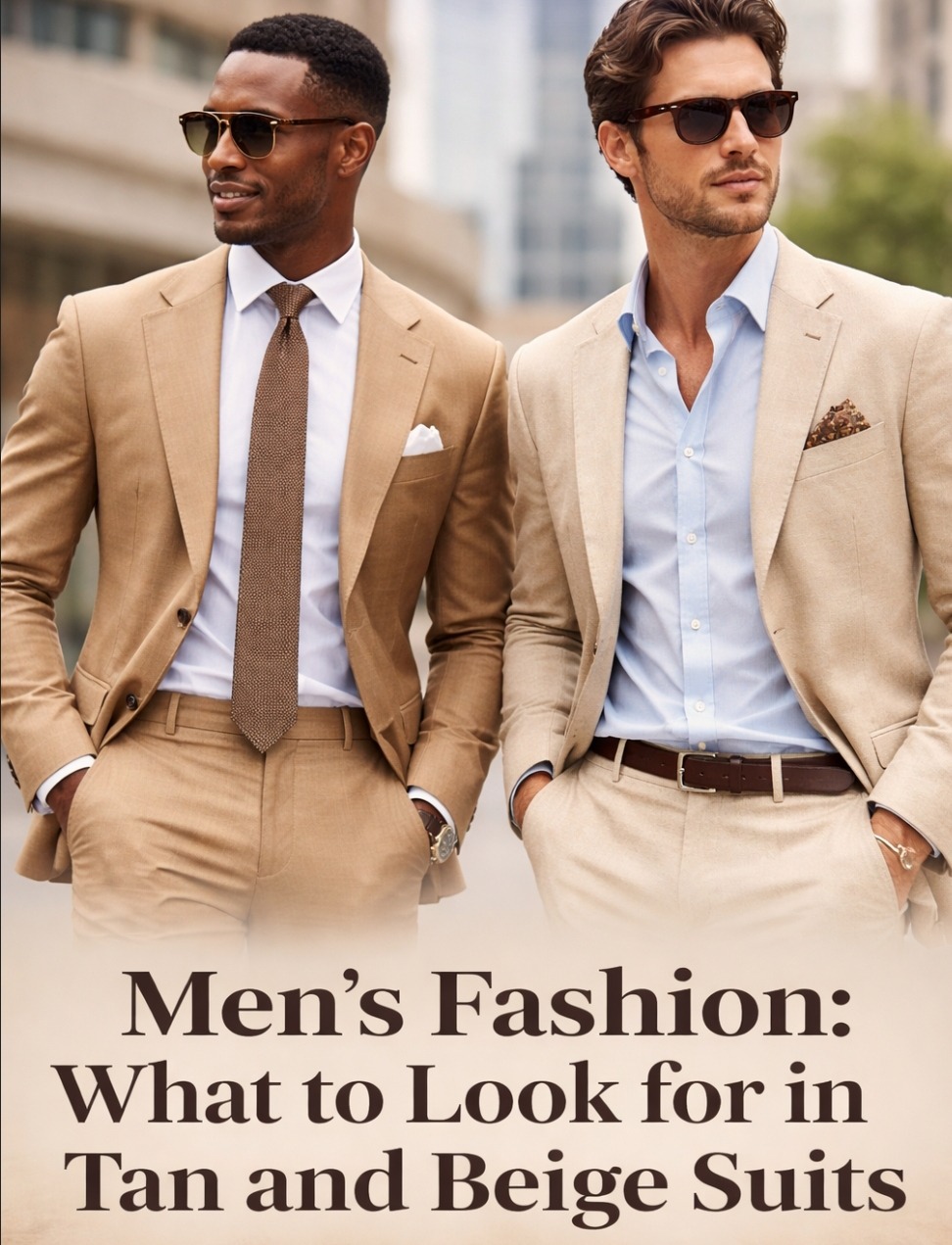
Tan and beige suits are often hailed for their versatility and elegance, standing out as a sartorial choice that can navigate between professional and casual affairs with ease. However, with a spectrum of shades available, not every tan or beige suit will suit every individual alike.
Understanding how to select the right hue, fabric, and fit is key to making a polished impression. The right accessories can also elevate the sophistication of the suit. Below, we’ll explore some considerations to keep in mind when selecting and styling these suit colors.
Finding the ideal shade of tan or beige for your suit is fundamental to enhancing your natural complexion. The shade should contrast yet compliment your skin tone, avoiding any hues that make you appear washed out or blend too similarly with your skin color.
Lighter skin tones match well with richer, darker beiges, which create a pleasing contrast, while darker skin tones can brilliantly pull off lighter and mid-range tans, adding vibrancy to their appearance. Not all beiges are created equal; being mindful of the undertones in the fabric can make a substantial difference.
An actionable guidance is to try on various shades in natural lighting. Evaluate how each hue works with your skin tone in the mirror or with the help of a trusted adviser. For additional accuracy, you could also seek the opinion of a professional stylist or use digital tools designed to assess suitable color palettes.
The choice of fabric plays a pivotal role in the look and feel of a tan or beige suit. The material will influence the suit's texture, breathability, and suitability for different seasons or events.
Natural fibers like wool, cotton, and linen are popular for their breathability and are excellent choices for warmer months or climates. Wool, for its part, is a versatile choice that maintains its shape and offers a sophisticated drape, making it suitable for both formal and casual occasions. For a more relaxed summer look, linen is unbeatable, but it does tend to wrinkle easily. Selecting one of the finest tan and beige suits for men can elevate your overall appearance.
When selecting your fabric, consider the occasion. A finely woven wool suit serves well in a business or formal setting, while a lighter cotton or linen suit may be more suitable for casual daytime events or outdoor gatherings. Also, consider the fabric’s care requirements – some may need more meticulous care or frequent dry-cleaning.
The cut and fit of a suit are essential to creating a silhouette that is flattering and timeless. A tailored fit that complements your body type can significantly improve the overall appearance and comfort of the suit.
For a tan or beige suit, a slimmer cut often provides a modern and clean look that is both stylish and professional. It is important to ensure that the suit is tailored to avoid excess fabric, which can appear sloppy, without being too constrictive. Remember, the perfect fit will allow for freedom of movement and comfort throughout the day. GQ’s style guides are an excellent resource for understanding modern tailoring trends.
Seek the services of a competent tailor who can adjust the suit to your proportions. A well-tailored suit can mask imperfections and accentuate your best features, whereas an ill-fitting suit can detract from even the highest quality fabric and color choice. Opt for a trial fitting and communicate any preferences or concerns you may have.
Accessorizing your tan or beige suit offers an opportunity to personalize your look and make a memorable style statement. It's important to understand the balance between subtlety and boldness to achieve a harmonious ensemble.
Selecting the right colors for ties, pocket squares, and even socks is crucial. Classic combinations include pairing a beige suit with a white shirt and a dark brown tie for contrast, while a tan suit can handle bolder tie colors, such as burgundy or navy. Shoes should typically match the belt in shade, with dark brown being a safe and sophisticated choice for either suit color. The inclusion of a style guide from Esquire may provide further inspiration.
For actionable guidance, always start with neutrals as your base and gradually introduce pops of color through your accessories. Ensure all elements are coordinated in color or pattern to maintain a cohesive and polished appearance. Consider the event and season when accessorizing; lighter fabrics and colors for summer, and perhaps woolen ties and pocket squares for the colder months.
Ultimately, a tan or beige suit is a versatile piece that, with the right shade, fabric, tailoring, and accessories, can enhance a gentleman's wardrobe significantly. The key to successfully integrating these hues into your style rotation lies in attention to detail and a personalized touch. Properly selected and styled, tan and beige suits are a testament to timeless elegance and understated sophistication.