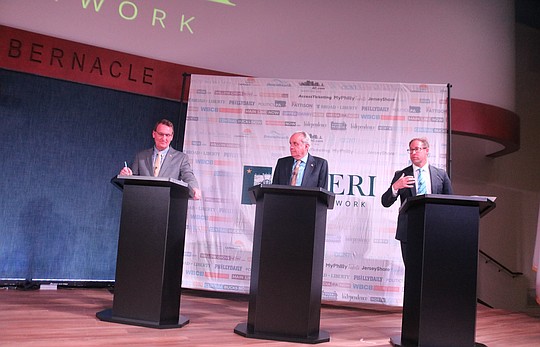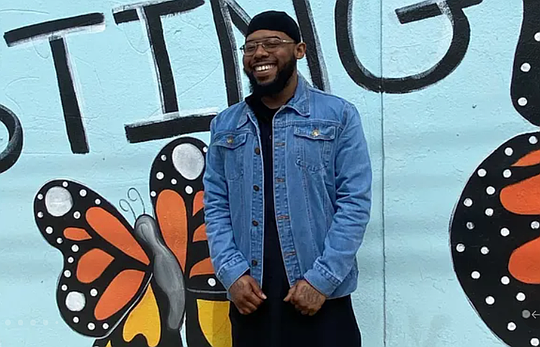
Yael Eckstein, President and Global CEO of the International Fellowship of Christians and Jews (also referred to as IFCJ or The Fellowship), oversees all ministry programs and serves as the international spokesperson for the organization.
Prior to her present duties, Yael Eckstein served as Global Executive Vice President, Senior Vice President, and Director of Program Development and Ministry Outreach. Based in Israel with her husband and their four children, Yael is a published writer and a respected social services professional.
Yael Eckstein has contributed to The Jerusalem Post, The Times of Israel, and other publications, and is the author of three books: “Generation to Generation: Passing on a Legacy of Faith to Our Children,” “Holy Land Reflections: A Collection of Inspirational Insights from Israel,” and “Spiritual Cooking with Yael.” In addition, her insights into life in Israel, the Jewish faith, and Jewish-Christian relations can be heard on The Fellowship’s radio programs.
Yael Eckstein has partnered with other global organizations, appeared on national television, and visited with U.S. and world leaders on issues of shared concern. She has been a featured guest on CBN’s The 700 Club with Gordon Robertson, and she served on a Religious Liberty Panel on Capitol Hill in May 2015 in Washington, D.C., discussing religious persecution in the Middle East.
She was also featured as the cover story of Nashim (Women) magazine in May 2015. Her influence as one of the young leaders in Israel has been recognized with her inclusion in The Jerusalem Post’s 50 Most Influential Jews of 2020 and 2021, and The Algemeiner’s Jewish 100 of 2019. She was named a winner in the 10th Annual 2022 CEO World Awards®, and received The Jerusalem Post’s 2023 Humanitarian Award.
Born in Evanston, Illinois, outside of Chicago, and well-educated at both American and Israeli institutions — including biblical studies at Torat Chesed Seminary in Israel, Jewish and sociology studies at Queens College in New York, and additional study at Hebrew University in Jerusalem — Yael Eckstein has also been a Hebrew and Jewish Studies teacher in the United States.
In a recent podcast episode of “Nourish Your Biblical Roots,” Yael Eckstein explores the spiritual and emotional power of forgiveness through the teachings of the Jewish High Holy Days.
Drawing from Scripture, Jewish tradition, and personal experience, she guides listeners through the process of repentance, atonement, and renewal that begins with Rosh Hashanah and culminates on Yom Kippur, the holiest day of the Jewish calendar.
Through biblical insight and lived tradition, Eckstein reflects on how forgiveness allows people to release the weight of the past, restore broken relationships, and move forward with purpose and faith. Her message speaks to Jews and Christians alike, offering a deeper understanding of forgiveness not only as a spiritual practice, but as a meaningful path toward healing and transformation.
Yael, welcome. You’re speaking to us from Israel today. Can you start by sharing what inspired today’s discussion on forgiveness and the past?
Most people carry around a lot of spiritual and emotional baggage throughout their lives. A lot of that baggage comes from the mistakes we made in the past or from the hurtful things that other people did to us. Today, we’re going to talk about how to let go of the past through the power of forgiveness so that we can move forward in our lives without all of that baggage weighing us down.
Forgiveness plays a big role in Jewish tradition, especially during the High Holy Days. Can you explain how that season sets the stage for this conversation?
The High Holy Days start with Rosh Hashanah, a joyful holiday that marks the Jewish New Year. In typical Jewish fashion, it’s celebrated with plenty of delicious food and feasting, but it also has a very serious side. It’s considered a day of judgment and begins the Ten Days of Repentance, which lead to Yom Kippur, the Day of Atonement. The Bible tells us to observe the Day of Atonement every year, and the traditions and teachings connected to it are meant to help guide us toward a better life
For people who may not be familiar with it, what makes Yom Kippur so significant?
Yom Kippur is the holiest day on the Jewish calendar. The Bible designates this day, the tenth day of the Hebrew month of Tishrei, as a day of atonement, a day on which God forgives us for our sins.
And where does the tradition of Yom Kippur come from?
The first time the Bible mentions this holy day is in Leviticus 16:29-30, which says, “This is to be a lasting ordinance for you. On the tenth day of the seventh month, you must deny yourselves and do not do any work, whether native-born or a foreigner residing among you, because on this day atonement will be made for you to cleanse you. Then, before the Lord, you will be clean from all your sins.” This verse tells us directly that Yom Kippur is a day set aside specifically for cleansing and forgiveness.
What are the historical roots of this day?
Historically, Yom Kippur has its origins in God’s forgiveness of the Israelites after they sinned by building the golden calf. That event led Moses to break the first set of tablets containing the Ten Commandments and caused God to want to destroy the entire nation of Israel. Moses pleaded with God for forgiveness, and ultimately God forgave the people. The day Moses brought down the second set of tablets, signaling God’s complete forgiveness of Israel, was the tenth day of the Hebrew month. That date became Yom Kippur, the Day of Atonement, and it has been a day of forgiveness ever since.
How was Yom Kippur observed in biblical times?
The Bible describes an elaborate service performed by the priests in the Tabernacle and later in the Temple in Jerusalem. That service, together with the people’s repentance, brought atonement for the nation of Israel every year. Today, we no longer have the Temple or the priestly service, but the power and purpose of this day remain very relevant, and we can still tap into it.
What does Yom Kippur look like in Israel today?
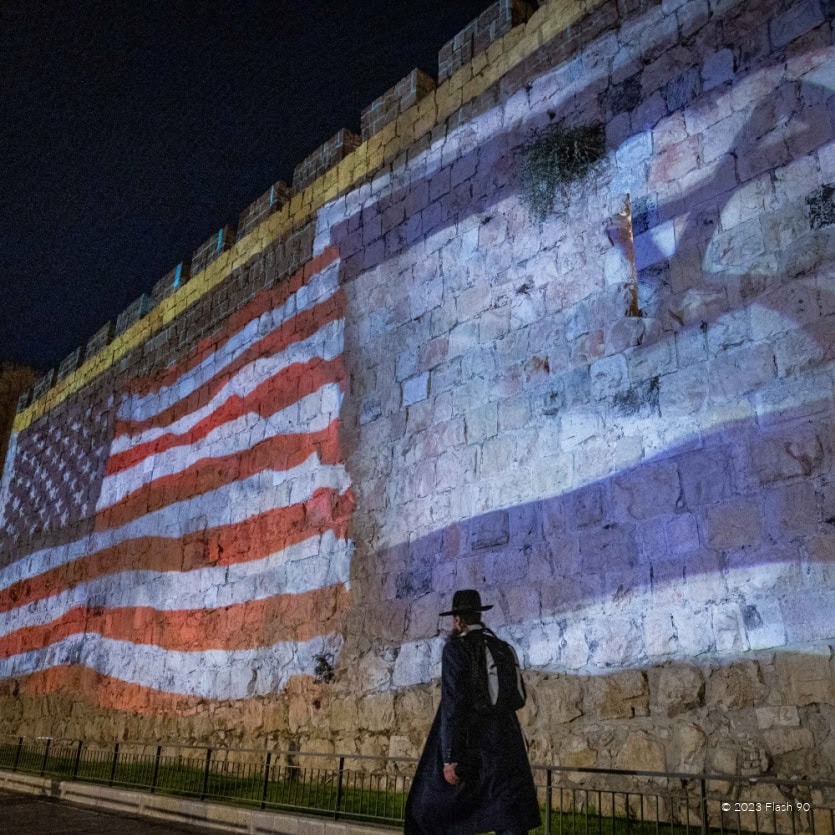
In Israel, where most people observe the sacred day, the holiness is tangible. There are almost no cars in the streets. Imagine empty streets, all the stores closed, and most people in synagogue. The silence, which is so unusual in our day and age, speaks volumes about the sanctity of the day. Every highway is empty. People even go bike riding on them. No cars are allowed to drive. No stores are allowed to be open. It's simply a day of atonement.
On the eve of Yom Kippur, adults begin a 25-hour fast. We don’t eat or drink, and instead we focus entirely on repentance and prayer. Many Jewish people wear white on Yom Kippur as a sign of purity and newness, and we wear only non-leather shoes as a sign of humility.
What does that experience feel like for you personally?
Standing in a synagogue among a sea of worshippers wrapped in white, praying beautiful prayers with melodies that stir my soul, feels otherworldly. There’s really no other way to describe it.
When the sun sets and Yom Kippur ends, there’s one final trumpet blast of the shofar, and then the congregation breaks out in celebration. I hug my daughters and the friends around me, and it feels like a weight has been lifted from our shoulders. We prayed all day. We repented. We fasted. And then we enter a new stage of holiness and purity as we return to everyday life.
Yom Kippur is often seen as solemn, yet you describe it as joyful. Why is that?
Even though Yom Kippur does have a solemn side, it’s considered one of the two most joyful days of the Jewish year. There’s an incredible joy that comes from knowing that we’ve been forgiven, that our relationship with God has been restored, and that everything is good again.
You’ve spoken about forgiveness as a gift, but also as a responsibility. Can you explain that distinction?
Divine forgiveness is a tremendous gift. The fact that God doesn’t hold us responsible for our past mistakes is a blessing that we shouldn’t take for granted. But Judaism teaches that while God can forgive us for anything related to our relationship with Him, He does not forgive our wrongdoings against other people until we have asked forgiveness directly from the person we hurt.
We’re required to seek forgiveness up to three times. After that, God will grant forgiveness even if the other person doesn’t. But we have to try. For this reason, the weeks leading up to Yom Kippur are traditionally a time to ask for forgiveness from the people in our lives.
Why do you think apologizing is so hard, even when we know we should?
It can be really uncomfortable to admit that we are or we were wrong. But at the same time, saying “I’m sorry” are two of the most powerful words that we can say. Those words have the ability to heal relationships and change the future for the better. It takes humility to apologize. But what I've learned is that people who are able to humble themselves and admit when they are wrong are the people who are truly great.
Do you have any personal stories that illustrate this idea?
No one taught me this lesson better than my Abba, my father, Rabbi Yechiel Eckstein of blessed memory. When I was a child and misbehaving, my father asked me to stop, but I ignored him. He asked again and again, and I didn’t listen. He was usually very patient, but that day I pushed him too far and he yelled at me. I ran to my bedroom in tears.
A few minutes later, he came in, sat on my bed, and stroked my back until I stopped crying. Then he said, “I’m sorry, Yael. I shouldn't have reacted so harshly. Yes, you were misbehaving, but you are the child and I am the parent. I shouldn't have lost my cool and yelled at you. In the future, I'm going to be more patient and talk things out with you.”
It was incredibly powerful when he admitted that he had been wrong and apologized for the way that he reacted. That day I learned that the sign of a truly strong and mature adult is the ability to ask forgiveness from anyone, including a small child. I learned that it was not just the right thing to do, but also the hallmark of a truly great person.
You also emphasize that forgiveness isn’t only about asking for it, but granting it. How does that show up in Jewish teaching?
Asking for forgiveness is not the only part of forgiveness that we practice during the High Holy Days. Yom Kippur and the days leading up to it are also a time to grant forgiveness. In the Jewish oral tradition, there is a story about two first-century rabbis who prayed for rain during a time of drought in the Holy Land. The first rabbi, Rabbi Eliezer, prayed fervently for rain, but his prayers were not answered. Then his student, Rabbi Akiva, prayed for rain and it began to rain immediately.
The other sages who had gathered were confused. Why were the prayers of Rabbi Eliezer, the greater of the two sages, not answered while Rabbi Akiva’s prayers resulted in rain immediately?
A voice came down from heaven and explained that it was not an issue of greatness. Rather, Rabbi Akiva was a more relaxed and forgiving person, while Rabbi Eliezer was more exact and demanding of other people. God responded to each person exactly according to their respective personalities and how they treated others.
The rabbis taught that God responds to us as we respond to others. And if we want God to forgive us for our mistakes, we have to be willing to forgive other people for their mistakes.
Are there limits to forgiveness?
We’re not allowed to forgive someone on behalf of another person, and we’re not required to forgive someone who continues to harm us. But if someone approaches us with a sincere apology, we need to practice forgiveness and grant them grace.
In Leviticus 19:17, we are commanded, “You shall not hate your brother in your heart.” Instead of harboring hatred and resentment, we need to make every attempt to work things out with those who have hurt us.
Do you see these themes echoed in the Christian Bible as well?
Yes. In Colossians, Paul taught, “Bear with each other and forgive one another if any of you has a grievance against someone. Forgive as the Lord forgave you.”
Ultimately, forgiving others is a gift we give ourselves. Not only because God is more forgiving of our own wrongdoings, but also because we free ourselves of the emotional pain that comes with hanging on to past hurts and offenses.
You mention a nightly prayer that many people say. Can you share it and explain why it matters?
Forgiving others is considered so important in the Jewish tradition that it is something we are encouraged to practice daily. There is a beautiful Jewish prayer that many people say every night. These are the words:
“Master of the universe, I hereby forgive anyone who has angered or antagonized me or who has sinned against me, whether against my body, my property, my honor, or against anything of mine. Whether he or she did so accidentally, willfully, carelessly, or purposefully. Whether through speech, deed, or thought. Whether in this lifetime or another lifetime. I forgive everyone. May no person be punished because of me.
May it be your will, Lord my God and the God of my forefathers, that I sin no more. And with your abundant mercies, may you erase any sins that I have already committed. May the words of my mouth and the thoughts of my heart find favor before you, God my rock and redeemer.”
In the first part of the prayer, we declare that we forgive anyone who may have harmed us. In the second part, we ask that God forgive us for anything we may have done. We forgive and seek forgiveness so that we can begin the next day fresh with a clean slate.
How does Yom Kippur connect to beginning the year in a different spirit?
Yom Kippur, the Day of Atonement, takes place just ten days into the Jewish New Year. The forgiveness that we achieve on this day allows us to start the new year cleansed and clear, refreshed and unburdened. This state of being is best described by the liturgy of the Yom Kippur service, which describes how the High Priest appeared when he emerged from the Holy of Holies, the Kodesh Kodashim, after achieving atonement for the nation of Israel.
I love this part of the prayer service. The words are so beautiful. The imagery is so rich. And we sing it joyfully together. The text compares the appearance of the High Priest to many images, including a rainbow in the midst of the clouds, a rose in the midst of a garden, a bridegroom who has just been wed, a bright star in the dark sky, and to light that streams in through the window. That glowing spirit is what we are after and what is possible when we forgive and are forgiven. And this wonderful state of being is available to us on Yom Kippur more than any other time of year.
Is there a verse that captures that promise of renewal for you?
In Isaiah 1:18, God says, “Though your sins are like scarlet, they shall be as white as snow.” Our God is a merciful God who will overlook our wrongdoings and recreate us as though we are brand new. And this is the season for receiving this gift of cleansing, renewal, and complete forgiveness.
As we close, what do you hope people reflect on and do after hearing this message?
This week, take some time to think about the role forgiveness can play in your life. Is there anyone that you need to ask forgiveness from? Can you pick up the phone and make that call? Is there anyone that you have not forgiven yet — an old friend, a family member, or maybe even yourself? What would you like God to forgive you for? What are the small blunders or huge mistakes that you’d like to erase from your record? The gift of renewal and a fresh start is yours to receive when you seek forgiveness, give forgiveness, and give over your past to God.
Before we go, where can people find you and your work?
If you like what you have heard, visit me at http://mybiblicalroots.org/ for more of my teachings, videos, blogs, and books. You can also follow me on Instagram @ Yael_Eckstein or on Facebook at Yael Eckstein. Shalom and see you next week.
Yael Eckstein Looks Ahead
For Yael Eckstein, IFCJ President and Global CEO, forgiveness is not meant to stay confined to a season or a single moment of reflection. It continues into everyday life through small, often difficult choices, such as taking responsibility, offering grace, and letting go of what no longer serves a relationship or the heart.
Her perspective is deeply influenced by her father, Rabbi Eckstein, whose life and legacy emphasized compassion, responsibility, and reconciliation as expressions of faith in action.
Those same values continue to guide her work at IFCJ, shaping how she leads, teaches, and connects with communities. By grounding ancient wisdom in lived experience, Eckstein invites people from all faiths to consider how forgiveness can become part of their daily lives.
We would like to thank Yael Eckstein for sharing her insights and experiences with our readers.