Modern industries rely heavily on advanced filtration systems to ensure purity, safety, and efficiency. From clean drinking water to life-saving medical treatments, membrane technology plays a central role in today’s world.
A hollow fiber spinning machine is at the heart of this innovation, enabling the production of highly efficient hollow fiber membranes used across multiple sectors.
This article explores how this technology works, its components, benefits, and why it continues to gain importance in industrial and scientific applications.
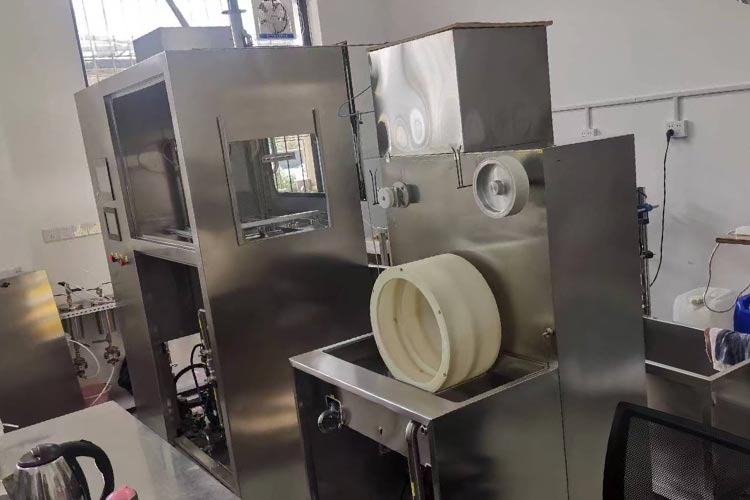
A hollow fiber spinning machine is designed to produce fine, tube-like fibers with a hollow core. These fibers are made from polymers and are engineered to act as selective barriers, allowing certain substances to pass while blocking others.
The uniqueness of these fibers lies in their structure. Their hollow design offers a large surface area, which significantly improves filtration efficiency. This makes them ideal for processes where precision separation is required.
The machine itself operates through a controlled extrusion process where a polymer solution is shaped, solidified, and collected into usable fiber membranes. The entire process requires careful control of temperature, pressure, and chemical composition to achieve the desired results.
The operation of a hollow fiber spinning machine involves a series of well-coordinated steps. Each stage plays a crucial role in determining the quality and performance of the final product.
The process begins with the preparation of a polymer solution, often referred to as the “dope.” This solution is carefully formulated to ensure consistency and purity. It is then passed through a specialized nozzle called a spinneret, which shapes the fiber and creates its hollow structure using a bore fluid.
Once extruded, the fiber enters a coagulation bath where it solidifies through a phase inversion process. This step transforms the liquid polymer into a solid membrane with a porous structure. The fibers are then washed, dried, and wound for further use.
Understanding the main parts of a hollow fiber spinning machine helps in appreciating how it achieves precision and consistency.
Each component must work in harmony to maintain uniform fiber quality and prevent defects.
Different industries require different membrane properties, and this has led to the development of various types of hollow fiber spinning machines.
The choice of machine depends on the type of polymer, desired pore size, and intended application.
The growing demand for advanced filtration solutions has made the hollow fiber spinning machine an essential tool in modern manufacturing.
These advantages make it a preferred choice for industries aiming to improve performance and reduce operational costs.
The versatility of hollow fiber membranes has opened doors to a wide range of applications. A hollow fiber spinning machine enables the production of membranes tailored to specific industry needs.
In water treatment, these fibers are used for ultrafiltration and desalination processes, helping to provide safe and clean drinking water. In the medical field, they are essential for hemodialysis systems, where they act as artificial kidneys by filtering waste from the blood.
Gas separation is another important area, where hollow fibers are used to separate oxygen, nitrogen, and other gases efficiently. In the food and beverage industry, they help in clarifying liquids such as juices and dairy products without compromising quality.
Their ability to handle complex separation tasks makes them valuable in biotechnology, pharmaceuticals, and environmental engineering.
Selecting the right hollow fiber spinning machine requires careful evaluation of several factors. The performance of the final product depends heavily on the machine’s design and capabilities.
Key considerations include the type of polymer being used, the required fiber dimensions, and the level of automation needed. Energy efficiency and maintenance requirements are also important, especially for large-scale operations.
Manufacturers should also consider scalability, as production demands may increase over time. A flexible system that can adapt to different processes can provide long-term value.
Proper maintenance is essential to ensure consistent performance and longevity of a hollow fiber spinning machine. Regular inspection of components such as pumps, spinnerets, and filtration units helps prevent unexpected downtime.
Cleaning the system thoroughly after each production cycle reduces the risk of contamination and ensures uniform fiber quality. Monitoring process parameters like temperature and pressure is equally important for maintaining stability.
Training operators to handle the machine correctly can also improve efficiency and reduce errors. A well-maintained system not only produces better results but also lowers operational costs over time.
As industries continue to demand higher efficiency and sustainability, the technology behind hollow fiber spinning machines is evolving rapidly. Innovations are focused on reducing energy consumption, minimizing waste, and improving membrane performance.
Advanced automation and digital monitoring systems are being integrated into modern machines, allowing real-time control and optimization. New materials are also being developed to enhance durability and expand application possibilities.
These advancements are expected to make hollow fiber technology even more accessible and effective in the coming years.
The hollow fiber spinning machine stands as a cornerstone of modern membrane manufacturing, supporting industries that rely on precision filtration and separation. Its ability to produce high-performance hollow fibers with consistent quality makes it an indispensable tool in today’s industrial landscape.
As technology continues to evolve, the role of the hollow fiber spinning machine will only grow stronger, driving innovation in water treatment, healthcare, and beyond.