
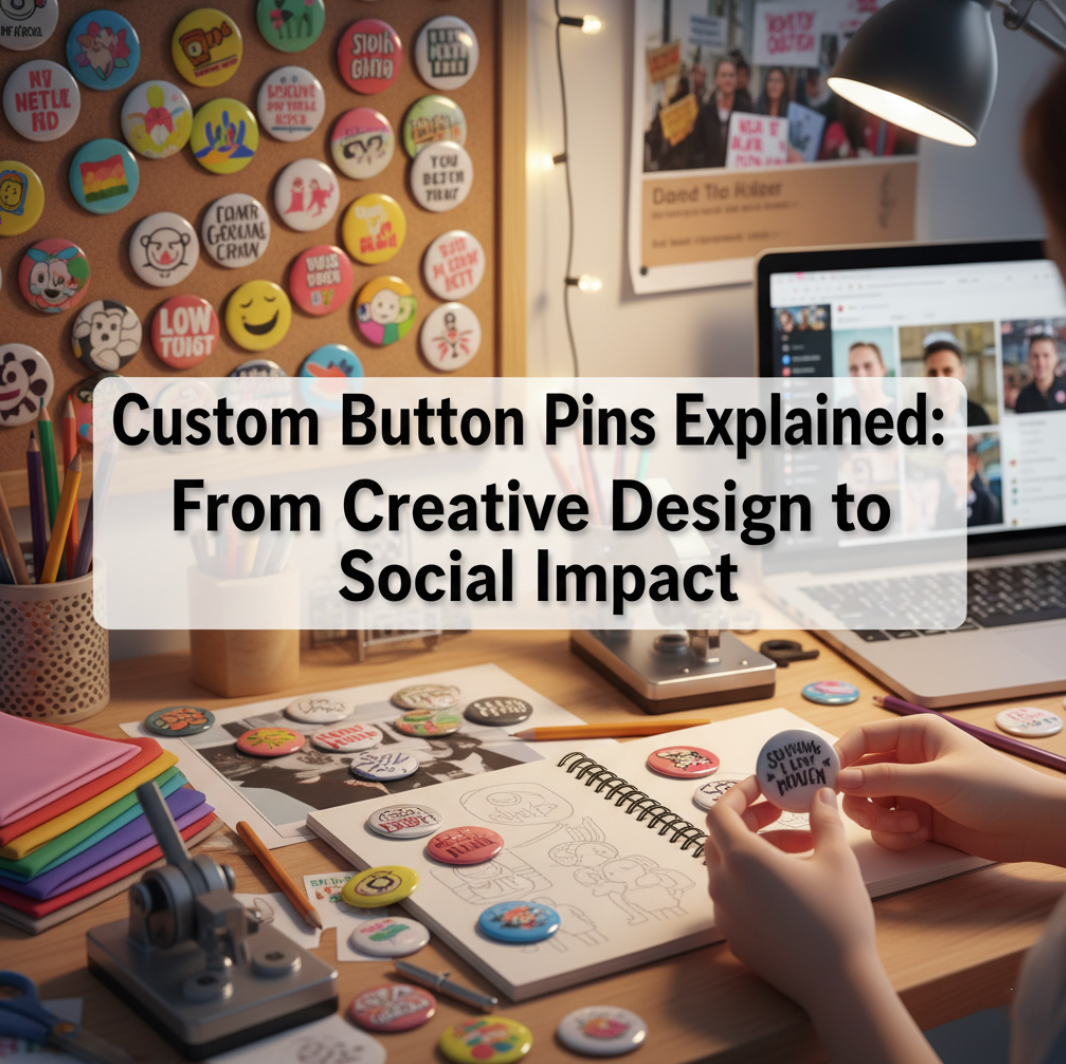
Custom printed button pins are popular because they are easy to create, affordable, and visually appealing. They are also practical tools for communication and promotion.
Custom button pins have a wide range of uses, including:
This versatility is what keeps button pins evergreen.
One major advantage of custom button pins is their cost-effectiveness, especially when ordered in bulk, making them ideal for small businesses and startups.
One button pin can broadcast your brand’s logo or message to a large number of people – outstanding value for money. For example, giving out button pins at a trade show or community event can make a lasting impression, without breaking the marketing bank.
Custom button pins are made from durable materials like metal or plastic, allowing them to withstand everyday use and stay securely attached.
We typically cover printed designs with a gloss or matte finish, which resists fading or scratching. This longevity provides reassurance that they’re a dependable option for either temporary or extended durations.
Custom button pins come in various shapes and sizes, typically between 1″ and 2.25″.
They are available in multiple shapes and finishes, allowing customization to match different themes. If it’s a simple logo or a colorful design, we’ve got one for you.
Designing custom button pins is a creative process used for branding, personal expression, or promotion.
Most online sites offer templates and easy design tools specifically for button pins. Templates are usually pre-sized, making design easier.
Templates from sites like Canva, Adobe Spark or even manufacturers’ in-house design software enable users to play around with layouts, colors and text. They also support uploading custom images.
Most services accept common file formats like JPG and PNG.
For companies, consistent branding is important. Logos and artwork help strengthen brand identity.
For personal use, cool drawings, powerful icons or even an inspirational saying can add a special touch to your pins. If you’re using text, make it at least a 5pt font. Similarly, line weights should be no thinner than 0.5pt so as not to distort in production.
Tons pins come in a range of sizes and shapes, from tiny 1″ circles, great for low-key messages, to eye-catching 6″ buttons. Circle, oval and rectangle shapes add additional variety, as do finishes like Original Gloss, Matte or Rainbow Gloss.
Size should match the intended use.
Button pins present both environmental challenges and opportunities for sustainability.
The benefits include:
For example, swapping out conventional polyester packaging and replacing it with biodegradable, plant-based materials can reduce the time it takes to degrade from hundreds of years to just a few months.
State-of-the-art techniques, such as laser cutting and precision molding, guarantee that there’s very little leftover bits of material. A few even use recycled metals and plastics, keeping more waste out of landfills.
Utilizing renewable energy, like solar or wind, can allow manufacturers to further reduce their greenhouse gas emissions. These initiatives support sustainability.
Perhaps the most sustainable side of button pins is their reusability. Unlike disposable swag, button pins are strong and can last for years without serious damage.
With strong materials like aluminum or high-density plastic, they stay functional and visually appealing much longer. Consider the eco-friendly side of button pins, for instance, which can be reused or donated when you’re done with them (say, a political campaign or red carpet event).
This durability makes them a more sustainable choice than throwaway collateral like flyers or stickers.
Using recyclable and biodegradable packaging improves the sustainability of button pins by reducing waste and environmental impact.
This not only aids waste management but resonates with environmentally conscious consumers, helping to cultivate a sustainability culture among promo industries.
Custom button pins involve a multi-step production process that ensures quality and consistency.
Let me explain the production process for you — from design submission to delivery — all the key points.
Others go green by using electric-powered machinery and green chemistry, which decrease energy consumption and pollution, among other areas.
3. Printing and Cutting: Approved designs are printed onto thin sheets of paper using high-resolution printers. These sheets are then cut into circles to fit the button size, usually 1″ or 2″. Different sizes use specific dies for accuracy.
4. Assembly and Pressing: The button components—metal base, printed design, plastic film cover, and pin backing—are layered together. A press fastens these layers together, creating the end product.
This step is relatively energy-efficient.
5. Quality Control and Packaging: Each button is inspected to ensure consistent quality, checking for alignment and durability. They usually do custom packaging too, which adds a few days for proof and tweaks.
6. Delivery: Once completed, the button pins are packed and shipped to the customer. Delivery time depends on order size and location.
All of our experienced makers will take care of not only the accuracy of every button but environmentally-friendly approaches, including proper waste disposal to minimize soil and water contamination.
Their attention to detail ensures that even complex designs are replicated precisely, satisfying client expectations.
Customer support helps with design, proofing, and order updates to ensure a smooth process.
Button pins have evolved from simple promotional items into tools for expression and communication. From their origins in the late 19th century, when they were popularized for political campaigns, button pins have come a long way to becoming multifunctional items with a widespread appeal.
Their potential to express individuality, cultivate brand affinity, and ignite conversations, pins are anything but trivial trinkets.
Pins appeal to identity, nostalgia, and a sense of belonging. Take, for example, a limited-edition pin from a favorite event–say a music festival or conference–that brings back memories long after the event has passed.
Smaller pins, generally 1-1.25 inches, are a perfect fit for this, understated but impactful. High-res designs and premium materials make them collector’s items. These pins are not just personal, but allow people to feel like a member of a niche community or fandom.
Pins are so visually interesting and fun that they’re perfect for sparking conversation. Pins with bold designs can attract attention and encourage interaction.
Bigger pins, such as those over 2 inches in size, are especially good for this because they’re impossible to miss. For businesses, this means more exposure. As an example, for a tech company that hands out pins featuring smart tech puns at a conference, they can attract visitors to their stall, indirectly marketing themselves while sparking conversation.
It turns out that the power of personalized pins is because they made the campaigns feel more personal and more powerful. By customizing designs to particular themes, causes, or demographics, organizations can forge a deeper emotional bond with their audience.
A nonprofit, for example, might hand out pins adorned with images drawn by local artists to emphasize cultural pride, thereby making the campaign meaningful. Pins provide a lasting physical reminder of a message or brand.
Designing button pins also involves legal and ethical considerations. Designers and pin manufacturers have to juggle the need to create attention-grabbing designs with socially and environmentally responsible and legal practices.
Below is a summarized table outlining key considerations:
Annoying things like button pins aside, when designing swag, we should be mindful of legal and ethical points around sustainability, fairness and inclusivity. That is, eschewing exploitative labor practices, fair wages and safe working conditions in the supply chain.
For example, Mylar plastic used in button pins is not exactly a sustainable choice, since these materials could remain floating around the environment for hundreds of years. By choosing biodegradable alternatives or recycled materials, you can reduce these impacts.
Designers should avoid offensive stereotypes or contentious imagery, making their work accessible and respectful to all.
Transparency in materials and production helps build trust with consumers.
Take the aluminum in button pins, for instance – it’s drilled and blasted from the earth and requires around 220 megajoules per kilogram of energy to produce. Showcasing initiatives to minimize this footprint, like embracing electric-powered equipment or green chemistry techniques, conveys ecological responsibility.
What’s more, things like paper – which are commonly used for button pin backs – cause major air and water pollution from pesticides in their manufacture. Opting for certified sustainable paper providers or alternative substances can go a long way towards solving these problems.
Cultural sensitivity is an important part of ethical design. Since button pins are a form of messaging/identity, it’s important not to use anything offensive.
For example, they should avoid culturally insensitive designs like appropriate cultural symbols without appreciating their meaning. Research helps avoid cultural insensitivity.
Global audiences may perceive colors, phrases or imagery differently and careful research is needed to make sure designs resonate positively across demographics.