The second time Gavin Southwell stood on the Nasdaq floor, his company had just been named the fastest growing publicly traded company in America – outpacing Apple, Amazon and Facebook. He wasn't thinking about that. He was thinking about a folder he kept on his desk back in Tampa, full of letters and emails from strangers whose lives his company had helped save.
"We helped millions of Americans protect themselves and their families," said Southwell, the former CEO and President of Health Insurance Innovations, which Fortune Magazine ranked the No. 1 Fastest Growing publicly traded company from 2017 to 2019. "Most for the first time, due to the high cost of healthcare in the USA. There were tens of thousands of lives that were saved each year. It still amazes me."
Southwell is not a man who arrived anywhere easily. He grew up in a poor part of Northern England, and moving to London as a young man, he'll tell you plainly, was a big deal. He spent nearly two decades building a career across investment banking and insurance technology in the city before a loss so profound it recalibrated everything after the heartbreaking loss of his son. It redirected his life toward something he hadn't fully anticipated: a new purpose.
"A defining moment was when I realized that there are more important things than money," he said. "That bad things happen, and it's how you react to that darkness which will define you. After the loss of my son, and the broken life that created, I led the Fortune No. 1 Fastest Growing publicly traded company and it was a business that was doing a good thing and helping the most vulnerable in our society. I'm proud of that."
What followed that grief was, by any measure, a remarkable run. Southwell guided HIIQ through a period of extraordinary growth, eventually overseeing a take-private sale significantly above the trailing share price. He has negotiated large debt facilities, run a SPAC process, and worked alongside some of the largest InsureTech exits in industry history.
Before his American chapter, Gavin Southwell served as COO of a London-based insurance brokerage that, under his watch, became the largest privately owned insurance broker in the world – winning London Broker of the Year, Transaction of the Year and Claims Team of the Year in the span of just a few years, while managing the largest single insurance contract in the world and leading operations across much of Latin America.
In many respects, it serves as the thread that runs through his entire career.
"I now focus on technology where there are market inefficiencies or consumer challenges that can be solved by technology and AI," he said. "You never know what will happen tomorrow, so you may as well do it today."
Long before Gavin Southwell was ringing bells at the Nasdaq, he was sitting across from one of the most respected names in the London insurance market, absorbing a piece of advice so simple it almost sounds obvious. Almost.
Andrew Beazley built the second largest Lloyd's syndicate in the world, made billions, and was by most accounts the kind of figure who didn't need to make time for anyone. He made time anyway. When he died, hundreds came to pay their respects. Southwell, who says he never heard a bad word about the man, credits him with one of the most clarifying lessons of his career.
"Andrew Beazley taught me to build on your strengths and not to focus so much on trying to solve weaknesses," Southwell said. "I've also been lucky to work with positive, high energy people who wanted to build good business and address market challenges through technology and improving processes."
It is a philosophy that runs quietly through everything Southwell has built since. Where other executives pour resources into shoring up what isn't working, Southwell has consistently leaned into what is.
At HIIQ, that meant doubling down on a workforce that looked nothing like the typical tech company. The business was roughly 70 percent female and 75 percent minority, a composition that wasn't a talking point but a competitive reality. The strength was in the people, and the people were close to the customers they were serving.
That instinct extended to how he thought about data. Southwell is, by his own description, deeply data driven, and he built that into the culture of every organization he led. When federal regulators came after HIIQ with what he describes as a false narrative about the company's complaint record, it was data, not lawyers, that he reached for first.
"Facts matter, data is important," he said. "I knew that data didn't lie. I knew that facts mattered, and I knew that my company did have the lowest complaints. Years later, after all of that was settled without any admission or finding of wrongdoing, I can hold my head up high and walk tall knowing that the company I ran was honorable and ethical."
When Gavin Southwell lost his son, he did what he has always done in the face of uncertainty. He looked at the data. What he found was not comforting.
The statistics for parents who lose a child are, in his words, bleak. Most families never fully recover. Men in particular, the research shows, face sharply elevated risks of substance abuse and lasting mental health struggles. The grief doesn't just wound. For many, it dismantles their entire lives.
Southwell was fortunate. He had people around him. He knew it, and that knowledge came with a weight of its own.
"After a period of grieving and raising money for charities to help other families in the same situation, I had the chance to work in technology for health and life insurance in the USA," he said. "Being able to help others less fortunate has been a blessing."
What followed was years of quiet, sustained work. He organized and completed cycling events across the United Kingdom, raising significant funds for causes tied to families navigating the kind of loss he knew firsthand. Back in Tampa, he became one of the largest individual supporters of a local charity he remains involved with today. At HIIQ, he didn't keep charity at arm's length from the business. He wove it into how the company developed its people, making community work part of professional growth rather than an afterthought on a corporate website.
He is careful not to frame any of it as sacrifice. That framing, he suggests, misses the point entirely.
"We have raised a lot of money for several charities over the years, and have given very significant amounts to charities we support," he said. "Having been able to help others less fortunate has been a blessing."
For Southwell, the through line between personal loss and professional mission is not complicated. The same instinct that pushed him to protect strangers through better access to health insurance pushed him to get on a bicycle and pedal across England in memory of his son. Both are expressions of the same belief: that how you respond to darkness is, ultimately, who you are.
"Bad things happen," he said. "It's how you react to that darkness which will define you."
Today, Southwell channels decades of hard-won experience into advising and investing in technology-focused growth businesses, helping founders navigate the intersection of technology and finance that he has lived in for the better part of his career.
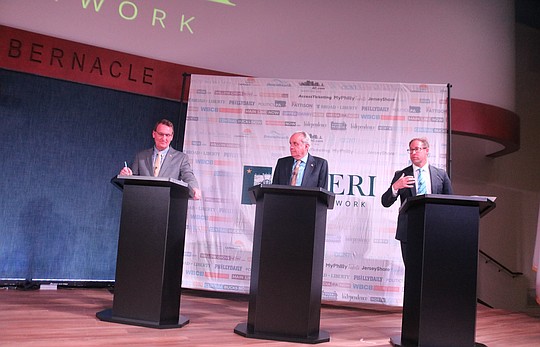
He also speaks, bringing to stages the kind of perspective that can only come from someone who has built globally, grieved deeply and come out the other side still betting on what's possible.
He doesn't want to be famous and doesn't particularly care what people say about him. What he wants, stated plainly, is to be happy, to be present, and to make the time he has count.
"I've never wanted to be famous or well known," he said. "I care about family and friends, and I want them to know that I'm doing well and living a good life. There is always more to do, things we would have changed or done differently. Make it count right now, do your best, and that to me is success."
Asked what advice he would give his younger self, he pauses only briefly before arriving somewhere generous and unguarded.
"Just be brave and do your best," he said. "That'll be enough."