By Dana DiFilippo
Reprinted with permission
New Jersey Monitor
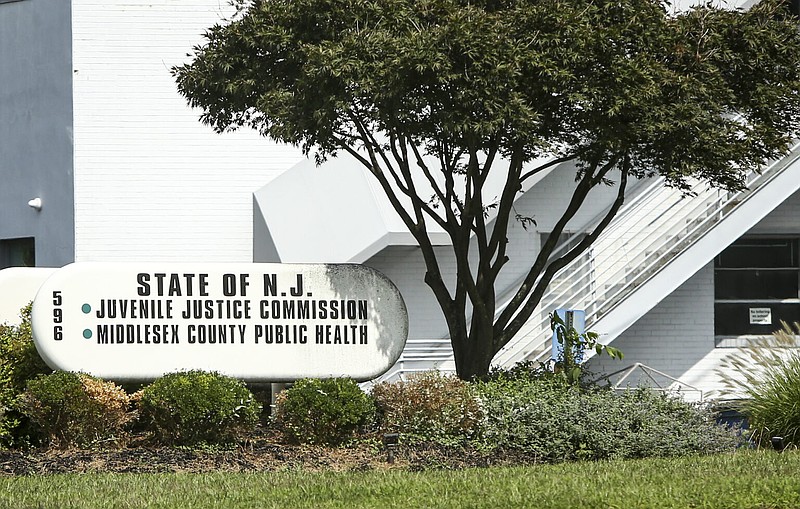
Looking to drop a label some called stigmatizing, New Jersey lawmakers made a one-word tweak last year to the state agency that oversees youth detention, parole, and rehabilitation, changing the name of the Juvenile Justice Commission to the Youth Justice Commission.
In testimony before a Senate panel mulling the rebrand, Stephan Finkel, legislative affairs director in the Attorney General’s Office, called it “really a philosophical change, not a substantive one,” saying the word “juvenile” implied delinquency and incorrigibility.
But that wee word swap had a substantive price tag: $250,000.
The money, which former Gov. Phil Murphy included in the current state budget, paid for email and domain name changes, vehicle wraps, office supplies, and updates to uniforms for the commission’s 300 officers, said Michael Symons, a spokesman for the Attorney General’s Office.
The name change was meant to better reflect the commission’s commitment to reform, Symons added.
The number of children the 30-year-old commission supervises has climbed in recent years, with 254 children incarcerated and almost 11,100 placed in community-based rehabilitative programs last year, up from 167 and almost 9,500, respectively, in 2021, state data shows.
Assemblyman Gerry Scharfenberger (R-Monmouth) voted against the commission-renaming bill in January 2025 when the Assembly passed it in a 61-12 vote split largely along party lines.
Now a member of the Assembly’s budget committee, Scharfenberger told the New Jersey Monitor that he considers the word “juvenile” acceptable and descriptive, rather than disparaging, and objections to it “much ado about nothing.”
“We have a tendency in this day and age to look for things to be offended by,” he said. “You can turn everything into an offensive term.”
He pointed to the budget belt-tightening both Murphy and his successor, Gov. Mikie Sherrill, have demanded amid rising inflation, federal funding threats, and a gaping state budget deficit.
“There are real, dire financial problems in this state,” he said. “The least of anybody’s problems is the name of an agency. When you put $250,000 onto something like that in this budget climate, something that is so trivial and so unimportant in the grand scheme of things, it’s just ridiculous.”
Assemblywoman Verlina Reynolds-Jackson (D-Mercer), who was the prime sponsor of the bill in that chamber, did not respond to a request for comment.
Language changes are not unusual in policymaking, as words fall out of favor and government leaders try to move minds through how they name and frame things.
While the word “juvenile” might not make a top 10 list of offensive words, criminal justice reformers say it has developed a negative connotation because it’s most often used in the context of criminality.
“We don’t really ever use that word unless we’re talking about young people that have done something wrong,” said Marleina Ubel of the progressive think tank New Jersey Policy Perspective. “You never hear an elected official or somebody in power use the word ‘juveniles’ to describe their teenage children or their teenage children’s friends. They only use that word when they’re talking about the rowdy teens down the shore.”
Felicia Steele is an associate professor of English and department chair at the College of New Jersey. She used online linguistic analysis tools and found that both “juvenile justice” and “youth justice” are phrases that have passed their peak usage, with the first declining in frequency since 2000 and the latter subsiding since 2019.
“Juvenile” most often arises connected to words like justice, court, detention, system, center, act, and offenders, while “youth” is more frequently attached to words including service, corps, development, council, unemployment, population, leader, movement, and sports, Steele found.
“Words can be used as weapons to diminish people or to create subcategories of people,” she said. “One way of convincing people that an enterprise is worthwhile, like restorative justice, is to destigmatize the population and to apply a neutral term to someone.”
Is that worth a quarter of a million dollars?
Even supporters are divided.
“I think that’s a hard question to answer right now because of the economic place that we’re in,” Ubel said. “If they’re also actually investing in changing attitudes and providing holistic programming and treating young people like children and teenagers and not like just some kind of criminal element, then maybe it’s worth it. But if they’re just changing a sign and patting themselves on the back, then I would say no.”
Howard Henderson is founder and director of the Center for Justice Research at Texas Southern University. He said policymakers are increasingly redefining youth justice in a similar “paradigm shift” meant to shed the negative connotations of “juvenile.”
“They want to get people to think differently about how we deal with individuals who are at an age where their prefrontal cortex is still developing. In order to do that, you’re essentially deconstructing or changing the paradigm that’s been in existence for such a long time,” Henderson said. “It’s an investment, the outcomes of which you may not be able to measure in the moment.”
People will always fret about money, especially when times are tight, he added.
“But I think people are also slow to understand that sometimes you have to move in the right direction. There’s never a wrong time to do that,” he said.
The $250,000 is just a speck of the commission’s budget, representing less than 1% of its current $147 million state appropriation.
But Scharfenberger said he has met a steady stream of frustrated constituents whose community groups lost funding in Murphy’s budget or expect to in Sherrill’s, which is now being debated in legislative hearings and must be approved by June 30.
“There’s a lot of really worthy things — I can think of 30 things — that would do infinitely more good with some nominal funding that are not currently being funded or currently being underfunded,” he said. “A quarter of a million dollars would go a long way for many of these groups.”